What are the control methods for sunflower downy mildew?
(1) Establish disease-free seed production fields. Strictly prohibit the introduction of seeds from diseased areas, and do everything possible to protect disease-free areas. (2) Practice a 3-5 year rotation with grass-family crops. (3) Choose disease-resistant varieties such as Liaokui No. 2, Fenkuiza No. 2, Kang 3A x Hui 6, CM592, etc. (4) If downy mildew is suspected, test the sunflower's inner pericarp and...
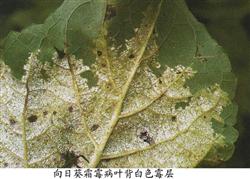
(1) Establish disease-free seed production fields. Strictly prohibit the introduction of seeds from diseased areas, and do everything possible to protect disease-free areas.
(2) Practice a 3-5 year rotation with grass-family crops.
(3) Choose disease-resistant varieties such as Liaokui No. 2, Fenkuiza No. 2, Kang 3A x Hui 6, CM592, etc.
(4) If downy mildew is suspected, test the sunflower's inner pericarp and seed coat to determine the seed-borne infection rate. In severely affected areas, dress seeds with 25% metalaxyl at 0.5% of seed weight.
(5) Sow at the proper time, not too late, and keep the density appropriate, not too dense. When diseased plants are found in the field, pull them out promptly and spray or drench the roots to prevent the disease from spreading.
(6) After the disease appears at the seedling stage or on mature plants, spray 58% metalaxyl mancozeb wettable powder at 1000 times dilution, or 64% Sandofan M8 wettable powder at 800 times dilution, 25% metalaxyl wettable powder at 800-1000 times dilution, 40% enhanced ridomil wettable powder at 600-800 times dilution, 72% DuPont Curzate or 72% Keshuangqing or 72% cymoxanil mancozeb or 72% Shuangba wettable powder at 700-800 times dilution. In areas where resistance to the above fungicides has developed, switch to 69% Anke mancozeb wettable powder at 900-1000 times dilution.