How to fertilize yam? Detailed explanation of the correct fertilization method
How should Chinese yam be fertilized? Chinese yam is a food and medicinal crop whose product is the underground tuber. Because its tuber is large and in some varieties reaches 1-2 m deep into the soil, deep, well-drained sandy loam soil should be chosen. Chinese yam likes organic fertilizer, which can be spread from sowing until the vines develop. Spread...
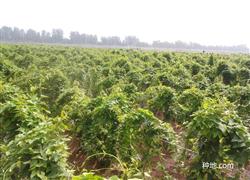 When preparing to fertilize before planting yam, how should yam be fertilized?
Because yam is rich in nutrients and has a nourishing and strengthening health effect, it is deeply loved by consumers. Its market price is relatively high, and growers earn good economic returns. At the same time, yam can also be deeply processed, and it is also one of China's traditional export agricultural products.
In the Huang-Huai region, few yam varieties are grown, mainly Hua Yam, Jiujinhuang and Crystal Yam. The highest-yielding one is Crystal Yam, with a yield of about 5,000 kg per mu and a single tuber weighing 8-10 kg.
Site selection: For growing yam, choose a plot of sandy loam or loam with high terrain, a low groundwater table, convenient drainage and irrigation, and deep, fertile, loose soil.
Seed selection: Choose robust yam with sparse lenticels, a glossy surface, and no disease or pest damage as seed pieces. Generally, round ones are best. Cut them into pieces 8 to 10 cm long, and each piece should preferably weigh no less than 250 g. When cutting, use the lengthwise cutting method. To prevent the cut surface from rotting, dip the cut surface in a chemical to prevent pathogen invasion and rot. Dilute 80% mancozeb into a paste, and dip the cut ends of the prepared yam pieces in the chemical to prevent rot.
Sprouting: In a sheltered, sunny place in the courtyard, spread out a reed mat and place the yam pieces flat on it to expose them to the sun. Cover them with a straw mat at night to keep the temperature, and expose them to the sun during the day. Generally, after about 15-20 days of sunning, they can be planted.
Fertilization: For every 1,000 kg of yam produced, 4.32 kg of pure nitrogen, 1.07 kg of phosphorus pentoxide, and 5.38 kg of potassium oxide are needed. The required ratio of nitrogen, phosphorus, and potassium is 4:1:5, and the amount and types of fertilizer needed differ at different growth stages. Base fertilizer: according to the fertilization practices of local yam farmers, apply 3 to 5 cubic meters of high-quality decomposed farmyard manure per mu, with decomposed chicken manure being best, 100-150 kg of soybean cake, 75-100 kg of Mecosin or diammonium phosphate, 100 kg of agricultural potassium sulfate, 25 kg of urea, and 3 to 5 bags of microbial fertilizer (40 kg per bag). Topdressing: at the seedling stage, mainly nitrogen fertilizer, applying about 15 kg per mu; during the peak period of branch and leaf growth (early July), apply 25-30 kg per mu of high-nitrogen, high-potassium compound fertilizer, and spray 0.3% potassium dihydrogen phosphate, spraying 2-3 times in succession. In early August, apply 25-30 kg per mu of high-nitrogen, high-potassium compound fertilizer.
Click to see more yam cultivation techniques
Click to see more vegetable cultivation techniques