What methods are there for disinfecting round yam seed tubers?
How should yams be planted to achieve high yields? I would like some guidance. To achieve high yields when growing yams, the following cultivation techniques can be referenced: 1. Choose a suitable plot and do a good job of deep plowing and land preparation. Yam is a tuber crop, and its tubers go deep into the soil. It is drought-tolerant and afraid of waterlogging, and prefers deep, loose soil. Therefore, choose a high, dry area with good drainage...
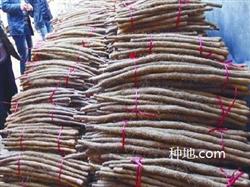 How do you disinfect seed tubers of round yam?
The pathogens of round yam mostly attach to the seed tubers to overwinter. To prevent the occurrence of diseases, the seed tubers should be disinfected; otherwise, the pathogens can easily invade through the cut surfaces, causing rot and missing plants.
Under normal circumstances, the seed tubers should be stored intact over winter. When cutting the seed tubers before planting in spring, in addition to keeping the kitchen knife, baskets, mats, cutting board, basin and other tools clean and sanitary, the seed tubers can be soaked in an 80-fold formalin solution for 20 minutes. Then, place the seed tubers on a mat to air-dry for 2-3 hours, then move them to a dark indoor place for 1 day to evaporate excess moisture.
When cutting the seed tubers, try to retain as much of the seed tuber cortex as possible and avoid damaging the cortex, so as to achieve uniform sprouting. After cutting the seed tubers into pieces, place them again in an 80-fold formalin solution to disinfect for 20 minutes, then place them in a cool place to let the moisture dissipate. Finally, coat the cut surfaces with plant ash or slaked lime. In this way, using formalin disinfection twice, before and after cutting the seed tubers, has a very good effect. Heat treatment disinfection can also be carried out, that is, soaking the seed tubers in warm water at 48°C (must not exceed 050°C) for 40 minutes, which can kill nematodes and other pests.
Click to view more yam cultivation techniques
Click to view more vegetable cultivation techniques