What precautions should be taken when growing chive flowers?
How should chive flowers be cultivated? What should be noted when cultivating chives? When cultivating chive flowers, note the following: (1) Strengthen fertilizer and water management: chive flowers enter their peak production period from May to October of the second year of planting. To meet the nutrient needs of continuously harvesting flower stems, apply imported potassium sulfate compound fertilizer per mu every week...
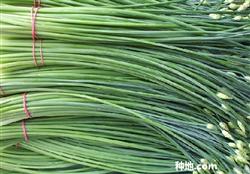 What should be noted when planting chive flowers? Seeking advice
In recent years, chive flowers have become widely popular among domestic and international consumers for their high nutritional value, containing large amounts of vitamins, minerals, fiber, protein, carbohydrates, calories and more, as well as their unique flavor. Chive flower varieties introduced from Taiwan, China are highly favored by growers for their high yield and excellent quality, and the province's planting area has been increasing year by year.
I. Variety selection At present, the Taichung No. 11 and Taichung No. 13 Lianhua series varieties introduced from Taiwan, China are the main varieties for market cultivation. Their plants grow vigorously, have many tillers, are cold- and heat-tolerant, grow quickly, bolt early, have thick and sturdy flower stems, delicious flavor and good quality, can be harvested all year round, and average 1000-2000 kg per mu.
II. Sowing and seedling raising
1. Sowing period: Propagation can be done by seed or by division of clumps; at present seed propagation is mainly used, and concentrated seedling raising generally begins after August.
2. Sowing and seedling raising: The seed rate is 0.5 kg per mu. Before sowing, prepare the beds first, each bed 1.5 m wide including the ditch, level it, and rake shallow furrows straight across the leveled bed surface, 6 cm wide and about 2 cm deep. Sow the seeds in rows in the furrows, then sweep the bed surface level, gently press the loose soil down slightly, water immediately after sowing, then water once every 2 days to keep the soil moist. 20 days after the seeds germinate and emerge, apply a light fertilizer once. Pay attention to drainage on rainy days, watch for the occurrence of pests and diseases, and strengthen management.
III. Choosing a plot and making beds Chives avoid acidic soil; a pH of 5.6-6.5 is more suitable. Sandy soil, loam and clay soil can all be used for cultivation, but well-drained, fertile loam is most ideal. Make beds 1.5 m wide including the ditch, leave a working row every other bed, and dig deep ditches around the perimeter to facilitate drainage. Apply 3500 kg of high-quality barnyard manure or 3000 kg of farmyard manure per mu, plus 60 kg of compound fertilizer as base fertilizer.
IV. Transplanting From 70-80 days after sowing, when each chive seedling has divided into 2-3 tillers, they can be transplanted to the field. The usual row spacing is 27 x 24 cm, with 4-6 plants per hole, adjustable according to the grower's habits. When planting, pay attention to the planting depth, and water once immediately after transplanting is completed to help them survive.
V. Field management
1. Fertilization: Chive flowers are a fertilizer-tolerant vegetable with a long growing period, so sufficient fertilizer must be applied during cultivation. Generally speaking, applying more nitrogen can increase yield and make the fiber less and the texture tender; applying an appropriate amount of phosphorus can promote root development and bolting; applying potassium can increase disease resistance, but too much will make the fiber coarser and reduce quality.
During the seedling stage of chive flowers, generally apply dilute human urine or 2% urea once every 10-15 days, or spray 800-1000 times diluted Sulujing once every 7-10 days. During the bolting stage, apply nitrogen, phosphorus and potassium together, but mainly nitrogen fertilizer; apply 16 kg of compound fertilizer per mu every 10-15 days, and pay attention to phosphorus application, as too much will instead reduce yield.
2. Chives avoid moisture, so during chive flower cultivation, if rain occurs, pay attention to drainage and do not allow waterlogging. However, long-term drought will reduce tillering, shorten the leaves, and make the bolts short and thin, so care must be taken to keep the soil constantly moist and irrigate as appropriate so that growth proceeds normally. In high water table areas, when building raised beds, be careful not to let the water level rise above the root zone, so as not to hinder root development.
3. From the second year of cultivation, cover the bed surface each spring with a 5-7 cm thick layer of loose soil to protect the roots and facilitate good development of the root system, which has strong tillering ability.
VI. Pest and disease control
1. Chive rust: Chive rust mainly damages the leaves and occurs severely at 15-20°C and relative humidity above 90%. It can be controlled by spraying 65% zineb at 400 times dilution.
2. Chive phytophthora blight: Chive phytophthora blight mostly occurs in rainy, highly humid seasons. It can be controlled by spraying 58% metalaxyl powder at 600 times dilution or 64% oxadixyl mancozeb wettable powder at 500 times dilution.
3. Chive gray mold: It can be controlled by spraying 50% iprodione at 1000 times dilution.
4. Onion thrips: It can be controlled by spraying 90% methomyl wettable powder or 25% bromophos.
5. Chive leafminer: It can be controlled by spraying 50% phosmet at 1000 times dilution.
6. Chive maggot: It can be controlled by spraying 75% phoxim at 500 times dilution.
VII. Harvesting
Pick the flower stems that emerge from the leaf axils while still young and before the flower buds open. Tie them into bunches according to grade for sale. Harvest once a day or every other day; in low temperatures, harvest once every 2-3 days.
VIII. Variety renewal
Although chives are a perennial crop, under natural conditions, after generally 5-6 years, their tillering ability weakens and their growth vigor declines. For chive flowers grown mainly for harvesting flower stems, renewal is necessary 3-4 years after sowing; otherwise, after repeated harvests, they will gradually become weak, with short stems and leaves and poor-quality flower stems, losing their commercial value.
Click to see more chive cultivation techniques
Click to see more vegetable cultivation techniques