What causes dead chive plants
How should chives be fertilised? What to pay attention to Chives' demand for fertiliser is mainly nitrogen fertiliser, combined with an appropriate amount of phosphorus and potassium fertiliser. Only when nitrogen fertiliser is sufficient can the leaves be plump and tender; compared with other vegetables, chives take up a relatively high amount of nitrogen, but too much nitrogen easily causes chives to lodge. Increasing potassium fertiliser can promote cell division and bul...
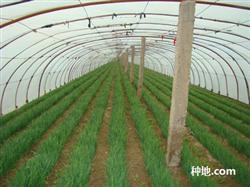 Why do chives die? How to prevent and control it
Dead chives can be prevented and controlled by the following methods:
1. Pay attention to timely drainage during the rainy season. Avoid irrigating with industrial wastewater. Before sowing or every spring and summer, spray no-deep-tillage agent so that the 30-50 cm deep soil layer becomes loose and permeable, reducing waterlogging in the field after rain and lowering humidity.
2. Methods for preventing and controlling phytophthora blight and fusarium wilt are as follows: practise crop rotation of more than 2-3 years; choose plots with high, dry, level terrain that drain easily after rain and do not easily become waterlogged for cultivation; keep seed in disease-free areas, and infected seed can be treated with 0.3% of 25% metalaxyl for seed dressing; different chive varieties differ somewhat in disease resistance, and the currently more widely used Hanzhong winter chive is relatively resistant; apply more organic fertiliser in the field, harvest appropriately, strengthen management, promote robust plant growth and improve disease resistance; irrigate appropriately, drain promptly after rain, and reduce field humidity; when transplanting, remove diseased seedlings, pay attention to root maintenance, and avoid conditions that favour disease; before rainfall in early summer, promptly remove the lower yellow, old and diseased leaves, gather the green leaves upward and tie them with grass to prevent the chive leaves from touching the ground and improve ventilation; in protected cultivation, strengthen ventilation and reduce humidity; avoid applying large amounts of nitrogen fertiliser and increase phosphorus and potassium fertiliser; during the growing period, spray the natural brassin "Shuofeng 481" once every 20 days, 4-5 times in total, to improve plant disease resistance. At the initial stage of disease, the following can be used: DuPont Curzate 600-750 times dilution; or DuPont Equation 1000-1200 times dilution; or Yikuaijing 2000 times dilution; or Fuxing 8000 times dilution; the above pesticides should be used alternately, once every 7-10 days, sprayed 2-3 times in succession. The above pesticides can also be used for root drenching, with 250 g of pesticide solution poured per clump.
3. To prevent and control soft rot and other bacterial diseases, use agricultural streptomycin 4000 times dilution, or 47% Kasugamycin-copper 800-1000 times dilution. Other agricultural measures are the same as those for preventing and controlling fungal diseases.
4. The method for preventing and controlling chive maggots is: organic fertiliser should be fully decomposed before application to reduce attraction of adult flies. When fertilising, it should be applied evenly and deeply, with seeds and fertiliser kept separate; a layer of poisoned soil or a small amount of pesticide can be mixed on top of the fertiliser; in plots where root maggots have already occurred, irrigate frequently, and if necessary flood irrigate to suppress root maggot activity or drown some larvae and reduce damage; autumn ploughing can eliminate large numbers of overwintering pupae and reduce the source of insects; during the peak occurrence of adults, carry out trapping and killing. In the field, dig 10-15 small soil pits per mu, line the pits with plastic film, and fill them with prepared trapping liquid. The trapping liquid is made by mixing sugar:vinegar:water at a ratio of 1:2:15-20, then adding a small amount of trichlorfon. Every morning remove the killed adults, and in the evening add more trapping liquid; to control adults and newly hatched larvae, 2.5% trichlorfon powder can be used, applying 1.5-2 kg per mu for dusting; or 80% trichlorfon soluble powder 500-1000 times dilution for spraying, once every 7-8 days, 2-3 times in succession. When root maggot damage is found in the field, the following agents can be used: 80% trichlorfon soluble powder 1000 times dilution; or 50% Diquiling emulsifiable concentrate 1500 times dilution, for ground spraying or root drenching to eliminate larvae.
Click to see more chive growing techniques
Click to see more vegetable growing techniques