Why is it easy for chives to have pesticide residues?
How do you prevent and control chive leaf spot disease? Asking for advice on chive leaf spot disease prevention and control: 1. Plant superior varieties. Practice reasonable crop rotation; the field for transplanting should be fertile with fairly abundant organic matter; before transplanting, water thoroughly and apply sufficient base fertilizer, with 3000 kg of fully decomposed farmyard manure and 30 kg of compound fertilizer per mu. 2. Strengthen field management...
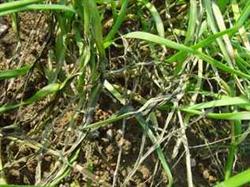 Why are chives prone to pesticide residues? What can be done about it?
"There are so many varieties of vegetables, so why is it only chives that are prone to pesticide residues?" Regarding the issue of pesticide residues in chives, which the public is widely concerned about, Qiao Chuanling, head of the Resistance Molecular Genetics Research Group at the Institute of Zoology, Chinese Academy of Sciences, explained: "It is not only chives that have pesticide residues. The reason everyone has always thought its residues are severe is due to its growth characteristics, mainly related to the chive maggot pest that infests chives."
Qiao Chuanling introduced that the chive maggot, commonly known as the larva of the chive late-eye fungus gnat, is the main pest of chives. Its larvae mainly gather in the underground bulb and tender stem parts of chives and cause damage. After chives are damaged, the aboveground leaves become thin and weak, wither and yellow, wilt with broken leaves, rot, or die in patches.
"Because the chive maggot hides in the soil, large amounts of highly toxic pesticides must be sprayed. An even more common practice is to drench the ground with toxic organophosphorus pesticides, such as parathion and methyl parathion." Qiao Chuanling said that through such operations, a large amount of organophosphorus pesticides will be absorbed by the chive roots, and the organophosphorus pesticides that enter the interior of the chives through the roots are not easy to wash off.
Qiao Chuanling told reporters that China currently has 23 pesticides explicitly banned by law, including parathion, monocrotophos, methamidophos, and nitrofen; and 19 pesticides are restricted for use on vegetables, fruit trees, tea, and so on.
Regarding the question many consumers care about, whether the bigger, neater, and cleaner the chives are, the more likely they have been soaked in toxic pesticides, Li Wanmin, president of the Shouguang Chive Cooperative in Shandong, said that the growth of chives requires the use of various organic fertilizers such as nitrogen, phosphorus, and potassium and trace elements. The use of organophosphorus pesticides does have a certain phosphorus fertilizer effect on the growth of chives; after use, the chives grow noticeably more robust, become thicker and more oily green, and look more attractive.
"It should be said that large and neat chives may have been treated with organophosphorus pesticides and may have certain pesticide residues, but it cannot be said that all 'bigger, neater, and cleaner chives are soaked out with toxic pesticides.'" Li Wanmin said. At the same time, he also said that because there are more flies and insects in summer, the amount of pesticide used is relatively larger.
Qiao Chuanling noted that if people consume agricultural products such as vegetables and fruits with relatively high pesticide residues over a long period, it is harmful to the body. Long-term low-dose organophosphorus pesticides can cause chronic poisoning in humans and may produce carcinogenic, teratogenic, and other harms to the human body; acute poisoning can cause muscle spasms, pupil constriction, difficulty breathing, and even death.
If you have already bought chives and cannot judge for yourself whether there is a certain amount of pesticide residue on them, the best method is to use fruit-and-vegetable-safe or Xishiduo specifically for fruits and vegetables for washing. Both are non-toxic and side-effect-free fruit and vegetable cleaning agents that can degrade pesticide residues such as organophosphorus.
In addition, Qiao Chuanling also taught the reporter a small method: "Because pesticides are more easily decomposed and volatilized in an alkaline environment, you can use the alkaline water soaking method. First rinse the surface dirt off the vegetables with water, then soak them in alkaline water (the ratio is about 5 to 10 grams of alkaline powder added to 500 milliliters of water), leave for 5 to 15 minutes, then rinse repeatedly with clean water."
Of course, if you believe you have already eaten toxic chives and have certain symptoms of discomfort, Qiao Chuanling suggests that if you can induce vomiting, do so as soon as possible, and after vomiting, go to the hospital for medical treatment as soon as possible.
In addition, Qiao Chuanling also said that the growth characteristics of scallions and garlic are relatively similar to those of chives, and they are also prone to pesticide residues, but scallions and garlic are eaten in smaller amounts at one time, so they have not attracted much attention from many people. "If scallions and garlic are left for a longer time, much of the residual pesticide components will naturally volatilize," she said.
Click to view more chive cultivation techniques
Click to view more vegetable cultivation techniques