Detailed Explanation of Key Techniques for Off-Season Bitter Melon Cultivation
How to scientifically topdress and irrigate bitter melon? Please advise. Bitter melon sets fruit in many successive rounds and has a long harvest period, consuming large amounts of water and nutrients over its lifetime. Therefore, strengthening fertilizer and water management is an important guarantee for achieving high yields. In addition to applying sufficient base fertilizer, heavy topdressing is generally applied at the vine-training, flowering and fruiting stages, while less topdressing is needed at the seedling stage. The first topdressing is applied at...
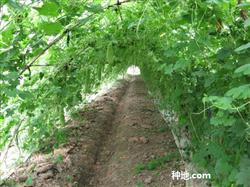 How do you cultivate off-season bitter melon? Please advise.
Bitter melon is a short-day plant. It is not strict about day length, likes light and does not tolerate shade, likes warmth and tolerates heat, does not tolerate cold, and likes moisture but does not tolerate waterlogging. The temperature required during the growth and development period is 15-30°C; the suitable temperature for seed germination is 30-35°C; the suitable temperature for flowering and fruiting is 20-25°C. It needs 85% relative air humidity and relative soil humidity, but water should not accumulate, as waterlogging easily damages the roots and causes leaves to yellow and wilt, affecting fruiting in mild cases and causing the plant to become diseased and die in severe cases.
For off-season winter production in our city, cultivation is mainly carried out using plastic film mulching, plus plastic greenhouses and artificial supplementary pollination, so that the crop can reach the market by March of the following year. The following points should be observed in cultivation:
1. Soil selection and land preparation
Choose a wind-sheltered, sunny, well-drained, fertile and loose medium sandy soil with high organic matter content. After the late rice is harvested, when the soil moisture is suitable, plow once each field one week before planting, then apply 50 kg of compound fertilizer per mu, and prepare beds at a specification of 1.4 m including the trench.
2. Variety selection
Choose white-skinned, long conical varieties with obviously protruding surface warts, thick and strong stems, and low branching nodes; these have higher yields and better quality.
3. Sowing time
For off-season planting, the temperature required for bitter melon growth must be taken into account, especially what favors flowering and fruiting. Therefore, whether by direct seeding or seedling raising in nutrient pots, sowing should preferably be done in late the first ten days of December and early the middle ten days of December.
4. Greenhouse construction
The greenhouse should be about 7 m wide, with a height of 2.5 m at the center from the ground; the two sides should be 1.6 m high. Five beds can be arranged inside the greenhouse, each bed 1.4 m wide including the trench. A north-south orientation is better, and each greenhouse should be 50-60 m long. For greenhouse materials, factory-made all-steel greenhouse frames or bamboo arched frames can be used.
5. Seed germination
Before germination, sun the seeds for 3-4 hours, then soak them in 50°C warm water for 10 minutes, then soak them in a 1/1000 carbendazim solution for 10 hours. After washing, wrap them in a damp cloth for germination. For the first two days, control the temperature at 30°C; on the third day, control it at about 20-25°C. When the sprouts grow to 2 mm, they can be sown. During germination, those that sprout first should be sown first.
6. Reasonable planting
Generally, plant spacing is 0.5-0.6 m, row spacing is 0.5 m, 2 rows per bed, and planting depth is 2 cm. Plant about 1250 plants per mu. For direct seeding, plant when the seeds show white; for nutrient pot seedlings, transplant when the seedlings are about 20-25 days old. When planting, cover with white plastic film 0.9 m wide to suppress weed growth, raise soil temperature and keep the soil moist.
7. Field management
1. Seedling stage: Before emergence, relatively high temperature and humidity must be maintained, preferably 25-30°C; when the cotyledons emerge above the ground, the film must be broken in time. From emergence to the growth of the first true leaf, the temperature should preferably be kept at 18-20°C to help the seedlings grow sturdy. For nutrient pot seedlings, hardening should be carried out one week before transplanting.
2. Fertilizer and water management: According to farmers' years of fertilization experience, for a general yield of 2500 kg of bitter melon per mu, the fertilizer application rate per mu is 18 kg of pure nitrogen, with an N:P:K ratio of 1.0:1.3:2.1. Base fertilizer is applied when preparing the beds and accounts for 60%, while topdressing accounts for 40% and is applied in two to three split applications after fruit set. Because waterlogging easily damages the roots of bitter melon and can kill the plants in severe cases, the field should always be kept alternately dry and moist.
3. Temperature and humidity regulation: Throughout the entire growth period, the greenhouse should be covered with white plastic film. When the temperature inside the greenhouse reaches 27-30°C, the film on the frame should be rolled up for ventilation. When the temperature inside the greenhouse reaches above 33°C, ventilation should be increased. On cloudy and rainy days, when air humidity is high, ventilation should also be provided appropriately.
4. Vine pruning and artificial pollination: When the main vine grows its fifth true leaf, trellising and training can begin, and because side vines have strong branching ability, they should be removed, leaving only two side vines per plant. Because bitter melon is monoecious with unisexual flowers, artificial supplementary pollination is necessary. The timing of pollination should be grasped: carry it out on the day the male and female flowers open. According to observation, when the temperature reaches 15-30°C, the peak flowering period each day is from 6:00 to 10:30 in the morning, and flowers basically do not open in the afternoon. Generally, one male flower can pollinate 4 female flowers. When bitter melon is flowering, pick the male flower and transfer its pollen to the stigma of the female flower. After fertilization, the ovary of the female flower gradually swells, and fruit can be harvested in about 20 days.
5. Disease and pest control: Diseases in off-season bitter melon cultivation are more serious than in normal-season cultivation, mainly downy mildew, powdery mildew, damping-off, anthracnose, fusarium wilt, etc.; pests include cutworms, aphids, fruit borers, etc. Disease occurrence is greatly related to plant growth and development and air temperature, so inspect frequently and prevent and treat early. Pest control should be carried out at the right time.
Click to get more bitter melon cultivation techniques
Click to get more vegetable cultivation techniques