How to cultivate bitter melon scientifically? Detailed explanation of key planting techniques
How to cultivate bitter melon scientifically? Please advise. I. Variety characteristics: "Xinxing Bitter Melon" is a first-generation hybrid, medium-maturity variety from Guangzhou Aipunong Agricultural Technology Company. The plant is vining, with strong growth vigor and strong branching ability; both the main vine and side vines can bear fruit. Leaves are palmate and green. The first female flower on the main vine begins to set at nodes 15-20...
How to cultivate bitter melon scientifically? Please advise.
I. Variety characteristics
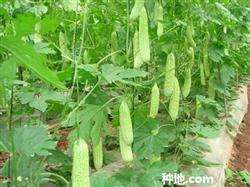
"Xinxing Bitter Melon" is a first-generation hybrid, medium-maturity variety from Guangzhou Aipunong Agricultural Technology Company. The plant is vining, with strong growth vigor and strong branching ability; both the main vine and side vines can bear fruit. Leaves are palmate and green. The first female flower on the main vine begins to set at nodes 15-20. The market fruit is cylindrical, about 30-33 cm long, 6.5-8 cm in transverse diameter, with 1.4 cm thick flesh and a single fruit weight of about 600 g. The rind is bright green and glossy, with thick, straight warty ridges. The flesh is dense, sweet and crisp with a slight bitterness, and of good quality. It is tolerant to storage and transport. This variety also has good heat tolerance, can withstand high temperatures of 35-38oC, is resistant to powdery mildew, has an attractive appearance, and has excellent market quality.
II. Germination method
Bitter melon seeds have a hard seed coat, thick seed shell, and a waxy surface, so they germinate slowly and with difficulty. Therefore, before soaking, it is best to sun the seeds for 1-3 hours, then lightly rub the waxy seed coat with moist fine sand. After soaking in warm water at about 30 degrees for 8-12 hours, remove and wash them, wipe off the surface moisture, wrap them in clean gauze, and keep them warm at 25-30 degrees to germinate. Wash once each morning and evening with warm water, dry them, wrap them again, and continue germination until most seeds have sprouted white. Then mix the seeds with an 800-fold solution of 50% carbendazim wettable powder, and sow the seeds into the soil of seedling bags (cups) with the root tip pointing down, preferably with the seed 0.5 cm below the ground.
III. Cultivation techniques
1. For the medium-maturity variety "Xinxing Bitter Melon," the open-field sowing period is from February to August. Prepare nutrient soil two months before sowing. Nutrient soil formula: about 70% garden soil, 25% decomposed manure and miscellaneous compost, 5% decomposed human and livestock manure and urine, and 0.2% multi-element compound fertilizer. After mixing the materials in proportion, mix them thoroughly, pile them centrally, and cover them tightly with agricultural film to prevent nutrient loss and ensure full fermentation. Two weeks before use, mix in an appropriate amount of Dixianling and Lesiben solution for disinfection and sterilization, cover again with agricultural film, and compost for another week. Then fill into nutrient pots 5 cm in diameter and 8 cm high. Each 667 sq m requires about 30 kg of nutrient soil. Soak and germinate the seeds before sowing.
2. Land selection, land preparation, and basal fertilizer application: ① Land selection: choose a plot with deep soil; sandy loam is best, clay is second, and sandy soil is worst. ② Land preparation and basal fertilizer application: Xinxing bitter melon has vigorous growth, a long harvest period, and a high fertilizer requirement. Sufficient organic fertilizer as basal fertilizer is the key to achieving high yield. Each 667 sq m requires 1500-200 kg of decomposed human and livestock manure, plus 30-35 kg of oil cake and 100 kg of calcium magnesium phosphate fertilizer; or apply 150 kg of vegetable-specific organic-inorganic fertilizer with 20% N, P, and K, plus 10 kg of potassium sulfate and 100 kg of calcium magnesium phosphate fertilizer. Apply basal fertilizer together with land preparation when making beds. Make large, high beds 1-1.5 m wide and 25-50 cm high. For arched sheds and flat sheds, the row spacing is 3-5 m. Apply basal fertilizer 1-2 weeks before planting. When making beds, first determine the planting rows according to row spacing, open two shallow furrows on both sides 20 cm from the planting rows for the basal fertilizer, then build up the soil on both sides of the bed to form high beds, lay plastic film, and wait for planting.
3. Intertillage, weed control, and hilling: Starting from the seedling stage, bitter melon should be intertilled, weeded, and hilled in a timely manner to prevent soil compaction around the plant crowns. Generally, after planting and watering to help the seedlings recover, carry out the first intertillage when the surface soil is slightly dry and no longer sticky. If there are strong winds or the soil is too dry, water heavily once before intertillage. The second intertillage can be done 10-15 days after the first. In this intertillage, take care to protect new roots, so it should be shallow rather than deep. Each intertillage can be combined with applying some high-quality farmyard manure, such as cake fertilizer, various poultry feathers, decomposed chicken manure, pig manure, and so on. After trellising, when the vines extend more than 50 cm, the root system has basically spread throughout the rows, and generally it is no longer suitable to intertill. However, pay attention to timely removal of weeds to prevent wild grasses from growing densely, so as to improve field ventilation and light penetration and reduce pest and disease damage. During the first intertillage, if missing plants or weak, diseased seedlings are found, replant promptly to maintain a full stand.
4. Trellising and pruning: When bitter melon seedlings grow to about 20 cm, trellising and vine training are needed. There are two trellising methods: flat trellis and A-frame trellis. Flat trellises have good ventilation and airflow, bear more fruit, and give higher yields. Flat trellises are further divided into connected flat trellises and separate flat trellises. For connected flat trellises, generally a wooden stake is set every 3-4 m in the melon rows, and small bamboo, small wooden sticks, or nylon netting is used on top to connect the stakes of the whole field into one piece, with the trellis top about 2 m above the ground. Separate flat trellises generally use every two rows of melons as one shed, with a shed height of 1.5-2 m. Separate flat trellises give plants a larger light-receiving surface, good ventilation and airflow, and are convenient to manage, making them better than connected flat trellises. Whether connected flat trellises, separate flat trellises, or A-frame trellises, the trellis must be made as sturdy as possible to avoid collapse from wind, damage to melon seedlings, and reduced yield.
5. Bitter melon has very strong branching ability, and both the main vine and side vines can bear fruit. Under normal circumstances, pruning is not necessary. However, because winter-spring bitter melon has strong growth and more side vines, side vines below 50 cm from the ground and overly dense, old, or declining branches and leaves should be removed in time to facilitate ventilation and light penetration and improve light energy utilization. In the middle growth stage, if the vines grow excessively, promptly pinch out the growing tips and top the plants to inhibit growth and promote fruit setting. For vine training of bitter melon, before the seedlings reach the trellis, it should be done frequently, tying and guiding every 2-3 days. The method is generally to guide the main vine straight up along the bamboo and guide side vines horizontally to the left and right along the support. Vine training is best done on sunny afternoons to avoid breakage.
6. Topdressing and irrigation: Bitter melon has many fruiting cycles and a long harvest period, and consumes large amounts of water and fertilizer throughout its life. Therefore, strengthening fertilizer and water management is an important guarantee for achieving high yield. In addition to applying sufficient basal fertilizer, generally apply heavy topdressing at the vine extension, flowering, and fruiting stages, while topdressing at the seedling stage can be lighter. The first topdressing is about 7 days after planting, applying 10% decomposed human manure and urine or 0.5% compound fertilizer water. After that, apply once every 5-7 days, gradually increasing the concentration. By flowering and fruiting, the concentration of human manure and urine can be increased to about 30%. During the flowering and fruiting period, apply heavy fertilizer 2-3 times to extend the harvest period. Generally, at early flowering, apply 25-30 kg of cake fertilizer, 15-20 kg of compound fertilizer, and 10 kg of urea per mu, combined with hilling, as one topdressing. After the first harvest, continue with 20-25 kg of cake fertilizer and 20 kg of compound fertilizer as another topdressing. After that, for every 1-2 harvests, apply 30%-40% human manure and urine or 10-15 kg of compound fertilizer. Topdressing should also be adjusted flexibly according to weather and leaf color, increasing or decreasing as appropriate.
IV. Pest and disease control: Diseases mainly include downy mildew, fusarium wilt, and leaf spot. Downy mildew can be controlled by spraying with 1500-fold Wangke solution; fusarium wilt and leaf spot can be controlled by spraying with 42% Fululv suspension at 400-600-fold. Pests mainly include melon fruit fly, thrips, aphids, and stink bugs. Melon fruit fly can be controlled by spraying 3.5% Ruidan emulsifiable concentrate at 1000-1500-fold; aphids, thrips, and stink bugs can be controlled by spraying 20% Sumicidin at 600-800-fold. The more difficult bitter melon pests to control include melon fruit fly, melon aphid, and melon webworm.
1. Melon fruit fly: commonly known as the "needle bee." Adults lay eggs in melons and fruits, and larvae bore and feed inside the flesh, causing the melon to rot and even drop, seriously affecting melon quality and yield. At present, this is the peak period for the appearance of the "needle bee." Adopt an integrated management approach combining field sanitation, trapping and killing adults, chemical insecticide, and bagging to protect melons. For chemical insecticide, "Kung Fu" is recommended. A small packet (5 ml) of "Kung Fu" sold on the market can be diluted in exactly one backpack sprayer of water (15 liters). Spraying should be timed during the peak activity period of adults, before 10-11 a.m. or from 4-6 p.m., and is more effective during the adult mating and egg-laying period. One trapping method is to use yellow boards: coat yellow cardboard or plastic boards with petroleum jelly and place them in the vegetable garden, about 20 pieces per mu, which has a good trapping and killing effect on adults. Vigorously promote the new technique of bagging to protect melons, which can reduce damage from various pests and diseases and improve fruit quality and market value.
2. Melon aphid: Adults and nymphs of melon aphids mostly gather on the undersides of leaves, young stems, and tender shoots to pierce and suck sap. This pest damages shoots, causes leaves to curl, kills growing points, makes leaves wrinkle, turn yellow, and drop early, and can also cause sooty mold and spread viral diseases. For chemical control, 25% Actara water-dispersible granules are recommended for their high efficiency, broad spectrum, safety, and long residual period of up to 21 days. Use at 5000-10000 fold to effectively control melon aphids and also control thrips, American leafminer, and various other pests.
3. Melon webworm: Larvae chew leaves, causing holes or notches, and often bore into melons, affecting yield and quality. For chemical control, spray 50% Kulong at 1000-fold or 2.5% Kung Fu at 1500-fold, once every 7-10 days.
V. Harvesting: Harvest when the fruit's ridge-like protrusions are plump and the rind is glossy. The first batch of melons should be harvested promptly, generally about 30 days after planting, to benefit the growth of later melons and vines. After that, harvest once every 3-4 days, and continuous harvest can last 3-5 months.
The above cultivation information is for reference only. Farmers in various regions should choose suitable cultivation techniques according to local actual conditions.
Click to get more bitter melon cultivation techniques
Click to get more vegetable cultivation techniques