What should be noted when cultivating bitter melon?
What should be noted when cultivating bitter melon? Please advise. Bitter melon is a short-day plant that likes warmth, light, heat and moisture, and does not tolerate shade. It is not strict about day length, and longer light periods favor its good growth. It has high requirements for soil moisture and air humidity, but does not tolerate waterlogging; it has wide adaptability and can be cultivated in many soils in both northern and southern China...
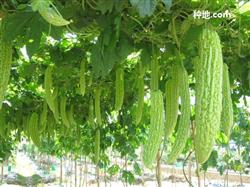
What should be noted when cultivating bitter melon? Please advise.
Bitter melon is a short-day plant that likes warmth, light, heat and moisture, and does not tolerate shade. It is not strict about day length, and longer light periods favor its good growth. It has high requirements for soil moisture and air humidity, but does not tolerate waterlogging; it has wide adaptability and can be cultivated in many soils in both northern and southern China. In recent years, vegetable growers in some areas have also grown it in polytunnels or greenhouses.
1. Choosing a good variety is key to a high yield. Big White Bitter Melon and Green Bitter Melon 915, bred by the Institute of Vegetables and Flowers of the Chinese Academy of Agricultural Sciences, are favored by vegetable growers for their many advantages such as good quality, high yield and strong disease resistance. Before sowing, first scald the seeds with hot water at 55°C and stir; when the temperature drops to 30°C, soak the seeds for 12 hours (if the seeds are gently cracked open along a seam, it helps the seeds absorb water, and the soaking time is 8 hours). Then wash the seeds, take them out, wrap them well in clean gauze, and place them in an incubator at about 30°C to sprout. Wash them once a day with warm water; they begin to sprout in about 4-5 days. In this way, the pathogens carried by the seeds can be killed and uniform sprouting can be ensured.
2. Sowing For open-field cultivation of bitter melon, seedlings are generally first raised in a solar greenhouse. The day before sowing, put the prepared nutrient soil (take garden soil that has never grown cucurbits, peat: vermiculite: decomposed human feces, dry = 1:1:1:0.5; add 1 kg of diammonium phosphate per cubic meter, sift and mix evenly, then pile it up, cover tightly with plastic sheeting, and it can be used after a few days; when using, mix it evenly once more) into 10 cm x 10 cm nutrient pots, or into a prepared seedling bed (use wooden strips to mark the bed into 10 cm x 10 cm squares, and make a 1 cm deep hole in the middle of each square with a wooden stick), and water thoroughly. The next day, spray the nutrient soil with water again, then scatter a thin layer of sifted fine soil and it is ready for sowing. Place the sprouted seeds in the small holes (note: the sprout should face downward against the soil), cover the seeds with a small mound of soil about 1.5 cm thick, and then scatter a layer of fine soil all over. Taking the Beijing area as an example, sowing is generally done in late March to early April, the seedling age is about 30-35 days, and they are planted in the open field after the last frost in early May. Raising strong seedlings is one of the elements of producing pollution-free vegetables.
3. Seedling stage management After sowing, keep the greenhouse sealed to raise the temperature; set up small hoop tunnels in the sowing bed, cover with film, raise the temperature and retain moisture, keeping the daytime temperature at 30-35°C and the nighttime temperature above 15°C. When 50% of the seedlings have emerged, promptly cover the film of the small hoop tunnels again. After the seedlings emerge completely, keep the indoor temperature at 20-25°C during the day and about 10°C at night. Water whenever the soil looks dry, following the principle of controlling temperature but not water, to keep the seedlings growing vigorously. After that, gradually lower the temperature in the tunnel, and open all the tunnel film a few days before planting out to harden the seedlings.
4. Planting out Because bitter melon is a warmth-loving, fertilizer-tolerant crop, sufficient base fertilizer is needed. Apply 5000 kg of high-quality organic fertilizer and 30 kg of diammonium phosphate per 667 sq m; after mixing evenly, first make flat beds at 1.5 m and water them; after a few days, when the soil is slightly dry and loose, make small raised beds with a bed surface width of 80-90 cm and a height of 10-15 cm, and lay plastic film 5-7 days before planting out. Two rows per bed, with a plant spacing of 60 cm, and plant out along a marked line. Do not dig the holes too deep; it is best if they can hold a little water after planting out. To prevent the soil temperature from dropping, the squat-water planting method is generally used; after the water in the holes seeps away, seal and firm the holes with soil to prevent air leakage. After planting out, set up the trellis promptly; because bitter melon grows very vigorously, sturdy A-shaped trellises should be set up. The spacing between trellises is 20 cm (30 cm for slightly thicker trellis material). Setting up the trellis promptly can also improve the field microclimate, which helps the seedlings recover quickly. Plant 1300-1600 plants per 667 sq m, using 250-300 g of seed.
5. Field management After the seedlings recover, water promptly with recovery water; because the temperature is still low at this time, the water should not be too much. After a few days, carry out deep intertillage promptly to preserve soil moisture, raise the soil temperature and promote plant growth and development. Because the plant branches strongly, select 2-3 thick vines from the lower part, tie them to the trellis, and remove all the rest. During this period, generally do not water; when the first melon has fully set and begins to swell, water and apply 10-15 kg of urea or 20-25 kg of ammonium bicarbonate per 667 sq m with the water. Because the plant then enters its vigorous growth period, water and fertilize according to weather changes, plant growth and soil conditions; this is what is meant by watering according to "the sky, the soil and the crop". It should be noted that because bitter melon has a relatively developed root system and strong growth vigor, do not water too frequently or too heavily, so as to avoid plants that only grow vines without setting fruit, diseases caused by poor ventilation and light transmission, or the trellis being pushed down, resulting in economic losses. About 40-50 days after planting out, harvesting of commercial melons begins. During the fruiting period, fertilizer and water requirements are relatively high.
6. Pest and disease control Because bitter melon has strong disease resistance and few diseases, leaf mold, powdery mildew and the like generally occur in the late growth stage. Generally, spray 50% thiophanate-methyl wettable powder at 1000 times or 10% triadimefon emulsifiable concentrate at 1500 times. Spray 20% omethoate at 1000 times to control aphids, and spray propargite at 1500-2000 times to control red spider mites and tea mites.
Click to get more bitter melon cultivation techniques
Click to get more vegetable cultivation techniques