Key Technical Points for Growing Water Spinach in Plastic Greenhouses
What should you pay attention to when growing water spinach? The scientific name of water spinach is Ipomoea aquatica, also known as bamboo-leaf vegetable, vine vegetable, and tong cai. It belongs to the Convolvulaceae family and is an annual or perennial trailing plant. Water spinach is eaten for its tender stems and leaves. It has a long harvest period and is a leafy vegetable that grows in summer, which can compensate for the market structure in Liaoning in summer where leafy vegetables are scarce and fruit vegetables are plentiful....
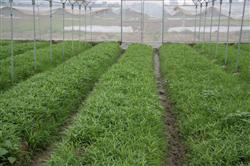 Growing water spinach in plastic greenhouses? When is the best time to plant?
Water spinach is widely cultivated throughout our province and is a major green leafy vegetable for bridging the gap in summer and autumn. It prefers high temperatures and humid environments, has strong heat tolerance, and is not tolerant of frost; when exposed to frost, the stems and leaves wither and die. The optimum growing temperature is 25-30°C, and growth stops below 10°C. Therefore, plastic greenhouses should be used for off-season cultivation in winter.
Variety Selection
Varieties suitable for cultivation in our province include Da Ji Huang, Da Gu Qing, Jian Ye, Si Weng, Da Ji Qing, and others.
Sowing Period
Greenhouse cultivation can basically achieve year-round production and year-round supply. In order to obtain higher economic benefits, sowing should be arranged from October to December, with harvest from December to March of the following year.
Land Preparation and Fertilization
Water spinach grows quickly and has strong branching ability, requiring more fertilizer and water. It is advisable to apply sufficient base fertilizer. Generally, 1500-2000 kg of decomposed organic fertilizer and 100 kg of plant ash are applied per mu, fully mixed with the soil, and raised into beds 20 cm high and 130-150 cm wide (including trenches).
Seed Soaking and Germination
The seed coat of water spinach is thick and hard. If sown directly, germination will be slow due to low temperatures. If there is prolonged low-temperature rainy weather, the seeds may rot. Therefore, germination should be promoted. The seeds can be soaked in warm water at about 30°C for 18-20 hours, then wrapped in gauze and placed in a germination box at 30°C for germination. When 50%-60% of the seeds have sprouted, they can be sown.
Sowing
Water spinach can be broadcast or drilled. The seeding rate is 1.5-2.0 kg per mu. After broadcasting, cover with fine soil about 1 cm thick. For drilling, draw a shallow trench 2-3 cm deep across the bed surface, with a trench spacing of 15 cm, then evenly scatter the seeds into the trench, cover with fine soil, then cover the bed surface with shade netting, and water. Once seedlings emerge, the shade netting can be removed.
Management Inside the Greenhouse
1. Temperature and Humidity Management
When growing water spinach in greenhouses in winter, the temperature is low, humidity is high, and prolonged low-temperature rainy weather lasts a long time, which is extremely unfavorable for the growth of heat-loving water spinach. Therefore, heat preservation and cold protection are the key to off-season cultivation. After sowing, the greenhouse should be sealed promptly to ensure the temperature inside is above 10°C, otherwise frost damage may occur. At the same time, when there is sufficient sunlight and the temperature is relatively high, ventilation should be strengthened to remove moisture, and try to avoid the temperature inside the greenhouse exceeding 35°C to prevent plant diseases, so as to maintain vigorous plant growth and increase yield. The relative humidity inside the greenhouse may reach 100% under high humidity and rainy days. At this time, the film at both ends or around the greenhouse must be opened promptly for ventilation.
2. Fertilizer and Water Management Water spinach is a crop harvested multiple times. Therefore, in addition to applying sufficient base fertilizer, multiple split applications of topdressing must be carried out to achieve high yield. During the seedling stage, 10%-15% diluted human urine and manure can be used for drenching, with a dosage of 1000-1500 kg per mu. When the seedlings have 3-4 true leaves, apply a mixture of 15-20 kg of compound fertilizer and 2-4 kg of urea. During the harvest period, apply 5-8 kg of compound fertilizer per mu after each harvest. Water spinach has a relatively large water requirement, so it should be watered frequently to keep the soil surface moist.
Pest and Disease Control
The main diseases are damping-off and stem rot during the seedling stage, caused by low temperatures and excessive relative humidity. Reducing humidity can alleviate the occurrence of diseases. Spray with 700 times diluted Ridomil or 800 times diluted Kameitong for control. The main pests are mites and red spiders, which can be controlled by spraying with 1000 times diluted Kelmate or 1500 times diluted Kaisike.
Harvest
Generally, 35-45 days after sowing, when the water spinach plants have grown to 35 cm tall, they should be harvested promptly.
Click to get more water spinach growing techniques
Click to get more vegetable growing techniques