How to grow carrots for high yields? A detailed guide to cultivation methods
How can carrots be grown for high yields? Please advise. To grow carrots for high yields, pay attention to the following points: 1. Choose the variety. Choose red-skinned carrots with good root shape, excellent quality and strong growth vigor. Commonly used varieties include Xiashi Five-Inch, Yantai Three-Inch, Five-Inch Red Radish, Japanese Black Five-Inch Ginseng and excellent local varieties from various regions...
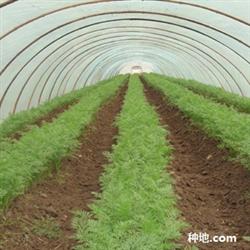
How can carrots be grown for high yields? Please advise.
To grow carrots for high yields, pay attention to the following points:
1. Choose the variety. Choose red-skinned carrots with good root shape, excellent quality and strong growth vigor. Commonly used varieties include Xiashi Five-Inch, Yantai Three-Inch, Five-Inch Red Radish, Japanese Black Five-Inch Ginseng and excellent local varieties from various regions.
2. Carefully select the plot. Choose sandy loam with deep soil, loose and airy texture, and good drainage and irrigation, to favor the formation of fleshy roots with good market quality. Suitable preceding crops for carrots are cucumber, tomato, onion, garlic and so on. In addition, wheat is also a suitable preceding crop. Carrots can also be intercropped with tall crops such as corn, using the tall crops for shade to lower the field temperature and favor fleshy root growth.
3. Prepare the soil and apply fertilizer. Carrot fleshy roots go deep into the soil, so the soil should be plowed more than 30 cm deep, and the soil should be sun-dried for 10-15 days along with deep plowing. Carrots have high yields and high fertilizer demands; along with deep plowing, apply 3000-5000 kg of decomposed organic fertilizer per mu, 7.5-10 kg of quick-acting nitrogen fertilizer, 50 kg of plant ash or 20 kg of potassium sulfate. The base fertilizer must be even to avoid forked roots and so on.
4. Level the soil and make beds. After deep plowing and sun-drying the soil, harrow the soil finely, level it and make beds. Carrots can be grown on flat beds or on high ridges, determined specifically according to light, rainfall and other conditions in each area. For high ridge cultivation, the ridge spacing is about 20 cm, the ridge width is 50-70 cm, and the height is 10-15 cm.
5. Sow carefully. Carrot seeds have a low germination rate and emerge with difficulty, so seeds should be treated before sowing. Use new seeds, dry them in the sun for 1-2 days, rub off the bristles, soak the seeds for 4-8 hours before sowing, drain off the water, mix with fine sand or plant ash and then sow. The sowing depth is 1-1.5 cm. Carrots generally emerge 6-10 days after sowing. When sowing, mix in a small amount (2%) of pak choi seeds; the pak choi seedlings can provide shade and heat protection for the carrots.
6. Thin seedlings and weed. Thin seedlings when there are 1-2 true leaves, with a plant spacing of 3 cm. Then shallowly hoe between the rows to weed and preserve soil moisture, promoting seedling growth. Thin seedlings a second time when there are 3-4 true leaves, and set the final spacing when there are 4-5 leaves; for small and medium varieties the plant spacing is 10 cm, and for large varieties the plant spacing is 13-15 cm, and carry out intertillage and weeding. Carrot seedlings are prone to weed infestation in the seedling stage; besides intertillage and weeding, herbicides can also be used.
7. Water reasonably. During the germination stage, carrots should be watered 2-3 times; moist, soft soil favors seed germination and ensures a full stand of seedlings. In the seedling stage, promote first and then control. After the "root-setting stage", when the thickest part of the fleshy root's head is about the thickness of a finger, this is the period of fastest fleshy root growth, and it should be watered in time to keep the soil moist. If the water supply is insufficient, the xylem of the fleshy root is prone to suberization and lateral roots increase; if there is drought early on and then excessive watering later, the fleshy roots will crack and product quality will be reduced. Stop watering half a month before harvest.
8. Prevent diseases and control pests. The main diseases of carrots are black spot, black rot and soft rot, which can be controlled with 75% chlorothalonil 600-fold solution or 70% mancozeb 600-fold solution, sprayed once every 7-10 days for 2-3 consecutive sprays; the main pest is the carrot root nematode, which can be controlled by spraying 40% dimethoate 1000-fold solution.
Click to get more radish growing techniques
Click to get more vegetable growing techniques