How to prevent and control forked radish roots? Practical methods to share
How should forked radish roots be prevented and controlled? Please advise. The forked radish root phenomenon is when the fleshy root is short and small and branches out. The causes of forked radish roots include the following aspects: 1. Poor soil properties: if the soil is too hard or there are stones in the soil, the fleshy root cannot grow downward and becomes bent and branched, forming forked roots. 2. Organic fertilizer...
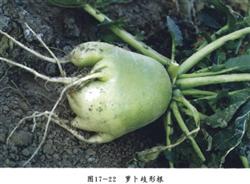
How should forked radish roots be prevented and controlled? Please advise
The forked radish root phenomenon is when the fleshy root is short and small and branches out. The causes of forked radish roots include the following aspects:
1. Poor soil properties: if the soil is too hard or there are stones in the soil, the fleshy root cannot grow downward and becomes bent and branched, forming forked roots.
2. Organic fertilizer not thoroughly decomposed: when organic fertilizer is applied as a base fertilizer and is not fully decomposed, root burn occurs, the fleshy root cannot continue to elongate, and the lateral roots are stimulated to swell, forming forked roots.
3. Damage by soil pests: pests bite and injure the main root, the main root cannot continue to grow, and the lateral roots are promoted to swell.
4. Weak seed viability: sowing with old seeds more than two years old results in weak seed viability and poor germination, affecting the growth of the tip of the young root and causing forked roots.
To prevent forked roots from occurring, the following points should be done:
First, carry out intensive cultivation and careful farming, plow deeply and expose the soil to the sun, and level and finely break up the soil. Second, organic fertilizer must be fully decomposed. Third, before sowing, prevent and control underground pests. Fourth, use seeds newly collected in the current year, not old seeds.
Click to get more radish growing techniques
Click to get more vegetable growing techniques