The correct method for sowing and fertilizing cowpeas
How to prevent pests and diseases when growing cowpeas in a greenhouse? Here are the methods that can be used to control pests and diseases when growing cowpeas in a greenhouse: 1. Cowpea rust. Symptoms: It mainly damages the leaves, and in severe cases also damages the petioles and pods. In the early stage of the disease, small light yellow spots appear on the underside of the leaves, then turn rusty brown, bulge and form small pustule-like spots, and then expand...
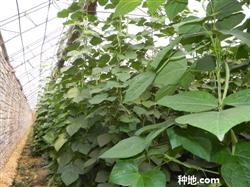 How should cowpeas be sown and fertilized? Please advise and explain.
Cowpea is one of the main vegetable crops in our province, grown in all areas, with an area of more than 700,000 mu. Cowpea is rich in protein and carotene, has high nutritional value, and tastes good, so it is deeply loved by people. The sowing and main fertilization techniques are introduced as follows.
I. Sowing period and specifications. The cowpea varieties currently cultivated in our province mostly belong to the long cowpea and medium-light type, which do not have strict requirements for light and can be planted in spring, summer and autumn.
Its varieties are mainly divided into two types: first, green cowpea, mainly including Qiweiqing, Suijiao 101, Xinqing, Zhejiangqing, Huanghuaqing, Jinqing, Teqing and other varieties; second, white cowpea, mainly including Jieshang No. 2, Luhuabai, Erhubai, Bayuedou, Xiabao, Taixuan, Chunyan, Jindi, Jinsui and other varieties --- Fengchan No. 2 is an oil-green cowpea type between green cowpea and white cowpea, and is very popular with consumers.
Cowpea likes warmth and tolerates heat, but does not tolerate frost, and the entire growth period must be carried out under frost-free conditions. The suitable temperature for plant growth is 20-30°C, and the suitable temperature for flowering and pod setting is 20-25°C. When the temperature is below 10°C, the absorption capacity of the root system is obviously affected; below 5°C the plants show damage, and near 0°C the stems and vines die. The minimum temperature for spring sowing in the field in our province should be above 5°C, and the autumn sowing period should be calculated based on the minimum temperature being above 5C in the late pod-setting stage of cowpea.
Cowpea requires high-ridge planting, with a ridge width of 1.6 cm (including the ditch), a ridge height of 25 cm, 2 rows per ridge, and a plant spacing of 22-25 cm.
II. Reasonable fertilization. Cowpea does not have strict requirements for the planting site, but to obtain high yield, it is necessary to choose slightly acidic sandy loam, and a field that has not grown legume crops for more than two years. If the soil acidity is too high, lime should be used to neutralize it.
If fertilizer and water are insufficient at the seedling stage, the seedling stems grow weakly, and high yield cannot be achieved; however, too much fertilizer and water in the early stage will cause the plants to grow too vigorously, with only vines growing, few flower clusters, few pods, lowered flowering nodes, and side buds sprouting to form middle and lower stem vines. Therefore, in the early growth stage of cowpea, fertilization should be mainly organic fertilizer; during the flowering and pod-setting stage, increase fertilizer and water; and from the full harvest stage, start heavy topdressing. Generally, apply 2000 kg of base fertilizer per mu, 5 kg of urea at the seedling stage, and topdress twice during the flowering and pod-setting stage, each time with 20 kg of compound fertilizer, which can be applied in furrows or holes. During the flowering and pod-setting stage, carry out foliar topdressing (the concentration must not exceed 0.4%) and spray flower-and-pod-preserving agents. Generally, spray once a week a mixture of high-efficiency foliar fertilizer and flower-and-pod-preserving agents such as Gaolida, Tianfengsu and brassinolide.
Click to get more cowpea growing techniques
Click to get more vegetable growing techniques