Detailed Explanation of Grafted Eggplant Cultivation Methods and Technical Points
How should grafted eggplant be planted? Please introduce the technique of eggplant grafting, which uses wild eggplant species plants as rootstock for grafting eggplant seedlings onto the rootstock. After grafting, eggplants can grow to 1.5-2m, with a harvest period of more than 200 d. In the cold northern regions, people can eat locally produced...
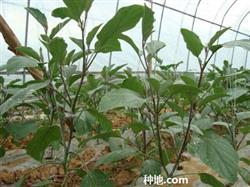
How should grafted eggplant be planted? Please introduce
Eggplant grafting technology is a technique that uses wild eggplant species plants as rootstock for grafting eggplant seedlings onto the rootstock.
After grafting, eggplants can grow to 1.5-2m, with a harvest period of more than 200 d. In the cold northern regions, locally produced eggplants can be eaten in winter, reducing production costs. In terms of yield, an average of more than 30 eggplants can be harvested per plant, with a maximum of 40-50 eggplants per plant, and a yield of up to 100-150t/hm'. In terms of market quality, grafted eggplants are large, generally weighing around 400g per fruit, with large ones reaching 800-1000g, and they have good quality with increased sweetness. Eggplant grafting technology can increase economic benefits by about 60,000 yuan/hm'. In the cold northern regions, it also solves the problem of same-year production and same-year supply. The most important aspect is that grafted eggplants have strong disease resistance. Common eggplant Verticillium wilt, damping-off disease, bacterial wilt, root-knot nematode disease and other soil-borne diseases are very serious and cause great harm, generally causing 50%-70% plant death, and even total crop failure in severe cases. Grafted eggplants fundamentally prevent the occurrence of these soil-borne diseases, reducing the amount of pesticide used, thereby reducing pesticide residues in eggplants.
The following are the main cultivation techniques for grafted eggplant.
I. Rootstock and Scion for Eggplant Grafting: Currently, the rootstocks used in production are mainly CRP, Torubamu (Solanum torvum), etc. CRP is a wild Solanaceae species plant with many thorns on stems and leaves. This rootstock is highly resistant to Verticillium wilt and is widely used in production. Torubamu (Solanum torvum) originates from Japan and is highly resistant or immune to 4 soil-borne diseases, making it an ideal rootstock material. The affinity between various scions and rootstocks does not differ much. Scions should be selected according to local eating habits, market quality, and cultivation season.
II. Seedling Raising and Seedling Separation
Conventional seedling raising: Torubamu (Solanum torvum) is more difficult to germinate than CRP, but there are three methods for breaking dormancy. Direct sowing: Soak seeds for 48h, disinfect the seedbed and water thoroughly, sow evenly, cover with soil and then cover with film. When the day-night temperature difference reaches 10°C, seedlings emerge in 10-15d. Alternating temperature treatment in an incubator: Soak seeds for 48h, put them in a cloth bag, place in a constant-temperature incubator, adjust the temperature to 30°C for 8h and 20°C for 16h, repeat the alternating temperature treatment, rinse the seeds with clean water once a day, and buds will appear in 8d. Hormone treatment: Soak with 100-200mg gibberellin per kg of water for 24h, then soak in clean water for 24h, place in an incubator or on a heated kang for alternating temperature treatment to break dormancy, and buds generally appear in 4-5d.
Sowing: Spray the seedbed thoroughly with 50% carbendazim 500x solution, then evenly sow the dormancy-broken rootstock seeds on the seedbed, cover with plastic film, and remove the film after the rootstock seedlings emerge completely in 3-5d. Scion seedling raising: The scion seedbed, seeds, etc. must all be disinfected to prevent the scion from carrying pathogens, which would defeat the purpose of grafting. Seeds can be soaked in 55°C warm water for 15min, soaked in 50% carbendazim for 2h, or soaked in 0.3% potassium permanganate for 30min; for soil disinfection, use 100g of sulfonated humic acid plus 5g of Lvxiang No.1, add 30kg of water to make a solution, and water the seedbed thoroughly.
Seedling separation: When the true leaves of rootstock and scion grow to 2-3 leaves, separate the seedlings. The rootstock is transplanted into nutritional pots, and the scion is transplanted into the seedbed. Scion seedling raising should be 20d later than rootstock seedling raising.
III. Grafting Technique When the rootstock grows to 6-8 true leaves and the scion grows to 5-7 true leaves, with a stem diameter of 3-5mm, the best grafting period is when lignification occurs.
Cleft grafting method: Cut off the upper part of the rootstock flat at a height of 4cm, keeping 2-3 true leaves. It should not be too high or too low, otherwise survival will be affected. The scion seedling is cut at the semi-lignified point, that is, where the black-purple and green parts of the stem clearly alternate, remove the lower end, keep 2-3 true leaves, cut into a wedge shape matching the size of the rootstock cut, insert into the rootstock cut, align and fix with a grafting clip. Approach grafting method: Cut the rootstock and scion at a 30° angle and fit them together. The rest is the same as the cleft grafting method.
IV. Management of Grafted Seedlings The survival rate of grafted eggplant seedlings is closely related to post-grafting management. Water the grafted seedlings thoroughly, but do not use sprinkling to prevent wound infection. Cover with a small arch shed. The suitable temperature for wound healing of grafted seedlings is: 25-26°C during the day, 20-22°C at night, humidity above 95%. Shade completely for the first 3-4d after grafting, then shade at noon and allow light in the morning and evening. As the wound heals, gradually remove the covering, and after survival, switch to conventional management.
Crop rotation arrangement: For open-field cultivation, in northern regions, raise seedlings in mid-to-late January or early-to-mid February, and transplant in mid-to-late April or early-to-mid May. For protected cultivation, autumn-winter crop: raise seedlings in June, transplant in mid-September. Winter-spring crop: raise seedlings in early September, transplant in mid-December.
Transplanting: Apply more than 75t/hm' of farmyard manure, and cultivate on ridges. For open-field cultivation, ridge width is 50cm and height is 15cm. For protected cultivation, ridge width is 60cm and ridge height is 20cm. Open-field density is about 45,000 plants/hm', and protected cultivation density is 30,000-38,000 plants/hm'.
V. Field Management Cultivation and hilling: After transplanting and watering the seedlings, cultivate in time. About 10d after transplanting, water a second time, deep hoe 5-7cm, carry out hilling, but do not bury the graft union, then carry out seedling hardening. Pruning and trellising: During the growing period, promptly remove side branches and adopt double-stem pruning. When grafted eggplants grow to 1m tall, they need trellising. Rope hanging can also be used. Insert two rows of 80cm-high trellises on both sides of the bed to control the eggplants from leaning to both sides, so as to avoid poor ventilation, poor light, and inconvenient operations. Hormone treatment: Use tomato yield promoter No. 2 plant growth regulator at 50-70x solution to dip flower buds, preventing flower and fruit drop. Temperature management: Greenhouse eggplants undergo four-stage variable temperature management. On sunny days, 25-30°C in the morning, 20-28°C in the afternoon, 13-20°C in the first half of the night, and 10-13°C in the second half of the night. On cloudy days, no more than 20°C during the day, 10-13°C at night. When the weather is cold, supplement heat appropriately. Water and fertilizer management: After seedling hardening, when open-field eggplants grow to the size of a walnut and protected cultivation eggplants grow to the size of an egg, end seedling hardening. Because grafted eggplants grow vigorously, water and fertilizer must keep up. For overwintering cultivation in protected facilities, the amount of watering should not be too much, but the soil should not be left lacking water and dry. The relative air humidity should not exceed 80%. After spring arrives, gradually increase the amount of watering. Pest and disease control: Due to the high temperature and high humidity in protected facilities, eggplants are prone to brown spot disease. If it occurs, use 65% mancozeb 500x solution or 75% chlorothalonil 600x solution, spraying once every 7-10d, for 3-4 consecutive times. Eggplant Phytophthora blight can be treated with 40% phosethyl-Al 300-400x solution, 65% mancozeb 500x solution, or 75% chlorothalonil 500-800x solution. Spray once every 7-10d, for 2-3 consecutive sprays. Red spider mites can be sprayed with dicofol 1000x solution or 40% dimethoate emulsion 800x solution. Aphids and whiteflies can be treated with 30% insect-mite fumigant, divided into 60-75 piles, ignited with a smoldering flame for fumigation.
Click to get more eggplant cultivation techniques
Click to get more vegetable cultivation techniques