What are the correct methods for scientifically fertilizing eggplant?
How do you scientifically fertilize eggplant? Please introduce the following methods as a guide for fertilizing eggplant: Fertilizing at the seedling stage To cultivate seedlings with thick stems, short internodes and well-developed roots, the seedbed soil must be fertile. On 11.3 sq m of seedbed soil, apply 200 kg of decomposed organic fertilizer and 0.5 kg each of superphosphate and potassium sulfate, and mix...
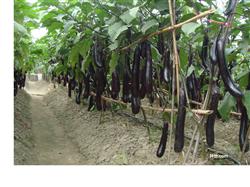
How do you scientifically fertilize eggplant? Please introduce as a guide
Eggplant fertilization can refer to the following methods:
Fertilizing at the seedling stage To cultivate seedlings with thick stems, short internodes and well-developed roots, the seedbed soil must be fertile. On 11.3 sq m of seedbed soil, apply 200 kg of decomposed organic fertilizer and 0.5 kg each of superphosphate and potassium sulfate, and mix the seedbed soil and fertilizer evenly. You can also apply 100-150 kg of mixed human manure and 1 kg of NPK compound fertilizer.
Base fertilizer Eggplant likes fertilizer and tolerates it, so a heavy base fertilizer must be applied. Before plowing, broadcast 5000-7000 kg of organic fertilizer per mu, together with 15 kg of superphosphate and 10 kg of potassium sulfate, then plow and prepare the land into beds; you can also broadcast 3000-5000 kg of organic fertilizer per mu before plowing, then make ridges or beds, and at transplanting apply 1500 kg of organic fertilizer and 25-50 kg of nitrogen, phosphorus and potassium compound fertilizer in the holes or furrows. You can also apply the trace elements zinc sulfate 1 kg and manganese sulfate 2 kg together.
Topdressing Throughout the life of eggplant, the fruiting period is very long and requires multiple topdressings. The nutrient uptake of eggplant increases rapidly after the full flowering stage, so the key period for topdressing is from when the first fruit sets until the fourth-layer fruit is harvested. During this period, topdress once every 10-odd days, each time applying 15-20 kg of ammonium sulfate per mu, or 7.5-10 kg of urea, or 10-15 kg of ammonium nitrate, and of course it is best to apply 500-600 kg of decomposed human manure and urine. The fertilization method can be furrow application, hole application or flushing with water.
Note that in the late growth stage of eggplant it is best not to apply phosphate fertilizer, so as to avoid promoting seed development in the fruit and hardening the seed coat, which reduces the market value of the eggplant fruit. During fertilization, you must grasp the principle of giving priority to organic fertilizer and supplementing with chemical fertilizer; the amount of chemical fertilizer must not be too large, especially nitrogen fertilizer, so as to avoid nutrients accumulating in large amounts at the flower buds, causing malformed fruits with carpel formation during cell division, and even leading to the accumulation of nitrate in eggplant tissues.
Click to get more eggplant growing techniques
Click to get more vegetable growing techniques