When Is the Best Time to Ripen Late-Developing Cotton
In recent years, we have trial-planted several colored cottons, including light brown, dark brown and green. The results show that to achieve good color effects and high yields, the following five key points must be grasped in cultivation. 1. Early sowing and early transplanting at the right time. According to the growth habits of colored cotton, it should be sown appropriately early; in our area, late March is suitable...
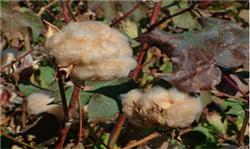 First, note that most cotton this year is late-developing, at least about half a month later than usual. Second, consider what crop follows the cotton. If wheat or rapeseed is to be planted, it can be intercropped in the wide rows of cotton without using ripening technology, letting the cotton mature naturally. If a higher-value crop such as vegetables must be planted immediately after the cotton, ripening technology can be used. The main chemical used is the plant growth regulator ethephon.
The chemical name of ethephon is 2-chloroethylphosphonic acid, commonly known as a ripening agent. The principle behind applying ethephon to cotton is that after the cotton plant absorbs ethephon, it releases ethylene, which increases the ethylene content in the bolls and enhances peroxidase activity, destroying auxin synthesis and thus turning the bolls toward maturity. After ethephon is applied to the cotton plant, the photosynthetic products in the cotton leaves can be transported out within a short period, promoting boll weight gain. Generally, cotton treated with ethephon can open its bolls 7-10 days earlier.
To better bring ethephon's effects into play, the following points should be mastered in application technique: First, the spraying time. In a normal year, it is from late September to early October; this year, because the cotton is late-developing, it can be postponed to early to mid-October. Second, on the day of spraying, the maximum temperature must reach above 20°C; if it stays above 20°C for several consecutive days, the effect is even better. Third, about 80% of the bolls on the cotton plant must have a boll period of more than 40 days; bolls less than 40 days old will suffer in boll weight, lint percentage and quality. Fourth, the dosage per mu of cotton field is 100-200 ml of 40% ethephon, diluted in 50 kg of clean water; reduce it appropriately when the temperature is high and increase it appropriately when the temperature is low.