Detailed Explanation of Welsh Onion Management Techniques During High-Temperature Periods
What methods can make Welsh onions high-yielding? Please advise, thank you. To achieve high yields of Welsh onions, you can refer to the following methods: 1. Hilling. Hilling is an important management measure in Welsh onion cultivation. Proper hilling helps prevent lodging, soften the pseudostem, and improve the yield and quality of the blanched stalks. Welsh onions should be hilled multiple times, roughly in 4 rounds...
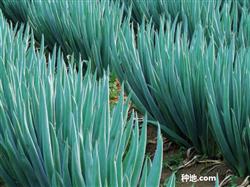 How should Welsh onions be managed during high-temperature periods? Please explain
Welsh onions prefer a cool climate and are not heat-tolerant. In recent days, continuous high temperatures have inhibited the normal growth of Welsh onions, and heavy rain has further aggravated the occurrence and spread of Welsh onion diseases. Therefore, doing a good job of managing Welsh onions during the high-temperature period and creating a suitable growing environment for the blanched stalks is the key to improving the yield and quality of Welsh onions.
First, promote root growth and strengthen the plants. After Welsh onions are transplanted, they immediately enter the high-temperature season. At this time, the focus of management is promoting root growth. Watering should be controlled, drainage after rain should be carried out to prevent waterlogging, and cultivation should be strengthened to promote root growth. When Welsh onions enter the peak leaf-growing stage, their demand for water and fertilizer increases. The first topdressing should be applied together with irrigation, with 20 jin of urea per mu, combined with potassium nitrate or monopotassium phosphate. When Welsh onions enter the blanched stalk formation stage, this is the key period for strengthening the plants and increasing yield. At this time, two topdressings can be applied separately, mainly with quick-acting nitrogen fertilizer, combined with phosphorus and potassium fertilizer. The soil should be kept moist regularly to meet the growth needs of the blanched stalks.
Second, hilling. Generally speaking, the deeper the hilling, the longer the blanched stalks will be, so hilling is an important measure for softening the leaf sheaths, preventing lodging, and improving the yield and quality of Welsh onions. Cultivation and hilling must be carried out during the blanched stalk formation stage; otherwise, the plants are prone to rot. When hilling, the soil should be gradually increased according to the age of the seedlings. After the Beginning of Autumn, hill once every half month, for a total of 3-4 hillings. This is the key measure for increasing the length of the blanched stalks. Hilling should be done in the afternoon when the leaves are soft. Avoid hilling in the morning when the leaves are tender and brittle, as this can damage the leaves. The hilling height should be such that the heart leaves are not buried, so as not to affect the growth of Welsh onions. (Generally, when the seedlings are small, the hilling should be shallower. As the number of hillings increases, the hilling becomes thicker and thicker. Each hilling should be done up to the exit point of the uppermost leaf. The final hilling should generally be controlled at 15cm above the ground. The heart leaves must never be buried, so as not to affect the growth of Welsh onions and cause rot of the roots and plants. In specific operations, the first hilling should be half the depth of the trench, the second hilling should be level with the ground, the third hilling should form a low ridge, and the fourth hilling should form a high ridge).
In addition, prevent and control diseases and pests. The high-temperature stage is a period of weakened growth for Welsh onions, and they are susceptible to diseases, mainly Welsh onion downy mildew and blight. Disease control is not difficult to explain: the main thing is to focus on early prevention. It is recommended to spray 1500x Amistar, 1000x mandipropamid, or 500x chlorothalonil once during the transplanting and seedling recovery stage, then mix in streptomycin, which can effectively prevent fungal and bacterial diseases. After the Beginning of Autumn, if Welsh onions develop diseases, 1500x Amistar Top, 600x Jinlei, or 700x Previcur can be used for control. The main pests of Welsh onions are onion thrips and leafminers. First eliminate field weeds, then spray with 3000x Actara or 1000x Caixi.
Click to get more Welsh onion cultivation techniques
Click to get more vegetable cultivation techniques