How to Grow Scallions for High Yield? A Detailed Guide to Cultivation Techniques
How can scallions be grown for high yield? Please advise. Although the growth process of scallions is relatively simple, the technical requirements for field management are quite high. To achieve the goal of high yield and good quality, the management measures are summarized as follows: 1. Early land preparation, early transplanting, and rational close planting are key. Years of production experience have shown that transplanting scallions early...
How can scallions be grown for high yield? Please advise.
Although the growth process of scallions is relatively simple, the technical requirements for field management are quite high. To achieve the goal of high yield and good quality, the management measures are summarized as follows:
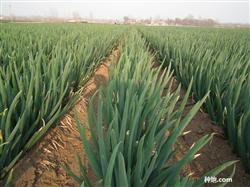
1. Early land preparation, early transplanting, and rational close planting are key. Years of production experience have shown that transplanting scallions early significantly increases yield compared with transplanting them late. In addition, rational close planting is an important measure for high-quality, high-yield scallions, generally with a plant spacing of 4-6 cm and a row spacing of 25-30 cm.
2. Cultivation and weeding must be done in a timely manner to prevent root rot caused by waterlogging. Cultivation can promote the growth of the scallion root system and increase soil aeration. When scallions are planted, it is a season with high temperatures and abundant rain, and there are many kinds of weeds, so weeding must be done in a timely manner to prevent weeds from taking over; July and August are the period of concentrated rainfall in northern regions, which easily causes scallion root suffocation, yellow leaves, and dry tips. While taking measures against waterlogging and standing water, the surface should also be broken early to dissipate soil moisture, so that the scallion root system can carry out various normal activities.
3. Base fertilizer and topdressing must be applied appropriately, which guarantees high yield and good quality. Based on the growth characteristics of scallions and local fertilization practices, generally apply 30 kg of "Tianji" nitrophosphate potassium per mu as base fertilizer, apply 30 kg of "Tianji" nitrophosphate fertilizer per mu as topdressing in July and August, and apply another 25 kg of "Tianji" nitrophosphate per mu as topdressing in late September.
Click to get more scallion cultivation techniques
Click to get more vegetable cultivation techniques