Detailed Explanation of Cotton Connected Seedling Raising and Seedling Separation Transplanting Technology
Connected seedling raising and seedling separation transplanting is a completely new cotton cultivation model. Each cultivation technique step in this model is closely linked and inseparable. During implementation, every step must be closely connected to bring its systemic effects into play. The four major steps are described below: (1) Lightweight seedling raising. In connected seedling raising and seedling separation transplanting,...
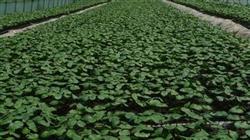
Connected seedling raising and seedling separation transplanting is a completely new cotton cultivation model. Each cultivation technique step in this model is closely linked and inseparable. During implementation, every step must be closely connected to bring its systemic effects into play. The four major steps are described below:
(1) Lightweight seedling raising
Connected seedling raising and seedling separation transplanting represents a thorough reform of traditional seedling raising methods. The main points are: no pots are made; the sowing date is postponed to around April 20; in the seedling pool, a specially made seeder is used for quick connected single-seed sowing to raise cotyledon seedlings; a specially made seedling separator is used, which does not damage roots or leaves, allows quick seedling separation, produces neat pot bodies with sufficient soil, and is easy to transport. Compared with ordinary nutrient pot seedling raising, it saves about 100 yuan per mu of field, saves 2.5 labor days, saves 375 grams of seed, and saves 90% of seedbed space. The specific operation procedure is:
1. Soil preparation: prepare at least 200 kg of decomposed fertile nutrient soil per mu of seedlings.
2. Bed making: dig a seedling pool 7 cm deep, 133.3 cm wide, and 165 cm long.
3. Soil filling: fill in nutrient soil until the pool is full, then smooth and compact it.
4. Sowing: start sowing around April 20 and finish before May 1, sowing according to plan. On the evening one day before sowing, soak the pool with enough water. The next morning, use a positioner to set holes and sow single seeds, cover with 1.5 cm of moist soil and press lightly, then arch 1 to 2 layers of plastic film over it.
5. Seedling hardening: after the seedlings emerge uniformly, gradually open vents for 4 days, then uncover by day and cover by night for 4 days to harden the seedlings.
6. Seedling separation: use a seedling separator to separate the cotyledon seedlings one by one, then transport them to the field for transplanting.
(2) Proper sparse planting
During transplanting, the main tasks are the following two aspects: first, reduce the density to about 1,500 plants per mu, develop sufficient vegetative growth, and raise the boll-setting rate per plant to above 40% with more than 50 bolls per plant; second, open the holes well, carry enough water, carry good pesticides, and achieve survival immediately after transplanting, growth immediately after survival, early squaring, early flowering, more bolls, and large bolls. The main methods are:
1. Select a good previous crop and cover film well. Generally, 200 cm is used as one combination, with a wheat strip of 80 cm and a reserved empty strip of 120 cm. In the middle row of the empty strip, apply 15 kg of urea per mu, 25 kg of superphosphate per mu, and 15 kg of potassium chloride fertilizer per mu as base fertilizer by opening a furrow, then smooth it, spray enough herbicide, and cover with 100 cm wide plastic film.
2. Set the holes well and open the planting holes well. On both sides of the plastic film, use a specially made hole opener every 40 to 60 cm to open holes, meeting the standards of complete mouth and wall, consistent depth, and smooth hole bottom. Plant 1,500 healthy seedlings with intact pot bodies per mu.
3. Water well, carry good pesticides, and cover with soil well. After cotton seedlings are planted into the holes, use a teapot to water each plant with soybean (cake) slurry water (made by decomposing 1 to 1.25 kg of soybean (cake) powder per mu) at 15 to 20 kg, and then use a sprayer (with the nozzle removed) to pour 15 kg of a 1,500-fold mixed solution of Chlorpyrifos 101 and Chlorpyrifos No. 3 into each hole to prevent insects and diseases. After the water and pesticide are absorbed, use moist soil to mound the base of the cotton plants into a steamed bun shape.
(3) Simplified management
For cotton from connected seedling raising and seedling separation transplanting, cultivation management should be as simple as possible. Under the conditions of rational use of herbicides and full ground coverage (seedling stage: fully cover the empty rows and empty strips with plastic film; middle stage: do not remove the film from cotton rows, and late-kill high wheat (bean, oilseed rape) stubble; late stage: develop sufficient seedlings), achieve no weeding, no intertillage, no pruning, no bud removal, no removal of old leaves, and no digging of strip furrows (only open side furrows and waist furrows). In management, only do 3 things:
1. Mound the roots well. Around July 15, when cotton has already opened two flowers, after rain evenly divide 25 kg of urea per plant and place it on flat ground 15 to 20 cm outside the cotton roots, use a small tractor for suspended tillage to kill stubble, open furrows and turn soil to cover the fertilizer, then use a shovel to slightly tidy and mound around the cotton root zone, so that every row forms a cotton ridge and every row has a furrow. In this way, stubble is killed, fertilizer is applied, furrows are opened, and roots are mounded, achieving multiple benefits at once.
2. Top the plants well. For cotton from connected seedling raising and seedling separation transplanting, row spacing is wide, plant spacing is large, density is sparse, and the whole field must reach a certain leaf area index. On the premise of developing sufficient seedlings, it is necessary to skillfully retain vegetative branches and produce more elongated fruiting branches. The methods are: 1) Do not remove vegetative branches; transform them in advance. Remove the top of vegetative branches at 6 leaves, so that they neither restrict main stem growth nor cause shading later, forcing them to grow fruiting branches early and set more summer bolls; 2) Appropriately top the central bud earlier (around Great Heat). Take advantage of the vigorous growth period of cotton plants to remove the top, suppress apical growth dominance, allow nutrients to circulate, elongate fruiting branches (especially the upper four positions), and develop the cotton plant into a cylindrical shape, so that it sets more early bolls and large bolls.
3. Control insects less. Connected seedling raising and seedling separation transplanting gives a good root system and stable growth, and all use transgenic insect-resistant hybrid cotton seed, so resolutely do not carry out excessive insect control. The main methods are: early control, surrounding control, and rapid control of mirids; inspection and selective control of red spiders; no control, less control, and concentrated control of cotton bollworms. Generally, do not control the second generation, and control the third and fourth generations only 1 to 2 times; under special circumstances, carry out concentrated control 2 to 3 times. At the same time, according to specific conditions, promptly carry out control of Fusarium and Verticillium wilt and, in the late stage, control of beet armyworm and tobacco cutworm, which have strong pesticide resistance.
(4) Combining promotion and control
For connected seedling raising and seedling separation transplanting, the central idea of cotton management throughout the growth period is: mainly promote, supplement with control, combine promotion and control, and manage scientifically and coordinately, so as to promote the cotton to develop large plants, extend more fruiting branches, produce more fruiting nodes, form more squares, open more flowers, set more bolls, bear more bolls, open bolls early, and harvest good cotton. The methods are:
1. Increase input. In fertilizer application, use more than 25 kg of pure nitrogen, 6 kg of pure phosphorus, and 8 kg of pure potassium per mu. When conditions permit, also apply some organic fertilizer. Generally, apply sufficient base fertilizer before transplanting, heavily apply flowering and boll fertilizer at the flowering and boll stage, and supplement with top-covering fertilizer at the topping stage, using fertilizer 3 times in total, with a distribution ratio of 4:5:1. In the late cotton stage, spray trace element fertilizers and hormones such as boron, zinc, potassium dihydrogen phosphate, and 920 on the leaves to promote more bolls and large bolls.
2. Spray regulators in appropriate amounts. At the cotton bud stage, when cotton plants show a tendency to excessive vegetative growth, spray 1 to 2 vials of mepiquat chloride per mu to promote more squares and more flowers, achieving the goal of suppressing excessive growth and stabilizing growth. After cotton topping, when the upper four positions of the cotton plant have elongated, use 2 to 3 vials of mepiquat chloride to control excessive horizontal elongation of fruiting branches, achieving the goal of dense nodes, more bolls, and steady growth.
3. Use ethephon in a timely manner. Cotton from connected seedling raising and seedling separation transplanting has strong growth vigor and good late-stage potential, and the upper, middle, and lower bolls mature uniformly. In order to harvest early cotton and good cotton and promote uniform concentrated boll opening, after October 15, spray 250 grams of ethephon per mu plant by plant to finish harvesting by the end of October.