How to prevent and control cucumber diseases? Sharing practical prevention and control methods
How do you lower the vines when growing cucumbers in a greenhouse? Please provide guidance on lowering greenhouse cucumber vines at the right time to reduce plant height, allow the leaves to be distributed evenly, maintain a reasonable position for light exposure, strengthen cucumber growth vigor; this is one of the important companion measures for achieving high-yield, efficient, and high-quality greenhouse cucumber cultivation. First, remove diseased leaves, old leaves...
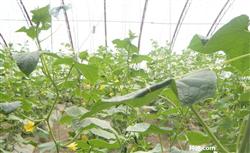 How to prevent and control cucumber diseases? Please advise.
You can refer to the following 4 points for preventing and controlling cucumber diseases:
First, determine whether the cucumber is diseased. First, you can judge from abnormal external performance of the plant, and second, you can judge from the disease symptoms on the outside of the plant or on the fruit what disease it is. Finally, look at whether the disease that has occurred is a physiological disease or an infectious disease. Generally, physiological diseases are characterized by a large affected area and relatively consistent onset time, but they are not contagious. Infectious diseases are characterized by individual plants becoming diseased, with onset times occurring one after another.
For physiological diseases, you can reduce them by changing the unfavorable environment for plant growth into a favorable one, and also by enhancing the plant's resistance to the unfavorable environment. When spraying, mixing in 800 times Fengshou No. 1 can enhance plant resistance and help it withstand unfavorable growing conditions.
For the prevention and control of infectious diseases, the first step is to eliminate seed-borne pathogens. For seeds carrying pathogens, hot-water seed soaking or chemical seed dressing can be used to sterilize and disinfect. Common methods are:
1. Warm water seed soaking: place the seeds in 55°C warm water and soak for 25 minutes, then cool them with cold water, dry them, and sow.
2. Chemical soaking: (1) Soak the seeds in 100 times 40% formalin solution for 30 minutes, then wash them clean with water after soaking, dry them, and sow; (2) Place the seeds in a 2-3% bleaching powder solution and soak for 30-60 minutes, then wash them clean with water after soaking; (3) Soak the seeds in 800 times thiophanate-methyl solution for 4 hours.
3. Chemical seed dressing: use 50% thiram wettable powder and dress the seeds at 0.4% of the seed weight.
Next, choose disease-resistant varieties, just as some tomato varieties now have high resistance to leaf mold, resistance to leaf curl, resistance to bacterial wilt, and so on. Then, promote vigorous plant growth. Only when the plants grow vigorously can disease resistance be enhanced. At the same time, creating an environment favorable for plant growth is also necessary.
Second, what are the causes of disease onset? When talking about the causes of disease onset, we must first start with the cucumber growing environment. Cucumber pathogens in greenhouses generally overwinter in seeds, soil, and manure, becoming the infection source for the next year. The occurrence of most cucumber diseases requires a relative humidity above 85%, so one major reason cucumber diseases occur severely is excessive humidity.
Third, how to carry out prevention and control. To prevent and control diseases, the first step is to create an environment suitable for cucumber growth but unfavorable for pathogen growth, that is, control greenhouse temperature and reduce humidity. When using chemicals to prevent disease after onset, the chemicals used for downy mildew and Phytophthora blight are basically the same. Commonly used chemicals include mancozeb, Previcur, and metalaxyl mancozeb. Commonly used fungicides for gray mold include dimethachlon, Scala, and iprodione. Commonly used chemicals for bacterial angular leaf spot include streptomycin, Xijun Nuo, and DT.
Fourth, precautions during prevention and control. (1) Distinguish whether the fungicide is protective or systemic. Protective agents should be applied early, and spraying should be thorough and careful; applying chemicals after disease onset is not very effective. Systemic chemicals can be used after disease onset, and applying them in the early stage of disease onset gives the best effect. (2) Prevention first, combining prevention and control; spraying should be based on the principle of "prevention." (3) Use mixed chemicals and alternate chemicals to improve control effectiveness and prevent resistance. (4) Improve spraying quality; the undersides of leaves should be sprayed evenly and carefully, grasp the main contradiction, and spray key areas according to the characteristics of disease occurrence.
Click to get more cucumber cultivation techniques
Click to get more vegetable cultivation techniques