How to prevent cucumber downy mildew? Master these control methods
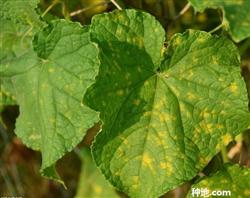
How to prevent cucumber downy mildew? Please explain that cucumber downy mildew is one of the most common and most serious diseases occurring on cucumber. It can occur throughout the entire growth period of cucumber and mainly damages the leaves. After the leaves are affected, water-soaked light green spots first appear and gradually turn yellow-green and yellow. It occurs in all parts of our city and causes great...
How to prevent cucumber downy mildew? Please explain
Cucumber downy mildew is one of the most common and most serious diseases occurring on cucumber. It can occur throughout the entire growth period of cucumber and mainly damages the leaves. After the leaves are affected, water-soaked light green spots first appear and gradually turn yellow-green and yellow. It occurs in all parts of our city and causes great threats and losses to cucumber production, so preventive measures against cucumber downy mildew should be well implemented.
1. Select disease-resistant varieties. According to several years of cultivation practice, the Jinyan series cucumbers and Jinchun No. 4 cucumber have a certain resistance to downy mildew. Self-saved cucumber varieties and some local varieties, such as Dongyang white-skinned cucumber, are highly susceptible to downy mildew. For some farmers, downy mildew had already caused serious damage and led to total crop failure just as the cucumbers began to set fruit. Therefore, special attention should be paid when selecting seeds.
2. Strengthen cultivation management and achieve vigorous cultivation. Cucumbers should be planted in sandy loam plots with relatively high terrain and good drainage. Fertilization should combine nitrogen fertilizer, phosphate fertilizer, and potassium fertilizer to improve the disease resistance of the plants. For protected cultivation such as greenhouses and plastic tunnels, greenhouse temperature and humidity inside the greenhouse should be well controlled. In the field, ditches should not accumulate water; after rain, loosen the soil promptly when it clears up, properly earth up the soil, and cover the bed surface with straw, wheat straw, and the like. Pruning and leaf removal should be carried out in time; in the later growth stage, 0.3% urea or 0.2% potassium dihydrogen phosphate can be used for foliar topdressing.
3. Chemical control. When central diseased plants are found in the field, 40% fosetyl-aluminum at 300 times, or 25% metalaxyl at 600 times, 64% oxadixyl-mancozeb at 500 times, 70% mancozeb at 500 times, etc. can be selected and sprayed with water, at an interval of 7-10 days; the number of applications should be determined according to disease severity and weather conditions. Protected cultivation such as plastic tunnels can also use smoke fumigation. For example, use 200-250 grams of 45% chlorothalonil smoke agent per mu, place it in 4-5 spots after closing the tunnel in the evening, ignite it with a smoldering fire to produce smoke and fumigate overnight, then ventilate the next day, once every 7-8 days; all can effectively control the disease.
Click to get more cucumber cultivation techniques
Click to get more vegetable cultivation techniques