What are the precautions for topdressing garlic?
What should be noted when topdressing garlic? Please give guidance. Garlic is a fertilizer-tolerant crop; on the basis of applying sufficient base fertilizer, topdressing is still needed in spring. In high-yield fields, the total amount of topdressing should be controlled at 25 jin of pure nitrogen and 10 jin of potassium. Fertilization should grasp that the vigorous nutrient growth period (early to mid-April) is the period of maximum nitrogen efficiency, and the garlic bulb expansion period (Grain Rain...
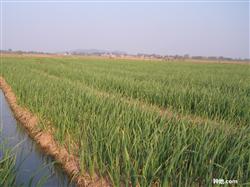
What should be noted when topdressing garlic? Please give guidance
Garlic is a fertilizer-tolerant crop; on the basis of applying sufficient base fertilizer, topdressing is still needed in spring. In high-yield fields, the total amount of topdressing should be controlled at 25 jin of pure nitrogen and 10 jin of potassium. Fertilization should grasp that the vigorous nutrient growth period (early to mid-April) is the period of maximum nitrogen efficiency, and the garlic bulb expansion period (Grain Rain to Start of Summer) is the period of maximum potassium efficiency. During the leaf formation stage, the nutrients required are mainly nitrogen, and the earlier the nitrogen deficiency occurs, the greater the yield reduction. During the garlic bulb expansion period, potassium deficiency occurring in the early stage has little effect, while occurrence in the later stage has a great effect. The garlic scape elongation stage is the period of maximum absorption of nitrogen, phosphorus, and potassium nutrients.
Garlic is a sulfur-loving crop. Allicin is mainly a disulfide-based compound. Most of the protein in garlic contains sulfur, and sulfur plays an important role in improving garlic quality. At the same time, studies show that only when the fertilizer N/S ratio is close to the optimal value can the nitrogen and sulfur absorbed by the plant be used most effectively. The N/S ratio in garlic is roughly 12/1. The utilization rate of sulfur in calcareous soils in the north is 2-3%, and it is easily fixed as calcium sulfate, while the nitrogen utilization rate is 30-35%. The optimal N/S is 4/5. Sulfur cannot be reused within the garlic plant, so sulfur must be supplemented in the middle growth stage to maximize the fertilizer effect. According to garlic's demand for nitrogen and sulfur, choose 40% nitrogen-sulfur fertilizer (N>=17.5%, S>=22.5%). Its fertilizer effect combines long-acting and quick-acting effects, and the fulvic acid it contains plays an important role in promoting garlic root growth, improving disease resistance and fertilizer utilization, and can achieve the purpose of combining root promotion and root nourishment, avoiding premature senescence, and increasing yield.
Supplementary application of green-returning fertilizer: after garlic turns green, 15-20 kg of 40% nitrogen-sulfur fertilizer can be broadcast per mu during rain or snow.
Heavy application of seedling-promoting fertilizer: in early April, apply 20-30 kg of 40% nitrogen-sulfur fertilizer per mu to meet the demand for nitrogen and sulfur during the vigorous growth of garlic.
Apply bulb-expanding fertilizer well: when the garlic scape emerges, apply 15-20 kg of high-nitrogen and high-potassium fertilizer with irrigation water to accelerate garlic bulb expansion.
Click to get more garlic cultivation techniques
Click to get more vegetable cultivation techniques