How to fertilize tomatoes after planting for good results
How should tomatoes be fertilized after planting? Please advise on the key technical points of fertilization management in tomato cultivation. As an important vegetable in daily life, the tomato is not only tasty and delicious but also rich in nutrients. However, due to current shortcomings in cultivation management, tomatoes develop various diseases and disorders during the growing period....
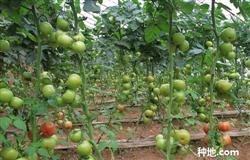
How should tomatoes be fertilized after planting? Please advise
Key technical points of fertilization management in tomato cultivation
As an important vegetable in daily life, the tomato is not only tasty and delicious but also rich in nutrients. However, due to current shortcomings in cultivation management, tomatoes develop various diseases and disorders during the growing period.
How to fertilize greenhouse cucumbers and tomatoes reasonably
Fertilize cucumbers and tomatoes according to their different growth stages. During the seedling stage of cucumbers and tomatoes, normal nutrient uptake must be ensured, so the fertilizer amount should be small and the concentration low; during the full fruit stage, the fertilizer amount should be larger and the concentration somewhat higher as well. Some farmers apply 200 kg of diammonium phosphate at one time, hoping to achieve high yields by using diammonium alone, which is not scientific.
Site selection, land preparation and base fertilizer application for tomato cultivation
For tomato cultivation, it is best to choose soil that is deep, loose and fertile, with strong water- and fertilizer-holding capacity and rich in organic matter. Tomatoes are averse to wet conditions and afraid of drought, so choose a field with relatively high terrain, good ventilation and sunlight, no water accumulation, and convenient drainage and irrigation.
High-yield and high-efficiency fertilization method for tomatoes
In open-field tomato cultivation, uncoordinated fertilization timing or a shortage of phosphorus and potassium often leads to weakened tomato plants, deformed fruits and other disorders, resulting in poor outcomes such as low yield, poor quality and reduced cultivation benefits.
Reasonable fertilization and irrigation for tomatoes
Reasonable fertilization and irrigation. Tomatoes have well-developed root systems and vigorous growth, and are fertilizer-tolerant, semi-drought-tolerant and not waterlogging-tolerant crops. Fertilizer should preferably be mainly organic fertilizer. Generally, apply more than 1000 kg of farmyard manure such as pig and cattle manure, 1 kg of borax, 50 kg of peanut bran and 50-60 kg of compound fertilizer per mu.
Fertilizer requirements of tomatoes
Tomatoes absorb different amounts of nutrients at different growth stages, and the absorption increases with the growth and development of the plant. During the seedling stage, nitrogen uptake is dominant, and as the stem thickens and elongates, the demand for phosphorus and potassium increases. In the early fruiting stage, nitrogen accounts for 50% of the three main nutrient elements (nitrogen, phosphorus and potassium). Potassium accounts for only 32%.
Click to get more tomato cultivation techniques
Click to get more vegetable cultivation techniques