What are the methods for preventing and controlling pests and diseases in tomato seeds
How to prevent and control pests and diseases in tomato seeds? Please explain. The general disease symptoms of tomato seeds are as follows: (1) Tomato fruit blistering disease, a physiological disease, also called rib rot or strip rot or band rot, mainly harms the fruit. Below is an introduction for everyone. There are commonly two types. One is the browning type: cut open the diseased fruit, ...
How to prevent and control pests and diseases in tomato seeds? Please explain
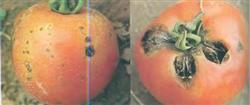
The general disease symptoms of tomato seeds are as follows: (1) Tomato fruit blistering disease, a physiological disease, also called rib rot or strip rot or band rot, mainly harms the fruit. Below is an introduction for everyone. There are commonly two types. One is the browning type: cut open the diseased fruit and you can find that the vascular bundles in the peel show tea-brown strip-shaped necrosis, the fruit core becomes hard, or the flesh turns brown, losing its commercial value. One is the whitening type: it mainly occurs during the period when green mature fruit turns red. The diseased part has a waxy luster. Cutting open the diseased fruit shows that the flesh is "pithy", and the vascular bundle tissue of the flesh is dark brown. In mild cases, part of the vascular bundles turn brown and necrotic, and the browned part does not turn red; the flesh hardens, quality is poor, and it tastes bland and flavorless. In severely affected fruit, all vascular bundles of the flesh are dark brown, some fruit form cavities, and the surface is unevenly red and green. What this vegetable grower described belongs to the whitening type.
The general disease symptoms of tomato seeds are as follows: (2) Tomato rib rot, also a physiological disease. The degree of damage depends on the variety (large-fruited red tomato Wanda is not easily infected), sunshine hours, light intensity, and the ratio of nitrogen, phosphorus, and potassium in the soil. The general control methods are as follows:
(1) Physical control. High-temperature soil disinfection: carry out during the high-temperature period of the three summer months. After pulling up the vines in spring protected cultivation, first clean the field, remove diseased remains, diseased leaves, and diseased roots from the field and bury them deeply or burn them; apply 50-100 kg of lime and 1000 kg of chopped rice straw (or wheat straw) per mu, evenly spread on the soil surface; deep plow the soil 66 cm, make super-high ridges 33 cm, irrigate so that the furrows are always full of water; cover with plastic film and keep the greenhouse closed for 7-10 days. This can control Fusarium wilt, Phytophthora blight, root-knot nematodes, and so on.
(2) Biological control. Disease prevention: for powdery mildew, anthracnose, and black spot, when a few individual lesions first appear, spray 2% agricultural antibiotic 120 or agricultural antibiotic B0-10 aqueous solution at 200 times dilution, once every 6-7 days, for 4-5 consecutive sprays. It can also simultaneously control gray mold and downy mildew. For bacterial diseases, such as angular leaf spot at the early stage, spray agricultural antibiotic 751 aqueous solution at 100 times dilution, once every 5-6 days, for 2-3 consecutive sprays. Pest control: when aphids occur, you can use kanamycin at 200 times dilution plus 0.01 neutral laundry detergent, or use 0.65% shanzhiside 200 mL plus 60-80 kg of water for spraying. For tea yellow mite, spray 20% compound liuyangmycin at 800-1000 times dilution, once every 6-7 days, for 2-3 consecutive sprays.
(3) Chemical control. For protected cultivation areas where disease has already occurred, choose pesticides with high efficacy and low residue for appropriate control. For downy mildew, use 7% dimethirimol dust or 80% Daconil M-45 wettable powder or 72% wettable powder; for gray mold, use 5% meimeiling dust or 50% meimeiwei wettable powder or 50% wanmeiling No. 2 at 1000 times dilution; for angular leaf spot, use 5% antibacterial dust or xijunling; for scab, use anti-black-mold dust or 40% Fuxing emulsifiable concentrate; for anthracnose, use 8% ketanling dust or 80% anthracnose thiram wettable powder; for aphids and whiteflies, use anti-aphid anti-whitefly dust or 10% imidacloprid wettable powder for control.
Click to get more tomato cultivation techniques
Click to get more vegetable cultivation techniques