What are the main technical points for fertilizing peanuts?
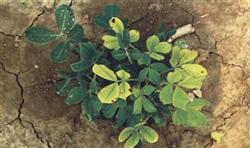
What are the symptoms when peanuts lack molybdenum? How can it be prevented and controlled? (1) Characteristics of the deficiency: When peanuts lack molybdenum, the plants are short and small, and the leaves are small and thin, appearing pale yellow-green, the same as the typical symptoms of nitrogen deficiency. If the above symptoms appear when nitrogen nutrition is sufficient, the possibility of molybdenum deficiency should be considered. (2) Control measures: ammonium molybdate...
 The principles to follow in fertilizing peanuts are: emphasize base fertilizer, apply appropriate amounts of topdressing, mainly use organic fertilizer, supplement with chemical fertilizer, and combine organic and inorganic. The amount of base fertilizer generally accounts for about 80% of the total fertilization amount. For medium-fertility plots: generally apply about 2000 kg of high-quality farmyard manure, 40-60 kg of cake fertilizer, 3-4 kg of nitrogen (N), 5-7 kg of phosphorus (P2O5), and 7-8 kg of potassium (K2O) per mu. When applying, use organic fertilizer as the base, cover the surface with fine fertilizer, and mix the fertilizer and soil evenly.
Topdressing for peanuts should mainly use quick-acting nitrogen and phosphorus fertilizers. Topdressing at the seedling stage should mainly be nitrogen fertilizer, because at this time the nitrogen in the seeds has been exhausted, and the nitrogen-fixing ability of rhizobia has not yet been brought into play, which is exactly the critical period of nitrogen nutrition for peanuts. Combined with intertillage, 3-4 kg of urea can be topdressed per mu. At the pegging stage, topdressing should be applied heavily once, mainly with phosphorus fertilizer, together with a certain amount of nitrogen and potassium fertilizer. Per mu, 2-3 kg of urea, 8-12 kg of calcium superphosphate, and 3-5 kg of potassium fertilizer can be topdressed. In addition, peanuts are very sensitive to molybdenum. Spraying a 0.1%-0.2% ammonium molybdate solution at the seedling stage and full flowering stage can promote nitrogen fixation by root nodules, with a significant yield-increasing effect.