What are the control methods for peanut violet root rot?
How does peanut leaf spot occur? Both peanut black spot and brown spot are diseases caused by fungi. The sexual stage of the peanut black spot pathogen is Berkeley's Mycosphaerella; the stroma is hemispherical, brown to black, embedded beneath the host epidermis, with conidiophores densely clustered on the stroma; conidia are borne terminally, the conidia are olive...
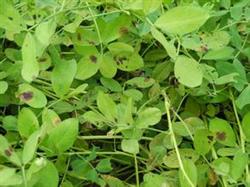 How is peanut violet root rot controlled?
(1) Damage symptoms: The base of the peanut stem or the roots are covered with a layer of purple-brown mycelium, like a fungal mat. The peanut stems and roots entwined by the mycelium turn brown, rot and die, the aboveground part of the peanut grows poorly, the leaves gradually turn yellow and die, and eventually the whole plant dies. Pods infected early turn brown and rot, producing no kernels. Diseased pods are covered with a layer of purple-brown mycelium, and pods infected later have kernels that turn black-brown and rot. This disease is called peanut violet root rot.
(2) Pathogen and disease pattern: Peanut violet root rot is a fungal disease caused by Helicobasidium mompa. The mycelium is purple-brown, and later forms purple-red hemispherical sclerotia within the mycelial layer; the interior of the sclerotia is white, and on the dark brown fruiting body a single layer of basidia is arranged; the basidia are colorless, with 4 cells, each cell producing a small sterigma, the sterigmata are colorless, conical, bearing basidiospores at the tip. The basidiospores are colorless, single-celled, oval, rounded at the tip and slightly pointed at the base. The pathogen's mycelium and sclerotia overwinter in the soil. When the pathogen encounters peanut roots, stem bases and pods, it can invade, and the mycelium spreads over the surface of the diseased parts. The disease can spread when diseased parts contact healthy parts, through field farming operations, and through surface runoff, and peanuts are susceptible when their growth is weak.
(3) Control measures: ① Practice crop rotation. Rotation with grass-family crops is possible, and especially paddy-upland rotation gives good control. ② Strengthen cultivation management, apply more organic fertilizer, drain and irrigate in time, promote vigorous growth of peanuts, improve disease resistance and reduce damage; promptly pull out diseased plants in the early stage. ③ Treat diseased soil. Applying lime or calcium cyanamide to the soil has a certain disease-preventing effect.