Taiwan Cuihong Tomato Cultivation Methods and Key Technical Points
How to cultivate Taiwan Cuihong tomatoes? Please refer to the following methods for cultivating Taiwan Cuihong tomatoes: I. Sowing and Seedling Raising 1. Sowing period: For the winter-spring crop in Qujiang greenhouses, sowing from mid-September to early October is suitable, with harvesting beginning in early February of the following year and ending in early June, with a harvest period of nearly 4 months. 2. Sowing...
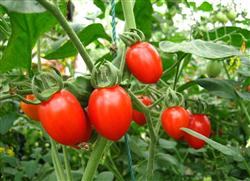
How to cultivate Taiwan Cuihong tomatoes? Please advise
Taiwan Cuihong tomato cultivation can refer to the following methods:
I. Sowing and Seedling Raising
1. Sowing period: For the winter-spring crop in Qujiang greenhouses, sowing from mid-September to early October is suitable, with harvesting beginning in early February of the following year and ending in early June, with a harvest period of nearly 4 months.
2. Sowing: Seed disinfection should be carried out before sowing to prevent seed-borne bacteria. Wrap the seeds in gauze and soak in 55°C warm water for 10 minutes, or soak in a 10% trisodium phosphate solution for 20 minutes, then remove and rinse clean with water, then soak in 30°C warm water for 20 minutes, remove and air-dry. Use nutrient cups for seedling raising. Take 7 parts garden soil or pond mud dried in the sun, 2 parts decomposed livestock manure, and 3 parts burnt soil, mix evenly, and add 0.1-0.2% phosphate fertilizer. Before sowing, moisten the nutrient soil first, sow 1 seed per cup, cover thinly with soil after sowing, then cover with rice straw. Spray water daily to ensure the seeds have enough moisture to germinate. Remove the rice straw promptly after seedlings emerge to prevent leggy growth. When the germination rate reaches above 80%, use 10 grams of seed per mu.
3. Seedling stage management: During the seedling stage, temperatures are relatively high. When raising seedlings in a greenhouse, the daytime temperature is high, so open both ends of the greenhouse for ventilation or uncover the greenhouse film to ventilate and cool down. At night, seal it completely to ensure temperature. The seedbed should be watered once in the morning and once in the evening, but fertilizer and water should be appropriately controlled to avoid leggy growth of seedlings. If seedling growth is poor, apply 0.2% urea or other fertilizer once. To prevent and control pests and diseases, spray with Score plus Actara 2-3 times during the seedling stage.
II. Land Preparation and Bed Making
For greenhouse tomato cultivation, the previous crop should not have been solanaceous crops, peanuts, or mulberry trees, to avoid continuous cropping. Deep plow and break up the soil 20 days before planting, apply 50 kg of lime per mu to neutralize soil acidity and disinfect the soil; 10 days before transplanting, apply 3000-5000 kg of decomposed livestock manure, 30 kg of superphosphate, and 50 kg of compound fertilizer per mu as base fertilizer. After raking level and mixing evenly, make beds 1.7 m wide including furrows.
III. Transplanting
Transplanting takes place in late October, with a seedling age of about 40 days and 5-6 leaves. When transplanting, it is best to choose a sunny morning or evening, using double rows with a plant spacing of 25 cm, planting about 2500 plants per mu. When transplanting, take the seedlings from the cups with soil and transplant them into pre-dug holes, cover with soil up to where the small leaves are attached, and water thoroughly with settling water while transplanting. Before transplanting, spray the seedbed once with Metalaxyl plus Actara to prevent seedlings from carrying diseases and aphids spreading viruses.
IV. Field Management in the Greenhouse
1. Temperature and humidity management. In the early stage after transplanting, temperatures are relatively high and light is good. During the day, attention should be paid to appropriate ventilation and cooling, and watering 1-2 times appropriately to maintain moisture. In the later growth stage, watering should be controlled to lower temperature and maintain temperature. Cuihong is relatively cold-resistant but not heat-tolerant. From transplanting until the first batch of fruits begins to swell, the management focus is on increasing the air temperature and soil temperature in the greenhouse. Do not ventilate for 5 days after transplanting, maintaining a daytime temperature of around 25°C and a nighttime temperature of around 10°C. After the seedling recovery period ends and new leaves begin to grow, appropriate ventilation can be used to lower the temperature and humidity in the greenhouse, maintaining around 25°C during the day and around 15°C at night. In the early flowering stage, keep it below 30°C during the day and above 15°C at night, with relative air humidity in the greenhouse controlled at around 65%. If the outside temperature rises, gradually increase ventilation. If the temperature is too low, add a small arched tunnel inside the greenhouse and cover the bed surface with rice straw to raise the temperature. During the peak flowering and fruiting stage, maintain around 25°C during the day and around 15°C at night, maintaining 55% air humidity.
2. Vine training and pruning. Because Cuihong tomato stems and branches are relatively slender, vine training must be carried out when the plant grows to about 25 cm tall. Generally, use the greenhouse frame and plastic string to hang and train the vines. Cuihong is a determinate growth type, pruned to double stems, with all other side branches removed. Pruning should be done on sunny days when there is no dew. When side branches grow to 7 cm, cut them off about 2-3 cm from the main stem. In the middle and late stages, old leaves and diseased leaves at the base can be removed.
3. Fertilizer and water management. 5 days after transplanting, apply 500 kg of manure water mixed with 7.5 kg of fermented peanut bran per mu. In the early flowering and fruiting stage, apply 1000 kg of manure water plus 10 kg of fermented peanut bran plus 10 kg of potassium fertilizer mixed evenly per mu. During the peak flowering and fruiting stage, apply 1500 kg of manure water plus 20 kg of fermented peanut bran plus 15 kg of potassium fertilizer mixed evenly per mu. During the harvest period, apply additional fertilizer appropriately, adding fertilizer once after each harvest, mainly organic fertilizer or foliar fertilizer spray. Humidity in the greenhouse is relatively high, so do not water unless there is drought, and do not water on cloudy or rainy days. Water demand is not high in the early growth stage. During the fruiting stage, maintain 80% relative soil humidity, and up to 90% during the peak fruiting stage. Watering should be done in the morning, and ventilation should be strengthened after watering.
4. Hilling and weeding. Generally hill up 2-3 times, combined with weeding and fertilizing. Weeds can be pressed under the hilled soil to reduce disease transmission.
5. Flower and fruit retention. During the flowering period, spray flowers with 2,4-D at a concentration of 15x10(to the negative 6th power)-20x10(to the negative 6th power).
6. Pest and disease control. For cutworms, use sugar-vinegar bait for trapping and killing. For late blight and gray mold, pay attention to integrated control techniques, ensure ventilation and moisture removal. When disease occurs, spray with Metalaxyl or Gray Mold Speed 600-800 times solution on sunny days.
V. Harvesting
For sale in local markets, harvest at the firm-ripe stage, when flavor is good and sweetness is high. If storing or transporting over long distances, harvest when the top of the fruit begins to turn slightly red (color-breaking stage).
Click to get more tomato cultivation techniques
Click to get more vegetable cultivation techniques