Methods and Tips for Growing Tomatoes on a Balcony
How to grow tomatoes on a balcony? Please give guidance. To grow tomatoes on a balcony, you can refer to the following methods: Soak the tomato seeds in warm water for 20 minutes, stirring constantly, then take them out and soak them in clean water for about 4-5 hours, with the water amount being more than 5 times that of the seeds. Next, wrap them in a wet cloth and keep them at 28-30°C for germination. Alternatively...
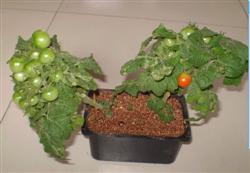
How to grow tomatoes on a balcony? Please give guidance
To grow tomatoes on a balcony, you can refer to the following methods:
Tomato seedsUseSoak in warm water for 20 minutes, stirring constantly, then take them out and soak them in clean water for about 4-5 hours, with the water amount being more than 5 times that of the seeds. Next, wrap them in a wet cloth and keep them at 28-30°C for germination. You can also mix them with 2-3 times their volume of fine sand, put them in an earthenware pot, cover with a wet cloth for germination, and turn them over top to bottom once a day. If the sand is not dry, there is no need to rinse it. Keeping at 25°C, they can sprout smoothly within 2-3 days.
For the nutrient soil for balcony sowing, you can use 6 parts of sieved garden soil and 4 parts of decomposed compost. The garden soil is best if it is soil from a previous crop of scallions or garlic. You can also mix in plant ash, chicken or bird manure, etc. according to your own household situation, and mix evenly. To prevent seedling-stage diseases, you can also mix 65% zineb wettable powder with fine soil to make disinfected medicinal soil, spread half on the surface of the pot soil that has already been watered thoroughly, and spread the other half on the evenly sown seeds, then cover with 1 cm of soil.
After seedlings emerge, keep the temperature at 20-25°C during the day and 10-12°C at night. About 25 days after sowing, when the seedlings have unfolded 1-2 true leaves, they need to be pricked out. If the midday sunlight is too strong, add newspaper or wooden boards for shade. When the seedlings open new leaves, it indicates that they have recovered from transplanting, and then you should appropriately open the balcony glass to lower the temperature, but prevent cold wind from blowing directly on the seedlings. Watering should be done at noon, and water should be controlled rather than reduced too much; after watering, pay attention to ventilation and loosening the soil. About 70 days after sowing, they can be planted in their final position.
(1) Prepare the soil well and plant the seedlings well. When planting in the final position on the balcony, you still need to apply 500-600 grams of high-quality decomposed organic fertilizer per cubic meter of soil, mix evenly with a shovel, and after arranging the seedlings, first add a small amount of soil to stabilize the seedlings. Between plants, you can apply diammonium phosphate in spots, 2 grams per kilogram of soil each time, then irrigate. You can use plastic film mulch, then close the balcony to raise the temperature and help the seedlings recover. After 4-5 days, once the seedlings have warmed up, you can ventilate and lower the temperature.
(2) Water well and fertilize well. 6-7 days after planting in the final position, water once to help the seedlings recover, then cultivate the soil to conserve moisture and appropriately restrain growth. After the first truss of fruit has set firmly, begin watering, and along with the water apply urea at 1 gram per kilogram of soil, flowing it into the small dark ditch under the plastic film. Decomposed human or livestock manure can also be used. When the first truss of fruit is about to be harvested, to promote the second and third layers of fruit, you can apply nitrogen fertilizer at 1.5-2.0 grams per kilogram of soil. After that, fertilize once for every 2 trusses of fruit. It is best to alternate among ammonium nitrate, diammonium phosphate, potassium sulfate, urea, etc. You can also spray fertilizer on the leaves during the growing period. Spray 2-3 times with a 0.23% potassium dihydrogen phosphate solution to strengthen seedlings, resist disease, and achieve early maturity and high yield. During the fruiting period, water once a week. It should not alternate between dry and wet; always keep the soil moist to reduce fruit cracking.
(3) Plant adjustment. This crop of tomatoes grown on a balcony has a very long growing period, with a harvest period reaching 6 months, so leave 6 fruit trusses or even 9-10 fruit trusses. There are three methods: First, after the main vine has 3 trusses of fruit, pinch off the growing tip, then choose the strongest side branch to replace the main branch for growth, and after another 3 trusses of fruit, pinch off the growing tip again. Second, for 9 trusses of fruit, pruning requires changing the leading shoot twice. Third, continuously pinch off the growing tip and change the leading shoot.
(4) Protect flowers and fruit. There are two measures that should be done slightly earlier rather than later. One is pinching off the growing tip, generally leaving 2-3 leaves above the top fruit truss before pinching. The second is growth hormone treatment. You can use Tomatotone with a micro sprayer to spray directly on the flowers. The concentration used is 25-50 mg/L, which makes it less likely to produce malformed fruit.
Click to get more tomato growing techniques
Click to get more vegetable growing techniques