How do you plant sunflowers in a pot? A detailed guide to growing methods
How do you grow sunflowers in a pot? Sunflowers grown in containers have a shorter growing period, generally flowering in about 50 days. At the same time, ornamental sunflowers suitable for containers, such as 'Valentine', 'Happy Little Dwarf', 'Teddy Bear' and 'Golden Monica', also have more branches and can produce many bright...
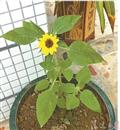
How do you grow sunflowers in a pot?
Sunflowers grown in containers have a shorter growing period, generally flowering in about 50 days. At the same time, ornamental sunflowers suitable for containers, such as 'Valentine', 'Happy Little Dwarf', 'Teddy Bear' and 'Golden Monica', also have more branches and can produce many bright, beautiful sunflowers one after another, extending the viewing period. Even more uniquely, these varieties have no pollen, so people allergic to pollen can also come into close contact with their beauty.
For raising seedlings, plug trays and nutrition pots can be used. The seedling substrate can be prepared from peat, vermiculite and sand in a ratio of 2:1:1, and a small amount of organic fertilizer can be mixed in. Container-grown sunflower seeds are relatively small and have relatively weak ability to push through the soil, so they should not be sown too deeply, generally about 1 cm is enough. After sowing, cover with soil and press lightly. If raising seedlings in winter or spring, cover with film to keep warm and shorten the emergence time. Keep the soil moist after sowing. In summer, seedlings generally emerge in 3 to 5 days, and in winter and spring, generally in 5 to 10 days.
Transplanting as early as possible can shorten the recovery time and also prevent the appearance of "leggy seedlings". The plants can be transplanted once they grow 1 pair of true leaves. Two weeks after sowing, sunflower seedlings can grow a strong root system. The root system of sunflower seedlings is very strong, which is the basis for ensuring a relatively high transplant survival rate.
Water and fertilizer management After planting, water should be appropriately controlled to prevent excessive vegetative growth. After budding, water appropriately according to plant growth to meet its growth needs. It is not recommended to apply base fertilizer, so as not to make the stems too thick due to excessive fertility. Topdressing can be carried out according to plant growth conditions, or fertilizer can be applied by foliar spraying.
Pest and disease control The incidence of pests and diseases in sunflowers is relatively low. The main diseases are bacterial leaf spot, rust, stem rot, powdery mildew and black spot; the main insect pests are aphids, mirid bugs, red spiders and beetles, etc. If they occur, targeted control can be carried out.
More sunflower growing techniques