What causes soybean seedling death in summer?
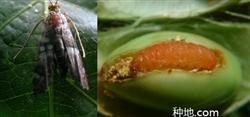
What should be done if pod borers are found in planted soybeans? Before late July, for those who have not completed the final round of hilling, they should do it promptly to build up soil around the plants, reducing the number of pod borers emerging from the soil, reducing egg-laying, and reducing the occurrence of larvae, which can lower the pod damage rate. According to forecasts from the local plant protection department, or based on your own observations in the soybean...
 This summer in the Huaibei region, summer soybeans often suffer from seedling death. Why do soybeans die in summer?
Soybean leaf yellowing and plant stunting that lead to seedling death are mainly caused by the following reasons. The findings and control measures are described below:
I. Seedling death caused by soybean top dieback
When infected at the seedling stage, brown ring spots appear on the cotyledons, the growing point necroses, and in severe cases the entire plant dies. In plants infected before flowering, the internodes of the diseased plant lengthen, the stem tip extends, the terminal bud turns brown and curls into a hook shape, and the plant becomes brittle and prone to lodging. In plants infected from late flowering to the pod-filling stage, buds and leaves drop easily, the stem nodes near the branches and the pith turn brown, pods are very small and poorly developed, seeds within the pods are not plump, and maturity is often delayed, with the plant remaining green until just before harvest.
Control measures: First, in plots with scattered occurrences, pull out and remove the diseased plants. Second, when soybean top dieback is confirmed, promptly spray with 64% Sandofan at 600 times dilution or 75% chlorothalonil at 600 times dilution for control.
II. Seedling death caused by soybean cyst nematode
When soybeans are infected at the seedling stage, the cotyledons and true leaves turn yellow, growth is stunted, and in severe cases the entire plant dies. When infected at the mature plant stage, the plant is stunted, leaves turn yellow from bottom to top, flowering is delayed, few pods are set, and seeds are not plump and have a darker color. Visual identification: the root system is poorly developed, with many fibrous roots and very few root nodules, and many cyst nematodes (small yellow granular in shape) are attached to the roots.
Control measures: (1) Apply more organic fertilizer. By improving soil fertility, promote vigorous soybean growth. (2) Irrigate in a timely manner to increase soil moisture. Soil drought favors the damage of soybean cyst nematodes. (3) For affected fields, promptly spray the base of the plant stems with 40% omethoate at 1000 times dilution for control.
III. Seedling death caused by bean stem fly
It mainly occurs in fields where a large amount of undecomposed organic fertilizer has been applied or in continuous cropping fields. At the seedling stage, the lower leaves of the plant appear normal while all the upper leaves turn yellow. Visual identification: after peeling open the root crown, bean stem fly maggots and maggot excrement can be seen inside the stem.
Control measures: Use 40% omethoate or phoxim at 1000 times dilution, and spray once each at the seedling stage and the flowering stage.
IV. Nutritional disorder
It mainly occurs in fields lacking fertilizer, or where a single nutrient element fertilizer has been overly or solely applied, or in severely drought-stricken highland plots. Plants show varying degrees of leaf yellowing, wrinkling, and stunted growth.
Control measures: Spray each mu with 50-80 milliliters of Huimanfeng plus 100 grams of potassium dihydrogen phosphate mixed with 30-50 kilograms of water for foliar spraying, which can alleviate or eliminate the symptoms and restore normal plant growth.
V. Herbicide phytotoxicity from residues of the previous crop
First, wheat field herbicides were applied too late: in early spring, due to low temperatures, some farmers postponed chemical weeding in wheat fields until after April 10. Because the weeds were relatively large, the usage of tribenuron-methyl and bensulfuron-methyl was correspondingly increased, expanding to 0.5-1 times the conventional dosage, which increased soil pesticide residues. Summer soybeans are mostly sown from June 5 to 10. The safe period for using tribenuron-methyl and bensulfuron-methyl is 60 days after application before sowing the next crop. In this way, for some farmers, the interval between pesticide application on the previous crop and planting of the next crop did not reach the safe period, resulting in phytotoxicity. Second, the use of metsulfuron-methyl, chlorsulfuron and their compound formulations in wheat fields: the soil in the Huaibei region is mostly neutral to slightly alkaline, and metsulfuron-methyl and chlorsulfuron are very difficult to decompose in alkaline soil, making them prone to causing phytotoxicity to the next crop. When used in wheat fields, in mild cases the next soybean crop has weak and stunted seedlings, and in severe cases the seedlings cannot even become established, resulting in a yield reduction of about 80%. Although the use of such pesticides has already been banned, because they are still sold on the pesticide market, the phytotoxicity caused by them occurs repeatedly.
Control measures: After phytotoxicity is found, irrigate promptly and spray foliar fertilizer or plant growth regulators.
Click to see more soybean cultivation techniques
Click to see more grain crop cultivation techniques