Common pests and diseases in loofah cultivation and their control methods
What pests and diseases need to be controlled when growing loofah? Please provide guidance. When growing loofah, the following pests and diseases need to be controlled: The main insect pest of loofah is: the yellow squash beetle. When insects that look like fireflies appear in a loofah field, these are symptoms of damage by the yellow squash beetle. Adult yellow squash beetles bite and feed on plant leaves, stems, flowers and fruits, breaking off the tender stems of seedlings, with leaf damage being the main type; in severe cases they can cause the death of the entire plant. The larvae cause damage to the roots in the soil; after the 3rd instar they bore and feed between the phloem and xylem, causing the aboveground parts to wilt and die. The yellow squash beetle likes warmth and moisture, is most active at noon, and the adults have a wide feeding range, damaging loofah, bottle gourd, winter melon, zucchini and other gourd vegetables.
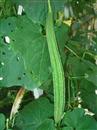
What pests and diseases need to be controlled when growing loofah? Please provide guidance.
When growing loofah, the following pests and diseases need to be controlled:
The main insect pest of loofah is: the yellow squash beetle.
When insects that look like fireflies appear in a loofah field, these are symptoms of damage by the yellow squash beetle. Adult yellow squash beetles bite and feed on plant leaves, stems, flowers and fruits, breaking off the tender stems of seedlings, with leaf damage being the main type; in severe cases they can cause the death of the entire plant. The larvae cause damage to the roots in the soil; after the 3rd instar they bore and feed between the phloem and xylem, causing the aboveground parts to wilt and die. The yellow squash beetle likes warmth and moisture, is most active at noon, and the adults have a wide feeding range, damaging loofah, bottle gourd, winter melon, zucchini and other gourd vegetables.
Control measures: (1) Intercropping. Planting loofah seedlings between rows of crops such as cabbage, celery and lettuce can reduce the degree of damage by the yellow squash beetle. (2) Chemical control. You can use 20% methomyl-fenvalerate EC at 1500-2000 times dilution, or 10% cypermethrin at 1000-1500 times dilution, or 10% beta-cypermethrin at 5000 times dilution, or 80% dichlorvos EC at 1000-2000 times dilution, or 90% crystal trichlorfon at 1500-2000 times dilution, etc., spraying at noon on the soil surface and on field-edge weeds and other pest habitats for control. In addition, manual capture can also be carried out.
Main disease types and symptoms of loofah
Downy mildew
Symptoms: Loofah downy mildew mainly damages the leaves. At the early stage of the disease, irregular brownish-green yellow spots appear on the upper surface of the leaves, gradually expanding into polygonal yellow-brown lesions; when humidity is high, a gray-black mold layer grows on the underside of the lesions, and in the later stage the lesions merge into patches, and the entire leaf withers and dies. Recently, loofah production in many vegetable areas has been severely damaged by downy mildew, resulting in numerous lesions, dry and withered leaves, premature aging of the plants, and curved, thin, small and aged fruit, with yield and quality declining significantly.
Control methods: To control loofah downy mildew, choose excellent disease-resistant varieties, use nutrient pots to raise strong seedlings in a concentrated way, prepare the beds so that drainage is good, apply sufficient base fertilizer, pay attention to training the vines and pruning, ensure ventilation and air permeability between plants, and more importantly, spray promptly and use the right pesticide for the disease. Before the disease occurs and at the early stage of the disease, choose protective agents, such as 75% dasuoning at 600-800 times dilution, chlorothalonil or baikening (40% suspension concentrate) at 500-700 times dilution; during the disease period, spray therapeutic (and protective) agents, such as shadushuangjing (64% wettable powder) at 600-800 times dilution, shuangjin (55% wettable powder) or shuanglusujing (72% wettable powder) at 800-1000 times dilution. Spray once every 7-10 days, and spray 3-5 times consecutively depending on the disease severity, taking care to spray the leaf surfaces and undersides evenly and thoroughly.
Anthracnose
The lesions showing concentric rings are the main feature of the late stage of this disease. At the beginning of the disease, they are pale yellow nearly circular small spots, which later expand and turn dark brown with rings; when dry, the center of the lesion is prone to perforation and rupture, and in severe cases the leaves wither and die early, causing serious yield reduction. When the vines and leaf stalks are infected, the lesions are oval dark brown sunken spots, and when humidity is high, pink mucus oozes from the lesion area. High temperature, high humidity and frequent rain favor the occurrence of anthracnose; the pathogen overwinters on diseased plant residues as mycelium and acervuli.
Phytophthora blight
It mainly damages the fruit, and sometimes the stems, vines and leaves are also affected. Fruit infection often starts from the flower base, with sunken lesions that are initially water-soaked dark green; when humidity is high, the fruit quickly softens and rots, with white mold-like material. Stem and vine infection mainly occurs on the tender stems or internodes, initially water-soaked, and after expansion the entire section becomes wet-rotted and dark brown. Leaf infection initially shows water-soaked yellow-brown spots; when humidity is high, a white mold layer forms, and when dry it appears greenish-white and breaks easily.
Powdery mildew
It mainly damages leaves, leaf stalks and stems. On both the upper and lower surfaces of the leaves, circular or irregular powdery mildew spots first appear, later merging into patches, and the leaves turn yellow and wither. At the early stage of the disease, it is not easy to notice, and once severe, control is difficult and yield is affected, so prevention should be the main approach.
Click to get more loofah cultivation techniques
Click to get more vegetable cultivation techniques