How to select seed ginger for planting? This article teaches you to pick good ginger seeds
How should seed ginger be selected for planting? Please give guidance. Ginger cultivation is simple and highly profitable. Generally speaking, for every 100 kg of seed ginger planted, with good management, 350-400 kg of fresh ginger can be harvested, and the yield can reach around 500 kg at best. The key points of its cultivation techniques are briefly introduced as follows: 1. Seed selection. In late February or early March...
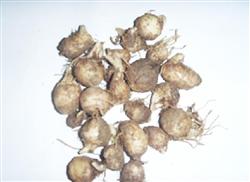
How should seed ginger be selected for planting? Please give guidance
Ginger cultivation is simple and highly profitable. Generally speaking, for every 100 kg of seed ginger planted, with good management, 350-400 kg of fresh ginger can be harvested, and the yield can reach around 500 kg at best. The key points of its cultivation techniques are briefly introduced as follows:
1. Seed selection. Take the seed ginger out in late February or early March. First put it in the sun to dry for 5-6 hours, then select relatively plump and strong seed ginger that already has fine shoot tips showing. The seed ginger should have many shoot tips, and when touched by hand it should feel like saw teeth catching the hand. Remove ginger with rotten crowns and rotten stems, as well as diseased and pest-damaged ginger.
2. Sprouting. After the ginger has been sun-dried and selected, it undergoes sprouting. The method is: inside a room, drive two posts on each side, and tie them with strip wood into a solid structure like a heated brick bed. The width depends on how much seed ginger is being sprouted, but the frame must be 2-2.5 m above the ground. The fire below for heating must not be too large; generally, producing smoke without open flame is best, so as to avoid damaging the ginger.
3. Cultivation and management. After a period of heating and sprouting treatment, the shoot tips of the seed ginger will quickly grow larger. After April, take the seed ginger down, select large and round buds, and break the tubers apart by hand. For each tuber, keep only one robust shoot tip at the top. If there is no shoot tip at the top, a side bud can also be used, but all the rest must be peeled off. If the sprouting rate is good, generally every 100 kg of seed ginger can be divided into about 2,000 plants. For cultivating seed ginger, choose a slightly sloping hillside field, and the soil quality should be relatively good. If cultivating on flat land, drainage and irrigation must both be convenient. When planting, first prepare the land well, prepare enough farmyard organic fertilizer, and the superphosphate and compound fertilizer used should, two days earlier, be piled and composted together with human manure and urine and plant ash, then cultivate in furrow rows. Generally, plant spacing is 30 cm and row spacing is 25 cm.
When planting, first place the tubers firmly, with the buds pressed tightly against the soil surface and not tilted upward, then grab a handful of plant ash composted from various fertilizers with the hand and drop it beside the buds, then cover with organic fertilizer, and plant row by row in this way. The base fertilizer must be applied sufficiently, and the furrows dug must reach 30 cm deep.
4. Management after planting. About 50 days after planting ginger, the seedlings can grow out of the furrows, and at this time the previously planted tubers can be taken out and sold. When digging out the mother ginger, use the thumb to press down on the top of the tuber, and use the index and middle fingers to hook the lower part and lift upward. After taking out the mother ginger, apply once more various fertilizers composted with human manure and urine, and at the same time rake the soil on the furrow ridges flat and build it up to hold the furrows. After 2-3 seedlings have grown, loosen all the soil in the furrows. To obtain high yield, apply a topdressing of phosphorus and potassium fertilizer once each in June and September.
Click to get more ginger cultivation techniques
Click to get more vegetable cultivation techniques