How to prevent and control damping-off disease when raising rice seedlings
How to prevent and control damping-off disease when raising rice seedlings? Asking for guidance. Although dry-raised rice seedling beds are not prone to seedling rot, they are most susceptible to damping-off disease causing seedling death, with 20%-30% loss in mild cases and over 50% in severe cases. The following measures can effectively prevent and control damping-off disease. 1. Acid adjustment treatment of soil: For neutral and alkaline soil, before sowing...
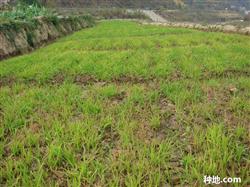
How to prevent and control damping-off disease when raising rice seedlings? Asking for guidance
Although dry-raised rice seedling beds are not prone to seedling rot, they are most susceptible to damping-off disease causing seedling death, with 20%-30% loss in mild cases and over 50% in severe cases. The following measures can effectively prevent and control damping-off disease.
1. Acid adjustment treatment of soil: For neutral and alkaline soil, acid adjustment treatment should be carried out before sowing, adjusting the pH value to below 6, which can effectively control the infection and damage of damping-off disease. The specific method is: test the soil before sowing. If the pH value is 6-6.5, apply 30-40g of specialized acid-adjusting fertilizer per sq m; if the pH value is 6.5-7, apply 40-50g. Apply one day before sowing and mix thoroughly with the soil to adjust the soil pH value to between 4.5-5.5.
2. Disinfect the seedling bed soil to avoid soil-borne disease transmission: After acid adjustment treatment, use 2g of 70% Dexon per sq m, diluted into a 600-fold aqueous solution, and spray evenly on the seedling bed. If it is a sunny day, halve the amount of Dexon, otherwise it will burn the seeds.
3. Do not sow too densely to avoid producing weak seedlings: Controlling the sowing rate is a key part of cultivating strong dry-raised seedlings. Generally, for raising large seedlings of 50-55 days, the sowing rate is 20-25g per sq m. If sown too densely, the seedlings will be thin and spindly, with weakened resistance, and will be susceptible to damping-off disease, while strong seedlings have stronger resistance and are less susceptible to damping-off disease.
4. Chemical control: From the 1-leaf-1-heart stage to the 2-leaf-1-heart stage, damping-off disease is most likely to infect and kill seedlings. You can use 600-fold Dexon solution or 500-fold Libuling solution for foliar spraying, then spray again after 5-7 days, for a total of 2 sprays. Dexon is particularly effective for preventing and controlling damping-off disease.
5. Overcome low temperatures to avoid inducing damping-off disease: From sowing to emergence of early rice, focus on heat preservation, keeping the temperature inside the film at 30-32°C; at the 1-leaf-1-heart stage, focus on temperature and humidity control, keeping the temperature inside the film at 25°C; at the 2-leaf-1-heart stage, half-open the film from 10 AM to 4 PM on sunny days, open the film for 1-2 hours at noon on cloudy days, and open the film for ventilation on rainy days, but the temperature inside the film must not be lower than 12°C, otherwise it is easy to induce damping-off disease. At the 3-leaf-1-heart stage, remove the film.
Click to get massive rice cultivation techniques
Click to get massive grain cultivation techniques