What method works well for weeding ginger fields
How should weeds be controlled in a ginger field? Please give guidance. During the growth of ginger, a large number of weeds compete with ginger seedlings for fertilizer, water and sunlight, so the ginger seedlings cannot get normal nutrition and grow poorly, causing reduced yields. Therefore, at the seedling stage, timely weeding is an important management measure, but pulling weeds by hand is labor-intensive and takes a lot of work...
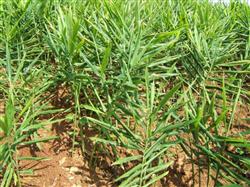
How should weeds be controlled in a ginger field? Please give guidance
During the growth of ginger, a large number of weeds compete with ginger seedlings for fertilizer, water and sunlight, so the ginger seedlings cannot get normal nutrition and grow poorly, causing reduced yields. Therefore, at the seedling stage, timely weeding is an important management measure, but pulling weeds by hand is labor-intensive and takes a lot of work. In recent years, using chemical herbicides to kill weeds has been more and more widely applied in production. Chemical weeding has a good weed-killing effect and is simple and easy to carry out; it can reduce labor intensity, save labor, keep the garden clean, and reduce the occurrence of pests and diseases.
At present, nitrofen is commonly promoted and used in ginger fields to kill weeds, mainly by spray method or toxic soil method for soil treatment. The spray method is: use 0.75-1 kg of nitrofen per mu, first add a small amount of water and mix evenly, then add water to dilute to the full amount, generally adding about 100 liters of water per mu to prepare the liquid. After sowing ginger, while the soil is moist, spray the liquid evenly on the ginger ditch and the surrounding ground. When spraying, pay attention to operating backwards to prevent stepping on the ground and damaging the soil surface chemical film, which would affect the weed-killing effect. After spraying, the whole area should be kept moist. The weed-killing effect can generally reach more than 85%, and it is safe and harmless to ginger seedlings. The toxic soil method is: use 0.75-1 kg of nitrofen per mu, first sprinkle the chemical on a small amount (2-25 kg) of fine soil and mix the soil and chemical thoroughly, or first dissolve the nitrofen in a small amount of water, then spray the liquid on a small amount of fine soil and mix evenly, then expand the amount of soil. Usually use 15-25 kg of pre-sieved semi-dry and semi-moist fine soil per mu, mix thoroughly, and pile it for 10-14 hours so the chemical is fully absorbed by the soil. After sowing the seed ginger, evenly sprinkle the toxic soil on the ginger ditch and the surrounding ground. During application, likewise operate backwards when spreading the toxic soil to prevent damaging the chemical film.
Nitrofen has a killing effect on all kinds of annual weeds in vegetable fields. Within 5 days after application, its killing power on weeds is strongest; after 5 days, the weed-killing power gradually declines, and the efficacy generally lasts 30-40 days. In order to keep the ginger field clean, after the first application, about every 35 days apply nitrofen once by the above method. In this way, the massive occurrence of weeds at the seedling stage can basically be controlled. After ginger enters the vigorous growth period, the plants have already closed the rows, and the occurrence of weeds gradually decreases.
The weed-killing effect of nitrofen is closely related to environmental conditions such as temperature, soil moisture and light. (1) Usually when the air temperature is above 20°C, the weed-killing effect is good; when the temperature is lower, the weed-killing effect is poorer. Therefore, the dosage of nitrofen should differ according to the temperature. In warm weather, 0.75 kg per mu is sufficient; in mild weather, 1 kg per mu is needed to achieve a better control effect. (2) Light conditions also affect the weed-killing effect. Under general conditions, the stronger the light, the better the weed-killing effect. For example, under dark conditions, nitrofen has almost no weed-killing effect. (3) Soil moisture conditions are often the key to success or failure when using nitrofen. When the soil surface is moist, the weed-killing effect is good; if the soil is dry, the weed-killing effect will be greatly reduced. Therefore, after applying nitrofen, the soil surface must often be kept moist to improve the weed-killing effect.
Click to get more ginger planting techniques
Click to get more vegetable planting techniques