Causes of High Empty and Filled Grain Rates in Hybrid Rice and Control Methods
What should you do if hybrid rice has many empty and shriveled grains? What methods can be used to control the high rate of empty and shriveled grains in hybrid rice? The following methods can be used for control: 1. Adapt measures to local conditions and select hybrid varieties with good recoverability. First, choose varieties with strong tillering ability, sufficient effective panicles, and high seed-setting rate and 1000-grain weight. Second, choose...
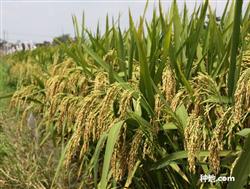
What should you do if hybrid rice has many empty and shriveled grains? What methods can be used for control?
A high rate of empty and shriveled grains in hybrid rice can be controlled with the following methods:
1. Adapt measures to local conditions and select hybrid varieties with good recoverability. First, choose varieties with strong tillering ability, sufficient effective panicles, and high seed-setting rate and 1000-grain weight. Second, choose varieties with moderate stem posture, tillering that is neither too compact nor too loose, relatively narrow and upright leaves, and neither excessive late-season greenness nor premature senescence. Third, choose varieties whose flowering period can tolerate high and low temperatures and that have strong stress resistance and high yield potential.
2. Sow early at the proper time. The level of empty and shriveled grains in hybrid rice is closely related to the climate during the heading and flowering period, so the high-temperature stage of 30°C or above and drought should be avoided; otherwise, spikelets may abort and the rate of empty and shriveled grains will be high. Therefore, the suitable sowing date should be determined according to the number of days required from sowing to full heading for each combination, while also considering whether transplanted young seedlings can survive.
3. Raise seedlings with heat preservation and cultivate strong seedlings with multiple tillers. "Rice starts from the seedling, and good seedlings are half the rice," which shows that strong seedlings are the foundation of high yield. Strong seedlings contain more dry matter and have strong rooting ability and stress resistance; after transplanting, they turn green quickly, tillers root early and grow quickly and uniformly, the ineffective tillering stage is short, nutrients are sufficient, heading and flowering are concentrated, and the seed-setting rate and 1000-grain weight are high. The measures are to vigorously promote dry-raised seedlings and seedling-throwing techniques, cultivate strong seedlings to increase yield, increase accumulated temperature, accelerate growth, shorten the growth period, advance heading and flowering, avoid midsummer drought, and mature early. Strengthen fertilizer and water management in the seedling field, do a good job in seedling-field disease and pest control, and prevent seedling rot. Apply a good "send-off fertilizer" according to seedling condition 7-10 days before transplanting.
4. Manage with shallow water 2-3 days after transplanting; 7 days later, apply 2.5-3 kg of urea per mu to promote seedling growth and early green-up. Hybrid rice tillers quickly and closes the rows early, the plants are robust, and in the later stage there are many ineffective tillers and panicles. Dry-raised seedlings cultivated in wide-narrow row planting can change the population structure, maintaining the advantages of rational close planting, ensuring enough basic seedlings, and also maintaining the benefits of wide rows; the "border advantage" is strong, ventilation and light transmission conditions are improved, lower leaves are less shaded, photosynthetic efficiency is high, more organic matter can be accumulated, field humidity is reduced, disease and pest occurrence is suppressed, and the panicle-forming rate, seed-setting rate, and 1000-grain weight are increased.
5. Balanced fertilization. Hybrid rice has a large amount of stem and leaf growth, large panicles and many grains, and a high fertilizer requirement, so rational fertilization should adhere to the principle of "applying sufficient base fertilizer, applying tillering fertilizer early, skillfully applying panicle fertilizer, and applying grain fertilizer as appropriate." Base fertilizer should be mainly organic fertilizer: per mu, use 1500-2000 kg of decomposed organic fertilizer, 200 kg of plant ash, 10-15 kg of urea or 25-35 kg of ammonium bicarbonate, 25-30 kg of superphosphate, and 1.5-2 kg of zinc sulfate. Hybrid rice relies on tillers to form panicles, so topdressing should be applied early; 7-10 days after transplanting, apply 5-6 kg of urea per mu to promote tillering. For fields with insufficient early growth, apply additional flower-promoting fertilizer at the early jointing stage, topdressing 4-5 kg of urea per mu, to strive for large panicles and for some unstable tillers to form panicles. After full heading, spray 50-60 kg of 0.4% potassium dihydrogen phosphate solution per mu 2-3 times, once every 7-10 days. For fields with weak fertilizer retention, insufficient seedlings, and fading color in the middle stage, a 1% urea solution can be mixed with potassium dihydrogen phosphate and applied.
6. Scientific water management. For green-up, use deep water, with the depth not submerging the leaf auricle of the uppermost fully emerged leaf, maintaining about 5 cm, to create conditions for heat preservation and temperature stability. For tillering, use shallow water, about 1.5 cm, so that the base and soil receive sufficient light, the tillering node position is lowered, the tillering time is shortened, and stem tissue is strengthened. For fields with sufficient seedlings and guaranteed water sources, dry the field at the late tillering stage to suppress ineffective tillering and enhance plant growth vigor. Hybrid rice grows vigorously at the booting stage, has a large leaf area, and with high temperatures, this is the period of greatest physiological water demand and greatest sensitivity to water in its life cycle; shallow water should be irrigated frequently, limited to a depth of 3-4 cm, to meet the water needs of young panicle development, increase the dissolution of nutrients, ensure that substances reach the panicle, and regulate mud temperature and microclimate, reducing spikelet abortion and sterility. Promote fast and uniform heading. After full heading, maintain a 3-4 cm shallow water layer to facilitate flowering and pollination, make full use of rainwater irrigation, protect the growth function of old roots, extend leaf function, and help grain filling to strive for grain weight, ensuring that at harvest the stems are green and the grains are yellow, with large panicles and full grains.
7. Integrated control of diseases and insect pests. In accordance with the policy of "prevention first, integrated control," with agricultural control as the foundation, do a good job in disease and pest forecasting, strengthen chemical protection, and carry out unified prevention and control. In recent years, rice has often suffered from pests and diseases such as stem borers, rice planthoppers, rice skipper, rice leaf roller, sheath blight, and rice blast, and control should be carried out promptly to reduce the occurrence of empty and shriveled grains.
Click to get massive rice cultivation techniques
Click to get massive grain cultivation techniques