What are the effective methods to increase peanut yields?
How to prevent and control early leaf drop in peanuts? Please share methods. The main causes of early leaf drop in peanuts are: nutrient depletion and premature aging, which is more serious in sandy soil; leaf spot diseases, especially net blotch and brown spot, which spread rapidly once they occur and often cause massive leaf drop within a few days; premature and excessive spraying of regulators, especially...
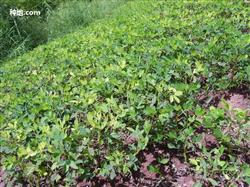 What methods can increase peanut yields? Please advise.
Seed dressing with molybdenum fertilizer, applying phosphorus and supplementing potassium, and sowing with shells on are all good ways to increase peanut yields; and the following methods also play a role that cannot be ignored in achieving high peanut yields and increased income.
They are introduced as follows:
(1) Apply calcium fertilizer - up to gypsum (CaSO4·2H2O); peanuts are very sensitive to calcium and have a relatively high demand, while sandy loam soil contains little available calcium, far from enough to meet the nutritional needs of peanuts. When peanuts lack calcium, the bud tips are prone to withering, the backs of old leaves have many scars, brown dead spots appear on both the front and back of the leaves, there are few pods and many empty shells, and the yield is low. Generally, about 15-20 days after the peanut pegs enter the soil, apply about 20 kg of gypsum powder per mu as a topdressing.
(2) Scatter soil to cover the pegs: "Cover all the pegs with soil, and you will have a bumper harvest even with your eyes closed." When a large number of peanut pegs are entering the soil, because the ground under the plants is uneven, some pegs find it difficult to enter the soil, affecting yield. You should pick up fine soil on the spot and scatter it down from the plants to cover the pegs, which can increase the rate of peg entry into the soil, the pod-setting rate, and the rate of full pods.
(3) Remove the main stem: "If the peanut loses its head (the tip of the main stem), you will gain an extra dou of pods." During the peanut rosette stage, use a blade to cut off the main stem and keep only one or two pairs of lateral branches. This can dwarf the plant, promote sturdy stems, promote branching, noticeably change plant vigor, and improve photosynthetic efficiency, thereby increasing peanut yield. Removing the main stem should be done around noon on a windless sunny day to help the wound heal and reduce infection by diseases.
(4) Spray "photosynthesis solution": The "photosynthesis solution" is an aqueous sodium bisulfite solution. Sodium bisulfite is neither a nutrient nor a pesticide for treating diseases or killing insects, but a photorespiration inhibitor. Spraying the "photosynthesis solution" during the peanut flowering stage can reduce the photorespiration intensity of the leaves and decrease the consumption of photosynthetic products (dry matter). Start spraying at the peanut flowering stage, spray once every 7-8 days, for a total of 2-3 sprays. Each time, use about 6 grams of sodium bisulfite per mu, mixed with 50 kg of water for spraying.
(5) Chemical control with paclobutrazol: During the peanut seedling stage and full flowering stage, an aqueous paclobutrazol solution can be sprayed. Spraying at the seedling stage can promote root growth, enhance the roots' ability to absorb water and fertilizer, increase leaf chlorophyll content, and improve peanut drought resistance; spraying at the full flowering stage can inhibit vegetative growth, reduce plant height and promote sturdiness, prevent lodging and promote pod formation, and increase the pod-setting rate and fullness. At the seedling stage, when the peanut main stem grows to 5-6 leaves, evenly spray 30 kg of 100 ppm paclobutrazol solution per mu; at the full flowering stage, 30 days after the first flowers, spray 40 kg of 100 ppm paclobutrazol solution per mu. The use of paclobutrazol easily causes premature aging and the occurrence of leaf diseases, so foliar topdressing and disease prevention should be strengthened.
(6) Spray fertilizer solution on the leaves: Foliar spraying uses little fertilizer and gives good yield increases, and is an effective measure to prevent premature aging and promote production. At the peanut flowering stage and pegging stage, spray once each time a mixed fertilizer solution of 1% urea + 0.3% monopotassium phosphate + 0.2% borax, with about 50 kg sprayed per mu each time.
(7) Prevent and control leaf spot disease: Leaf spot disease is very harmful to peanuts. It can cause the plant leaves to fall to the ground, inhibit photosynthesis, and thereby make the pods small and the kernels not full, reducing yield by 10%-20%. To prevent and control peanut leaf spot disease, carbendazim can be used. Use 100 grams of 25% carbendazim wettable powder per mu, mixed with 50-60 kg of water for spraying.
Click to get more peanut cultivation techniques
Click to get more grain and oil crop cultivation techniques