How to grow peanuts to achieve increased yield
How can peanuts be grown to increase yield? Please advise. Summer peanuts have become the first choice of planting variety for many growers today because of their advantages such as high economic benefit, easy cultivation and management, and being beneficial to circular land use. To obtain high yield, you need to start from the following points. Choose early-maturing varieties with high yield potential. Choose...
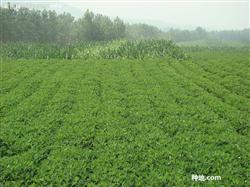
How can peanuts be grown to increase yield? Please advise
Summer peanuts have become the first choice of planting variety for many growers today because of their advantages such as high economic benefit, easy cultivation and management, and being beneficial to circular land use. To obtain high yield, you need to start from the following points.
Choose early-maturing varieties with high yield potential. Choosing varieties with high yield potential is the internal factor for achieving high yield. In 2012, after harvesting garlic in Qixian County, Henan Province, Zheng Guangdong planted the early-maturing large peanut "Yuyu 502", and the average yield per mu of pods reached 625 kg across 8 mu. At present, the better new large peanut varieties include Qinghua No. 7, Huayu No. 36, etc. For small peanut varieties, Qinghua No. 6 or high-yield excellent varieties suitable for local planting should be chosen.
Implement summer direct sowing of peanuts. The protective cultivation method of saving cost and increasing efficiency, the mechanized sowing black plastic film mulching W cultivation method, an innovative cultivation technology, is the latest cultivation method invented through cooperative research by Professor Cai Changjiu, specially appointed expert of Benyu Enterprise in Yangling Demonstration Zone, Shaanxi, and director of the Pingdu City Peanut Scientific Research and Development Center, together with Qingdao Agricultural University. It received a national invention patent certificate in 2011. Adopting this method can greatly increase peanut yield.
Increase application of nitrogen fertilizer and foliar spraying. Before rotary tillage, broadcast 30-50 kg of ammonium bicarbonate or 20-30 kg of urea per mu. In addition to meeting the nitrogen demand of peanut seedlings, it can also promote the decomposition of wheat straw and wheat stubble. Foliar spraying of peanuts has many advantages such as rapid action, balanced nutrition, low input cost, and significant yield-increasing effect. Spray fertilizer as soon as the seedlings emerge uniformly and two true leaves unfold, alternating spraying "Lingbao" or "Green Prevention and Control - Sui'an" at an interval of 10-12 days.
Control pest and disease damage. The more serious pests of summer peanuts mainly include underground pests such as white grubs and wireworms. Aphids at the seedling stage (black summer aphids) and leaf-eating pests during the growth period. Diseases mainly include dead seedlings caused by seedling-stage damping-off and early leaf drop caused by leaf spot disease in the middle and late stages. Control methods: before sowing, dress and coat seeds with "Shufengdan" at 2.1% of seed weight. When sowing, use 1.0 kg per mu of "Sumeidichong" with sufficient active ingredient and 10% content to cover the seeds or apply it into the soil together with chemical fertilizer. Combined with foliar spraying, when there is damage from leaf-eating pests, mix in insecticide; when there are signs of excessive growth, mix in a regulator; in the middle and late stages, mix in a fungicide.
Do not water in the middle and late stages. When summer directly sown peanuts grow to the middle and late stages, it is exactly autumn with clear high skies and large day-night temperature differences. At this time, moderate drought is beneficial to pod filling and achieving high yield. As long as there is no prolonged permanent wilting, do not water.
Harvest appropriately late. As long as leaf protection measures in the middle and late stages are done well, the middle and upper leaves do not fall, and there is no rush to clear the stubble to plant the next crop, harvest can be appropriately delayed.
Click to get more peanut cultivation techniques
Click to get more grain and oil crop cultivation techniques