How can asparagus be grown for high yields? Key technical points explained in detail
How can asparagus be grown for high yields? Please advise. Asparagus, also known as Shattawas, is a premium nutritious health vegetable, hailed as the "king of vegetables" and one of the "world's top ten famous dishes." It can be processed into canned goods and nutritional products, and is a "golden industry" for earning foreign exchange through exports, in tight market supply and commanding high prices. Asparagus is a perennial crop, ...
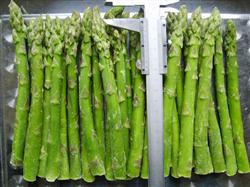
How can asparagus be grown for high yields? Please advise.
Asparagus, also known as Shattawas, is a premium nutritious health vegetable, hailed as the "king of vegetables" and one of the "world's top ten famous dishes." It can be processed into canned goods and nutritional products, and is a "golden industry" for earning foreign exchange through exports, in tight market supply and commanding high prices.
Asparagus is a perennial crop. Once planted, it can be harvested for 10-15 years, and can be planted from March to October. With scientific management, relatively high economic returns can be obtained. Therefore, vigorously promoting asparagus cultivation is a good way for the broad community of farmers to become prosperous.
1. Variety selection. According to the requirements of asparagus production, asparagus varieties should have the following characteristics: deep green color, tightly closed tips that do not easily scatter, good shoot morphology, resistance to bending, few deformities, and strong resistance to pests and diseases. Each region should select asparagus varieties suitable for local cultivation according to local conditions.
2. Sowing and raising seedlings. For large-scale cultivation, seed sowing is used. The suitable sowing period is calculated based on the standard of transplanting seedlings when asparagus grows in May-June. For spring sowing, seedlings are raised under protected cultivation and sown in late February; for open-field sowing, sow in April; for autumn sowing, sow in August-September. The nursery should be chosen in sandy soil with convenient irrigation and drainage and good aeration. Apply 1500-2000 kg of decomposed barnyard manure per mu to the nursery land, then plow it into the soil, and add 10 kg of urea, 16 kg of superphosphate, and 10 kg of potassium chloride, apply them into the soil and mix thoroughly with the soil, and make a seedbed 1.2-1.5 m wide. On the bed surface, open horizontal sowing furrows every 40 cm, 2 cm deep. Sow 1 seed every 7-10 cm, cover with a 2 cm thick layer of fine soil, cover the bed surface with rice straw, water thoroughly, keep moist, and then cover with a small arched shed. Sow 500-600 g of seeds per mu of seedbed. When the seedlings are 7-10 cm tall, apply 3.5 kg of urea and 2.5 kg of potassium chloride per mu, dilute with water, apply in furrows or holes, and topdress once every 10 days. During the seedling stage, regularly spray 0.3%-0.5% Bordeaux mixture and 1000-fold 70% thiophanate-methyl solution to prevent diseases, and timely carry out intertillage and weeding.
3. Cultivation points. Before field transplanting, deeply plow the field, apply 3000 kg of decomposed composted barnyard manure per mu, turn it into the soil, level the ground, and make beds. In the center of the bed, dig transplanting furrows with a spacing of 1.2-1.5 m, a depth of 30-40 cm, and a width of 50-60 cm. In the transplanting furrows, apply 2000 kg of barnyard manure, 30 kg of superphosphate, 7 kg of urea, and 10 kg of potassium chloride per mu, mix thoroughly, cover with soil, and firm it. Transplant in spring or autumn, with a plant spacing of 30-40 cm. When transplanting, make the root system spread out, cover with 5-6 cm of soil, pat firm and water, and after survival, cover with soil in stages to fill the transplanting furrows.
4. Rational fertilization. Follow the principle of "mainly farmyard manure, with organic and inorganic combined." During the annual growth period, asparagus in full production should be applied with 4000-5000 kg of decomposed farmyard manure per mu, 22 kg of pure nitrogen, 18 kg of pure phosphorus, and 18 kg of pure potassium from chemical fertilizers. The use of undecomposed farmyard manure is strictly prohibited. When conditions permit, applying biological bacterial fertilizer is best. The annual fertilizer application is divided into three times. The first is the sprout-promoting fertilizer, applied before harvesting shoots at the end of March, with N:P:K of 5:3:2, accounting for 20% of the total annual growth-period fertilization. The second is the rejuvenation fertilizer, applied after shoot harvesting ends in May-June, with N:P:K of 5:4:4, accounting for 60% of the annual growth-period fertilization. The third is the autumn rejuvenation fertilizer, applied after the Beginning of Autumn in August, with N:P:K of 3:3:4.
5. Timely irrigation. Asparagus is a crop that prefers warmth, tolerates drought, and fears waterlogging. When planted in dry land on the Loess Plateau, attention should be paid to timely watering to maintain soil moisture. Generally, during the annual growth period, it needs to be watered 6 times: once before ridging in March, once midway through shoot harvesting, once after removing the ridges, once during the dog days, once after the Beginning of Autumn, and once at overwintering.
6. Intertillage and weeding. Use manual weeding or mechanical weeding. The use of all kinds of herbicides is strictly prohibited. After each watering, take the opportunity to preserve soil moisture and carry out intertillage once in a timely manner, keeping the soil near the plant rhizosphere loose and free of cracks, increasing aeration and reducing evaporation.
7. Pest and disease control. Adhere to the policy of "prevention first, integrated control," strengthen the coordination and supporting of agricultural, biological, physical, and chemical control, and strictly control the application amount of chemical pesticides.
Asparagus mainly has fungal diseases such as stem blight, root rot, and brown spot. For control, pesticides should mainly be biological pesticides (Nongkang 120) and mineral-derived pesticides (lime-sulfur mixture, Bordeaux mixture), etc.; chemical pesticides must be selected from varieties with high efficiency, low toxicity, and low residue, such as carbendazim and Baikedan, which are pesticides permitted for use in national green food. Before the arrival of high temperature and high humidity in June-August is the key period for asparagus disease prevention. Depending on the different shoot emergence in the asparagus field, timely spraying can achieve good preventive results.
Click to get more asparagus cultivation techniques
Click to get more vegetable cultivation techniques