Detailed Explanation of Key Technical Points for High-Yield Asparagus Cultivation and Management
How can asparagus be managed for high yield? Please advise. For high-yield asparagus cultivation, you can refer to the following management methods: 1. Cultivate strong seedlings. To achieve high yield in asparagus, in addition to selecting excellent varieties, a nursery plot must be established for raising seedlings. The optimal time for establishing the nursery is June, and the seedling-raising period is about 3 months. Form raised beds and sow in hills, with a plant spacing of 16.5 cm x ...
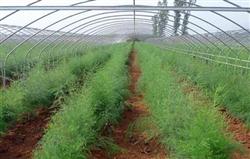
How can asparagus be managed for high yield? Please advise.
For high-yield asparagus cultivation, you can refer to the following management methods:
1. Cultivate strong seedlings
To achieve high yield in asparagus, in addition to selecting excellent varieties, a nursery plot must be established for raising seedlings. The optimal time for establishing the nursery is June, and the seedling-raising period is about 3 months. Form raised beds and sow in hills, with a plant spacing of 16.5 cm x 16.5 cm. For transplanting, medium-sized seedlings with 10-20 roots are most suitable.
2. Land preparation and transplanting
Asparagus thrives in moist sandy loam soil. Before transplanting, plow and loosen the soil multiple times and remove all impurities from the soil. After fully sun-bleaching the soil (for about 1-2 months), apply 4000-5000 kg of decomposed farmyard manure per mu or 100-150 kg of cake fertilizer, plus 150 kg of superphosphate and 30 kg of potassium chloride. After broadcasting the manure, plow again. For the cake fertilizer, add water and let it decompose for 8-10 days, then mix it with superphosphate and potassium chloride, apply it into furrows 30-40 cm deep, cover with soil, and then plant the seedlings.
3. Reasonable close planting
The optimal seedling planting period is August-September in autumn. Spears are harvested in March-April of the following year, with a short time to harvest and a high survival rate. The plant spacing for planting seedlings is 25 cm x 160 cm. When planting, straighten the roots and divide them into two halves, fix them in the planting furrow or hole with the scale buds facing the middle line of the bed, then cover with 5-6 cm of soil, firm it, and water thoroughly to settle the roots.
4. Strengthen fertilizer and water management
1. Seedling stage: After planting, if furrow irrigation is used, irrigate once every 20-25 days. At the same time, open drainage ditches so that the ground dries after rain stops. Apply the first fertilizer 20 days after planting, using 5 kg of compound fertilizer per mu diluted in 1000 kg of water, applied in holes or furrows. From 40-60 days after planting, apply fertilizer once every 25-30 days, using 25-50 kg of compound fertilizer per mu or 10-20 kg of urea plus 6-12.5 kg of potassium chloride. From 4 months after planting until before spear harvest, apply fertilizer about once every 25 days, using 20 kg of urea and 12.5 kg of potassium chloride per mu applied in furrows. Irrigate after fertilizing.
2. Harvest period: During the harvest period, apply fertilizer once every 15-20 days, each time using 20 kg of urea and 12.5 kg of potassium chloride per mu. At the same time, be sure to open ditches on all four sides and ditches in the field. Drain water on rainy days and irrigate on sunny days.
5. Selecting mother stems
About 5-6 months after planting, the seedlings send up their last batch of stems. When the stem diameter reaches 0.8-1 cm, mother stems can be selected. Generally, keep 2-3 mature, pest-free, robust mother stems per clump, then pull out the excess, thin, or overly thick stems. Before selecting mother stems, apply 30 kg of urea and 15 kg of potassium chloride per mu in furrows. Immediately after selecting the mother stems, level the beds and carry out heavy hilling, forming raised beds 30-40 cm high.
6. Pest and disease control
Common asparagus diseases include stem blight and anthracnose. To control stem blight, spray with 70% thiophanate-methyl at 600 times dilution or 40% carbendazim at 500 times dilution. Spray once every 10-15 days during the seedling and mature seedling stages, and once every 5-7 days during the mother stem selection period. To control anthracnose, spray with 70% mancozeb at 500 times dilution, or 75% chlorothalonil wettable powder at 600 times dilution, or 80% anthracnose thiram wettable powder at 800 times dilution, spraying once every 10 days for 2-3 consecutive sprays, but spraying is strictly prohibited 7 days before spear harvest. Common pests include cutworms and green caterpillars. For green caterpillars at the 1st-2nd instar, spray with 1000 times dilution of chlorfluazuron to kill them. For older green caterpillar larvae and cutworms, manual capture can be used.
7. Replacing seedlings
After 3-4 months of spear harvest, the original seedlings begin to age. At this point, all the seedlings should be pulled out, leaving only the root spears, then open the ridges and apply fertilizer to promote spear emergence and seedling growth. Generally, seedlings are replaced twice a year.
For harvesting white asparagus, inspect the field at dawn every day. If cracks are found on the soil surface, this indicates that young stems are pushing up through the soil. First, use your hands to scrape away the surface soil at the crack, determine the position of the young stem, then insert a specially made asparagus harvesting knife and cut it off near the underground stem, so that the young stem length is more than 18 cm. Do not damage the underground stem when cutting. The hole left after cutting should be filled level with soil immediately. In the later stage of harvest, when the weather is hotter and young stems elongate quickly, harvest once in the morning and once in the evening every day. The harvested young stems should be placed into containers immediately to prevent coloring from light exposure.
The duration of harvest and the yield vary depending on specific conditions such as plant age, climate, soil quality, and fertilizer management. Green asparagus begins to produce a small number of young stems in the second year after planting. Cut them off level with the soil surface when the young stems are 21-24 cm high. Regardless of whether it is white asparagus or green asparagus, all young stems must be cut at each harvest; otherwise, they will consume stored nutrients in the underground part and affect yield. Generally, the 6th to 12th years after planting are the peak production period. After 13 years, the plants tend to age and yield gradually decreases. The economic lifespan of the plants is about 15 years, and with good cultivation and management, it can be extended to about 20 years.
Click to get more asparagus cultivation techniques
Click to get more vegetable cultivation techniques