Key Cultivation Techniques and Management Methods for Fresh-Eating Peanuts
How to identify the quality of peanut seeds? Please advise. As the peanut pre-sowing period is currently underway, how to select good peanut seeds is a matter of great concern to peanut growers. Here is a brief introduction to a few points on how to identify the quality of peanut seeds: 1. Look: good peanut seeds have plump pods, sharp embryo tips, protruding germ discs, and pink seed coats...
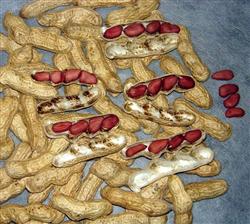 How to cultivate fresh-eating peanuts well? Please advise.
Peanut is one of the main edible oil crops in the provinces south of the Yangtze River in China. Peanut seeds contain about 30% protein and also contain vitamins B1, B6, D and E, among others, and have certain health benefits, which is why they are also called "longevity nuts" among the people. With the improvement of people's living standards, in addition to mature peanuts being eaten roasted or processed into by-products, tender peanuts as fresh vegetables are steadily gaining popularity; fresh-eating peanut cultivation is highly profitable and has very broad development prospects. The high-yield cultivation techniques for fresh-eating peanuts are as follows:
1. Land preparation and bed making. Peanut is a deep-rooted crop and is suitable for planting in loose sandy loam with a soil layer more than 30cm deep, good drainage and irrigation conditions, and soil organic matter of no less than 0.5%. In hilly areas, sandy loam or medium loam with a slope of less than 10 degrees and medium fertility should be selected. Before sowing, plow the land, break up clods, level the soil, open furrows and make beds, with a bed width of 1.2-1.4m and a furrow width of 25cm.
2. Selection of good varieties. For fresh-eating peanuts, medium- and small-fruited varieties with early maturity, excellent quality and concentrated fruiting should be selected. The main varieties suitable for planting in our province are Xiaojingsheng, Dahongpao, Yuhua 10, Yuhua 15, Yuhua 9327 and other peanut varieties.
3. Seed soaking and sprouting. Sowing peanuts after soaking and sprouting the seeds helps achieve full stands in one sowing, prevents missing plants and gaps in rows, and also helps cultivate strong seedlings. The specific method is: before sowing, sun-dry the seed pods for 1 day and shell the seeds. Soak the seeds in warm water at 30°C for 4 hours, then place them in a bamboo basket, cover with cloth and straw, and place in a warm place maintained at about 25°C. Sprinkle warm water once every 5 hours, keep warm for 24 hours, and they will germinate. It is best to sow seeds that have just exposed the radicle, and sprouted seeds should preferably be sown the same day.
4. Timely sowing. The suitable period for spring sowing of fresh-eating peanuts in our province is March 20 to April 10, and the suitable period for autumn sowing is mid-to-late July. For spring sowing, the row and plant spacing is 40-45cm x 30-35cm, with a planting density of 4000-5000 clusters per mu. For autumn sowing, the vegetative growth of peanuts is less than that of spring sowing, so the density should be appropriately increased, with row and plant spacing of 35-40cm x 30cm, and the planting density increased to 5500-6500 clusters per mu. When sowing in spring, covering with plastic film can not only advance the market season of fresh-eating peanuts but also increase yield by about 20%. For fields with many weeds, spray a pre-emergence herbicide before covering with plastic film, using 100ml of 50% acetochlor per mu diluted with 50kg of water, and spray evenly on the bed surface. After sowing, cover with 0.007-0.008mm microfilm, and after emergence, punch holes in the film to release the seedlings.
5. Scientific fertilization. Some people believe that peanuts can grow root nodules and therefore do not need fertilization or need very little fertilizer, which limits the improvement of peanut yield. According to research, the demand ratio of peanuts for nitrogen, phosphorus and potassium is 10:1:3. The general principle of peanut fertilization is: apply heavy base fertilizer, timely topdressing, and combined application of trace element fertilizers. Generally, apply 500kg of farmyard manure per mu as base fertilizer, or 7.5-10kg of ternary compound fertilizer. Pay attention to the application of trace elements such as boron and molybdenum, and advocate seed dressing with molybdenum fertilizer and boron fertilizer or basal application. Before the early flowering stage (about 8-10 true leaves), apply fertilizer according to seedling condition, generally applying 4-5kg of urea per mu, to meet the fertilizer needs for pegs entering the soil and pod development.
6. Reasonable regulation. If excessive fertilization or high temperatures during the growth period cause obvious excessive vegetative growth of the plants, use 50-60g of 15% paclobutrazol per mu diluted with 50-60kg of water and spray evenly for inhibition.
7. Pest and disease control. Peanut should not be continuously cropped, and a 2-3 year rotation should be implemented; the longer the rotation period, the better the effect. In the late growth stage of peanuts, the common disease is leaf spot disease. In the early stage of the disease, spray with 1500-2000 times dilution of 50% carbendazim wettable powder, once every 10-15 days, for 2-4 consecutive sprays. The main aboveground pests are aphids and red spiders, and 6-8g of 50% wettable powder per mu can be diluted with 50kg of water for spray control. Before sowing, treat the soil with phoxim granules, or dress seeds with phoxim emulsion, to control nematodes.
8. Timely harvest. Harvest in a timely manner according to peanut plumpness and maturity and market demand. Generally, harvest when the top leaves become lighter, the basal leaves turn yellow, and 80% of the pods are mature.
Click to get more peanut cultivation techniques
Click to get more grain and oil crop cultivation techniques