How to grow mung beans for high yields? Detailed explanation of cultivation techniques
How to grow mung beans for high yields? Please advise. Mung bean is one of the important minor grain crops in China, with the effect of cooling and relieving summer heat, combining nutritional value and medicinal value. As people's living standards rise day by day, in order to adjust and improve their diet, the demand for mung beans is increasing, while growing mung beans requires...
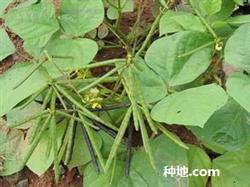
How to grow mung beans for high yields? Please advise.
Mung bean is one of the important minor grain crops in China, with the effect of cooling and relieving summer heat, combining nutritional value and medicinal value. As people's living standards rise day by day, in order to adjust and improve their diet, the demand for mung beans is increasing, while growing mung beans requires little investment, gives quick results, offers high returns and has very broad development prospects. Its high-yield cultivation techniques are as follows.
(1) Crop rotation
Mung bean is an important soil-improving crop and an excellent preceding crop for cereal crops. Mung bean should not be grown continuously; "rotate the bean plot every year, and the yield will be high every year." Mung bean rotation patterns include: (a) one crop per year, such as mung bean, foxtail millet, sorghum and corn; (b) two crops per year, such as wheat and mung bean; (c) three crops in two years, such as wheat, mung bean, wheat, mung bean (foxtail millet); (d) five crops in three years, such as wheat, mung bean, spring sugarcane, spring corn, wheat, mung bean (soybean).
(2) Planting methods
Mung bean planting methods include intercropping, relay intercropping, mixed cropping, multiple cropping and sole cropping, 5 types in total.
① Intercropping Mung bean is not sensitive to light and is relatively tolerant of shade. Taking advantage of its short stature and its root nodules that fix nitrogen and increase fertility, it is often intercropped with tall-stemmed crops, using light to supplement nutrients and providing ventilation and light penetration, which helps increase the yield of the main crop and allows two harvests from one field, achieving both increased income and soil improvement. There are two intercropping patterns. (a) Mung bean and foxtail millet (sorghum). 2 rows of corn and 4 rows of mung bean, or 2 rows of corn (sorghum) and 2 rows of mung bean, or 4 ridges of corn and 2 ridges of mung bean. With corn as the main crop, mung bean provides extra income; with mung bean as the main crop, corn provides extra income. (b) Mung bean and foxtail millet, commonly known as "millet riding the donkey (mung bean)", 1 drill of foxtail millet and 4 rows of mung bean. Both mung bean and foxtail millet should increase yield by 10%.
② Relay intercropping (a) Mung bean relay-intercropped with sweet potato. Plant sweet potato on the ridges, and sow 1 row of mung bean in the furrows by hole sowing or drilling; this can yield an extra 40-50 kg of mung bean per mu without reducing the sweet potato harvest. (b) Cotton relay-intercropped with mung bean. Plant mung bean in 1.2 m wide rows and cotton in 0.5 m narrow rows. Sow cotton and mung bean at the same time, and finish harvesting the mung bean by the cotton boll stage.
③ Mixed cropping Generally, mung bean is broadcast or buried between the rows or plants of corn and sorghum. It is usually used to fill gaps in main crops such as corn, so that yield loss from missing plants of the main crop is reduced. Mung bean can also improve poor soil, thereby increasing income.
④ Multiple cropping Multiple cropping mainly means, in multiple-cropping areas, using wheat or other follow-on crops to grow mung bean, achieving multiple harvests from one field and improving land utilization. There are planting patterns such as wheat and mung bean, rice and mung bean, and rapeseed and mung bean.
⑤ Sole cropping Sole cropping means growing one season of mung bean per year, mostly in areas with a short frost-free period and in poor, sandy, thin, hilly or sloping land, especially in arid areas with dry climate and thin soil layers, as well as in areas with vast land and sparse population, short growth periods and extensive management, where mung bean is sole-cropped to obtain a certain yield.
(3) Fine land preparation
Mung bean has large cotyledons and relatively weak soil-emergence ability, so land preparation requires deep ploughing and fine harrowing, with a loose topsoil and firm subsoil, no clods, uniform depth, and level, well-broken soil. Good soil permeability is favorable for rhizobia development and soil microbial activity. Land preparation requires deep ploughing in early autumn to thicken the active soil layer, and harrowing in early spring when the surface soil is still frozen.
Click to get more mung bean cultivation techniques
Click to get more grain and oil crop cultivation techniques