What problems should be paid attention to during asparagus cultivation?
What problems should be paid attention to in asparagus cultivation? Please explain and guide. Attention should be paid to the following aspects in asparagus cultivation: fertilizer and water management. When autumn stems are retained in asparagus, sufficient fertilizer has already been applied. Entering October, if premature aging of asparagus is found, foliar spraying of 500 times Huimanfeng solution should be done; using 100-200 grams of Huimanfeng per mu each time can prevent asparagus from fertilizer deficiency. Spraying...
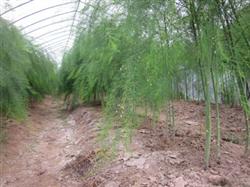
What problems should be paid attention to in asparagus cultivation? Please explain and guide.
Attention should be paid to the following aspects in asparagus cultivation:
Fertilizer and water management When autumn stems are retained in asparagus, sufficient fertilizer has already been applied. Entering October, if premature aging of asparagus is found, foliar spraying of 500 times Huimanfeng solution should be done; using 100-200 grams of Huimanfeng per mu each time can prevent asparagus from fertilizer deficiency. The number of sprayings depends on the seedling condition; in October it can be sprayed 2-3 times. Recently the soil water content is low, so light watering can be done. By the end of October or early November, if it is rather dry, one irrigation should be given to keep the soil moist and promote root and bud development, but do not irrigate heavily. If heavy rain falls in October, attention should be paid to drainage.
Pest and disease control Common diseases include violet root rot, anthracnose and brown spot, and stem blight is also prone to breaking out at this time. This year, rhizome rot has also been found, and it must be controlled promptly. A method combining root irrigation and foliar spraying can be adopted.
The method of root irrigation is to unscrew the sprayer nozzle so it can be connected to spray the stem base and let the pesticide solution seep down. The pesticides used for root irrigation are 50% xiaojunling 1000 times plus 1.5% junlimie 1000 times plus Fengshouchun 800 times (or diniconazole 1500 times), or 50% xiaojunling 800-1000 times plus 70% ultramicro mancozeb 800-1000 times. The above two methods can be sprayed alternately. Diseased plants should be pulled out promptly to avoid infecting other plants. At the end of October, because the weather turns cooler, spray once with junlimie containing a high-lipid film, which can improve cold resistance.
The main pests on asparagus branches and leaves are tobacco cutworms and the like. They bite and eat the stems, branches and cladodes. In severe cases, they will eat all the cladodes and gnaw the epidermis of stems and branches. According to experiments, a mixed solution of isofenphos-methyl and Weinong No. 1 has a good killing effect. Once found, it should be controlled promptly.
Chemical regulation In order to prolong the functional period of leaves, promote root crown growth and increase the number of buds, Tianxing cytokinin should be sprayed in early and mid-October. According to measurements, spraying Tianxing cytokinin 2-3 times in October in newly planted asparagus fields can increase root crown weight by 20%-30%; old asparagus can increase about 2 young stems the following year and increase the thickness of young shoots. Therefore, spraying 500 times Tianxing cytokinin solution is an important regulatory measure for increasing yield and improving quality.
Harvesting asparagus In October, the stems and branches of asparagus have already become fixed, and each retained plant's 6-10 autumn stems have all been topped and entered the functional period. Young stems regenerated after entering October need the root crown to supply nutrients in their early growth stage, and only after they grow up can they carry out photosynthesis themselves to supply the root crown. Whether to retain newly grown young stems mainly depends on the difference between the nutrients needed in their early growth stage and the nutrients they can supply to the root crown after growing into branches and leaves. Since after October the nutrients that newly grown young stems can supply to the root crown after growing up are few and often cannot compensate for the nutrients needed at their initial growth, young stems newly grown after entering October should be harvested and sold. At this time the price is still good, and certain economic benefits can be obtained.
Click to get more asparagus cultivation techniques
Click to get more vegetable cultivation techniques