How to grow potatoes for high yields?
How can potatoes be grown for high yields? Here is a detailed introduction: To grow potatoes for high yields, you can refer to the following cultivation methods: 1. Variety selection. Because potatoes are planted continuously in the same plot for many years, they are susceptible to virus infection, and viruses accumulate through vegetative generations, causing variety degeneration. Therefore, generally choose high-yielding, high-quality, virus-resistant varieties with high resistance to late blight...
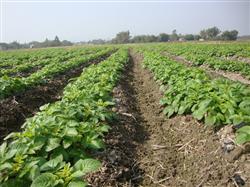
How can potatoes be grown for high yields? Here is a detailed introduction.
To grow potatoes for high yields, you can refer to the following cultivation methods:
I. Variety selection
Because potatoes are planted continuously in the same plot for many years, they are susceptible to virus infection, and viruses accumulate through vegetative generations, causing variety degeneration. Therefore, generally choose high-yielding, high-quality, virus-resistant varieties with high resistance to late blight, wart disease and other diseases.
II. Seed potato treatment
1. Disinfection. Dilute 40% formalin solution 200 times, spray it on the surface of the seed potatoes or soak the seed potatoes for 5 minutes, cover with plastic film and let them sweat for 2 hours, then spread them out to dry.
2. Cutting into pieces. For whole-tuber planting, small seed potatoes of 0-25 g are suitable. Large seed potatoes can be cut into small pieces of about 25 g, each with 1-3 eyes, preferably including the top eyes, and cut lengthwise. When cutting, use two knives. If a diseased potato is encountered, immediately switch to a sterilized knife, and put the virus-contaminated knife into 5% lime water to soak for later use. The cut potato pieces should be placed in a cool, ventilated place to dry, or dusted with plant ash, so that the cut surfaces dry and heal easily.
3. Sprouting. 20 days before sowing, choose a plot sheltered from the wind, facing the sun and with good drainage as a seedbed. The bed should be 100 cm wide and 10 cm deep. Spread moist river sand or fine soil, place a layer of seed potatoes, cover with a layer of sand or fine soil, and repeat for 3-4 layers. Cover the top with 3-4 cm of sand or soil, water appropriately, and finally cover with plastic film. The temperature inside the film should preferably be about 20°C. After 15-20 days, they will sprout. During sprouting, turn the potato pieces frequently so that the sprouts grow evenly and stoutly. When the sprouts grow to about 1.5 cm, they can be planted. For sprouting, seed potatoes can be soaked in 5-10 mg/kg gibberellin for 15 minutes and then placed in the seedbed, which can increase the sprouting rate.
III. Land preparation
Potatoes are tuber crops, and their vegetative organs grow underground. Therefore, potato cultivation should preferably choose loose sandy loam. At the same time, the land should be deeply plowed and harrowed level and fine, so that the soil is loose, water storage, fertilizer retention and drought resistance are improved, thereby increasing yield.
IV. Fertilization
1. Base fertilizer. Apply 2500-3500 kg of high-quality decomposed farmyard manure per mu, and 30-50 kg of multi-element compound fertilizer containing nitrogen, phosphorus, potassium, boron, etc.
2. Topdressing. After spring begins, depending on the growth of the potato seedlings, apply 5-10 kg/mu of urea together with liquid manure.
V. Sowing
1. Timely sowing. An important condition for determining the suitable sowing period is temperature. Sowing can begin when the average temperature at 10 cm in the soil reaches above 5°C. If plastic film mulching is used, sowing can be advanced to late January to early February, and potatoes can be marketed successively around "May Day."
2. Reasonable close planting. For zoned rotation in dry land, 3000-4000 plants/mu, with a seeding rate of 100-150 kg, that is, in a 167 cm-wide bed for zoned rotation in dry land, plant 2 rows in the 100 cm potato zone, with a row spacing of 8 cm and a hill spacing of 20-30 cm.
3. Sowing method. Furrow sowing or hole sowing. Organic fertilizer and chemical fertilizer should be applied deeply, then covered with soil before sowing to prevent fertilizer damage. After sowing, cover with soil and form ridges.
VI. Field management
1. After the seedlings emerge completely, promptly check the seedlings and fill gaps to prevent missing hills and broken rows. After topdressing with urea at the seedling stage, promptly cultivate, weed and earth up to favor root growth. Where plastic film mulching is used, the film should be broken promptly in early April (when the soil temperature is stable at 16-18°C) to prevent excessively high soil temperature from affecting tuber expansion.
2. From budding to flowering, remove the flowers and buds, and spray potassium dihydrogen phosphate at 1 kg/mu to favor tuber expansion.
3. In the rainy season, open ditches for drainage to keep the soil unobstructed, so as to favor root growth and tuber expansion.
4. Disease and pest control. Use 0.1% copper sulfate solution (50 kg/mu) or 1:100 Bordeaux mixture to control late blight; use 40% dimethoate 1000-fold solution (50 kg/mu) or fenvalerate emulsifiable concentrate 2000-3000-fold solution to control aphids; use 80% trichlorfon wettable powder (500 g/mu) mixed with water as poisoned bait to trap and kill, or phoxim diluted 1000-fold with water to control underground pests.
VII. Timely harvest
Harvest when the stems and leaves naturally turn yellow and dry up and the stolons shrink and separate from the tubers. At this time, the yield is the highest, and the potato skin is not easily rubbed off, making transport and storage convenient. Harvest time can also be reasonably arranged according to market conditions.
VIII. Storage
Remove diseased potatoes, damaged potatoes with rubbed-off skin and deformed potatoes, and store them separately in layers in a cool (1-4°C), dry, ventilated place, with each layer 50 cm thick. Turn and inspect once about every 20 days, pick out rotten potatoes, and prevent infection of other potato tubers.
Click to get more potato cultivation techniques
Click to get more vegetable cultivation techniques