How to Grow Fruit Corn? A Detailed Guide to Cultivation Methods
How do you grow fruit corn? Please explain, thank you. Fruit corn is a type of sweet corn suitable for eating raw. Compared with ordinary sweet corn, its main characteristics are thin skin, abundant juice, and a crisp, sweet texture. It can be eaten directly raw or cooked. There is no essential difference between fruit corn and sweet corn; ordinary sweet corn can...
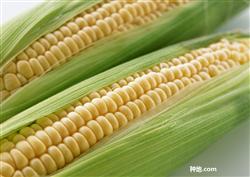
How do you grow fruit corn? Please explain, thank you.
Fruit corn is a type of sweet corn suitable for eating raw. Compared with ordinary sweet corn, its main characteristics are thin skin, abundant juice, and a crisp, sweet texture. It can be eaten directly raw or cooked. There is no essential difference between fruit corn and sweet corn; ordinary sweet corn can all be eaten raw, only the taste varies in quality, and those with good taste are regarded by people as fruit corn.
Compared with previous varieties, the newly developed fruit corn varieties are especially suitable for raw eating, with a unique flavor and rich fruity aroma, thin skin and no residue, a delicate texture, fresh and tender, soft and smooth, sweet and juicy, with characteristics of crispness, tenderness and sweet fragrance. Their sugar content is 10 times higher than ordinary corn and about 5% higher than watermelon, so the market prospects are very promising. According to relevant common knowledge, eating some grains, melons, fruits and vegetables raw can greatly reduce the loss of nutrients in food, improve the human body's ability to absorb protein, vitamin C, vitamin E and enzymes, enhance human immunity, improve disease resistance, and at the same time enrich the citizens' dining tables.
Cultivation Characteristics of Sweet Corn
(1) Sweet corn kernels are shrunken and shriveled, with poor soil-emergence ability, and the seedlings are weak and small.
(2) Sweet corn has the highest sugar content at the milky ripe stage, and the suitable harvest period is short. For ordinary sweet corn, the sugar content is highest at about 20 days after pollination, that is, at the milky ripe stage, and then declines rapidly. Sweet corn is harvested for fresh cobs and tender kernels, so special attention should be paid to the suitable harvest period, and it should be harvested when the sugar content of the kernels is highest.
(3) After cross-pollination, the sugar content of sweet corn decreases. Only pollination by pollen of the same type of sweet corn can maintain a high sugar content in the kernels. If cross-pollinated with ordinary corn, the sugar content of the kernels in that season immediately decreases, and the commercial value declines.
(4) Pests and diseases are severe. Sweet corn plants have a high sugar content and are prone to pest damage. Moreover, compared with other types of corn, it is most susceptible to ear and kernel rot.
Cultivation Techniques for Sweet Corn
Compared with ordinary corn, sweet corn differs somewhat in growth and development characteristics and production purposes. To obtain high quality and high yield, the following key techniques should be emphasized.
(1) Choose suitable varieties. For those mainly marketed as fruit and vegetables using young ears, super-sweet corn varieties should be selected; for those mainly used for canned products, ordinary sweet corn varieties should be selected, and qualified varieties should be chosen according to the ear size and weight required by the manufacturer. Also pay attention to matching early, medium and late maturing periods to continuously provide raw materials to the market and processing plants.
(2) Strict isolation to prevent cross-pollination. The sweetness of sweet corn is controlled by recessive genes. If cross-pollinated by ordinary corn or different types of sweet corn, the xenia phenomenon will occur, turning it into ordinary corn and losing its sweetness. Therefore, sweet corn must be planted with strict isolation from other corn, generally more than 300 m apart. If spatial distance is difficult to arrange, obstacles such as villages, woods and hills can also be used for isolation, and staggered sowing can also be adopted. Generally, spring sowing should be separated by more than 30 days, and summer sowing by more than 20 days. When sowing, it is also necessary to strictly prevent the mixing in of a small amount of ordinary corn seeds. If ordinary corn is mixed into sweet corn, ordinary corn has strong growth and a large amount of pollen. If it is not removed in time, the quality of sweet corn will be greatly reduced, and it may even be impossible to sell as sweet corn.
(3) Sow at the right time and sow carefully. Sweet corn is a vegetable crop, and harvesting and marketing it in the off-season can greatly increase economic benefits. Therefore, determining the sowing period according to market and climatic conditions is very important. For example, in the Huang-Huai River basin, film-mulched planting can be carried out at the end of March or the beginning of April, which can bring it to market earlier. Staggered sowing can also be implemented to extend the market supply time. For sweet corn used for canning, the sowing time should be reasonably arranged according to the processing capacity of the factory and the factory's needs in different periods.
The optimum temperature for sweet corn germination is 32-36°C. When the spring temperature is low, the number of days required for germination increases and the germination rate is also low; when the temperature is high, the number of days required for germination decreases and the germination rate is also high. Generally, when the ground temperature is 13°C, it takes 18-20 days to germinate; at 15-18°C, it takes 8-10 days; at 20°C, it takes only 5-6 days. It is generally considered that sowing can begin when the air temperature steadily passes 13°C and the 5 cm ground temperature reaches above 11°C. The speed of sweet corn germination is also closely related to soil moisture. When the temperature is constant, within the optimum moisture range, germination is faster when there is more soil moisture.
(4) Use fertilizer scientifically and promote seedlings and ears. According to research, under general production conditions, applying 8-9 kg of pure nitrogen, 5-6 kg of phosphorus pentoxide and 7-8 kg of potassium oxide per 666.7 sq m of sweet corn can achieve relatively high yield and good quality.
Attention should be paid to the ratio of base fertilizer to topdressing. Organic fertilizer, phosphate fertilizer and potassium fertilizer should all be used as base fertilizer, but too much nitrogen fertilizer as base fertilizer can easily cause seed burning, so usually only 50% of the total nitrogen application can be used as base fertilizer, and attention should be paid to separating the seed from the fertilizer. The timing of topdressing should be divided into two stages according to the fertilizer requirement pattern of sweet corn: once before jointing, when there are 7-8 leaves, and once about 10 days before tasseling. Each topdressing uses the remaining 50%, which can promote thick and strong stems and large ears with high yield.
(5) Strengthen management and control pests and diseases in time. Thin and finalize seedlings at the right time. The role of thinning is to avoid crowding between seedlings, thereby promoting robust individual development. Finalizing seedlings is actually the last thinning, and it affects density and strong seedlings. Generally, thin seedlings at 4-5 leaves and finalize them at 6-7 leaves. A planting density of 3200-4000 plants per 667 sq m is appropriate.
Cultivation, weeding and earthing up. Cultivation and weeding have the effects of raising ground temperature, conserving soil moisture and improving nutritional conditions. When cultivating and weeding, the principle of shallow-deep-shallow should be grasped (see the back). The first shallow cultivation is carried out at 4-5 leaves, generally 3 cm; at 7-8 leaves, cultivate deeply about 10 cm; after jointing, cultivate shallowly 3 cm. Generally, from jointing to before tasseling, combine cultivation and weeding with light earthing up 2-3 times to enhance lodging resistance.
Remove tillers at the right time. Sweet corn is more likely to produce branching than ordinary corn. In order to promote the main stem ear to grow into a large ear and improve commercial quality, under certain density conditions, tillers need to be removed. Removing tillers not only concentrates nutrients for supply to the main stem ear, but also improves ventilation and light transmission conditions in the field, thereby increasing yield and output value. The time for removing tillers should not be late. The first time is when branching begins to grow, and another time after 7-8 days, following the principle of removing early, removing small, and not damaging the main stem.
Control pests and diseases in time. Sweet corn is more susceptible to pests and diseases than other corn, and is very prone to damage by pests such as corn borers, scarab beetles and aphids, with ear and kernel rot being especially severe in the later stage. After the ears of sweet corn are damaged, the commercial quality and selling price are seriously affected. Therefore, for sweet corn pests and diseases, prevention should be more important than treatment, and treatment should be early, small and thorough. First, attention should be paid to selecting disease-resistant varieties, and second, attention should be paid to control during the growth process. The main underground pests in the seedling stage of sweet corn are cutworms and mole crickets. When they occur severely, sweet corn suffers serious missing plants and the seedlings grow unevenly. To control cutworms, it should be done at the peak of the second-instar larvae, and 80% dichlorvos 1500-fold solution can be sprayed along the corn rows. The main pest in the heart-leaf stage and ear stage of sweet corn is the corn borer. The larvae bore into the stems and cause damage, causing stems or tassels to break, and bore into the ears to damage the kernels, greatly reducing commercial quality. Generally, it can be controlled one or more times from the small trumpet stage to the large trumpet stage. To prevent residual toxicity, after pollination of sweet corn, biological pesticides should be used as much as possible, chemical pesticides should be used little or not at all, and highly toxic pesticides with long residual periods must never be used.
(6) Ensure quality and harvest at the right time. The harvest period of sweet corn is completely different from that of ordinary corn. Except for sweet corn kept for seed production, which is harvested at the fully ripe stage of the kernels, sweet corn used for canning, quick-freezing and fresh ear marketing should all be harvested at the most suitable "eating quality" stage (early milky ripe stage). This is because the sugar content of sweet corn kernels is highest at the milky ripe stage after pollination. If harvested too early, the sugar content is low, the ears are small, the kernel color is light, the milky matter is little, and the flavor is poor; if harvested too late, although the ears are larger and the yield is high, the sugar content decreases, the starch content increases, the skin is hard, there is more residue, and the flavor declines. The harvest period is relatively difficult to grasp. Generally, 20-28 days after pollination is the period with the highest sweetness, but there are differences among varieties. Different sweet corn varieties also have different suitable harvest times. It must be determined according to different varieties, and the harvest period also differs in different locations. In Shanghai, ordinary sweet corn is best harvested when the kernel moisture content is 65%-67% and 23 days after pollination; in places such as Huaiyin in Jiangsu, it is best harvested 17-21 days after pollination. Super-sweet corn in places such as Zhengzhou in Henan is more suitable for harvest 20-25 days after pollination. With different sowing dates, the suitable harvest time also differs. Generally speaking, spring-sown sweet corn is best harvested 17-22 days after pollination, and autumn-sown sweet corn is best harvested 20-26 days after pollination. In addition, after harvest, the sugar content of sweet corn declines rapidly, with sugar decreasing by about 1.8% per day. Therefore, after harvest, sweet corn should be processed and handled promptly.
Notes:
1. Because the seeds are shrunken, low in starch content and poor in soil-emergence ability, sow 3-5 seeds per hole. Before sowing, seize sunny days to sun the seeds for 1-2 days, which can improve the seed germination rate and germination vigor. Film-mulched sowing can be 10-20 days earlier, and after sowing, the soil covering should be thinner than for ordinary corn. The sowing depth is generally 2.5-5 cm, shallower for clay soil and slightly deeper for sandy soil. Press lightly after sowing, which is beneficial for emergence.
2. Sow only after the ground temperature steadily passes 12°C.
3. If different varieties are required to be sown in the same period, spatial or temporal isolation is necessary. Spatial isolation generally requires more than 300 m from other corn to avoid receiving pollen from other corn and affecting quality. Temporal isolation is best achieved by staggering the sowing period from other corn by more than 20-25 days.
4. Pay attention to timely harvest, and be sure to finish harvesting within the suitable harvest period.
5. Sell promptly, preferably within 72 hours, and please keep it stored at low temperature.
Click to get more corn cultivation techniques
Click to get more grain crop cultivation techniques