Detailed Explanation of Corn Plastic Mulch Cultivation Methods
How to cultivate corn with plastic mulch? Please advise. Corn plastic mulch cultivation has obvious effects of increasing temperature, preserving soil moisture and improving soil physical and chemical properties. It can generally increase the effective accumulated temperature during the entire growth period of corn by 200-300°C, advance maturity by 7-15 days, and increase yield by about 150 kg per mu. 1. Select hybrid...
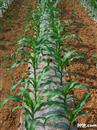
How to cultivate corn with plastic mulch? Please advise.
Corn plastic mulch cultivation has obvious effects of increasing temperature, preserving soil moisture and improving soil physical and chemical properties. It can generally increase the effective accumulated temperature during the entire growth period of corn by 200-300°C, advance maturity by 7-15 days, and increase yield by about 150 kg per mu.
1. Select excellent hybrid varieties. Choose hybrids suitable for close planting, with strong stress resistance, no premature senescence in the later stage, and high productivity per plant. Generally, varieties should be selected whose growth period is 7-15 days longer than locally open-field corn varieties, or which require 150-300°C more accumulated temperature, or have 1-2 more leaves.
2. Select plastic mulch.
1. Thickness and width of plastic mulch. In southern areas with low temperature, insufficient light, abundant rain and high humidity, plastic mulch with a thickness of 0.005-0.007 mm and a width of 600 mm can be used. In areas with more weeds in the field, plastic mulch with a thickness of 0.008-0.01 mm can be used.
2. Amount of plastic mulch. For plastic mulch with a thickness of 0.008 mm and a width of 800 mm, the amount per mu is 3.7-4 kg; for plastic mulch with a thickness of 0.006 mm and a width of 800 mm, the amount per mu is 3 kg; for plastic mulch with a thickness of 0.006 mm and a width of 600 mm, the amount per mu is 2.5 kg.
3. Land selection and land preparation.
1. Land selection. Choose flat land or gently sloping land with deep soil layers, loose soil texture, medium or above fertility, and high yield potential. It is not suitable to plant on steep slopes, barren land, or fields with severe soil erosion.
2. Plowing and ridging. After the previous crop is harvested, plow in time. The plowing depth should be 18-22 cm. After plowing, harrow in time to preserve soil moisture. Ridging should be carried out according to the predetermined sowing row spacing. For wide-narrow row planting, ridge on the narrow rows, with 2 rows planted and covered per ridge. The ridge surface width is 40-50 cm, and the ridge height is 7-10 cm. Ridging is best carried out continuously with the film-covering operation. 7-10 days after sowing, after the seedlings emerge and the first leaf appears, timely break the film to release the seedlings. Releasing seedlings is best done on a windless sunny day. Never release seedlings in high-temperature weather or on windy, cooling days. To release seedlings, use a small knife, bamboo strip, or wire hook to make a 1-2 cm small hole in the plastic mulch above the seedling, lead the seedling out of the film, and then immediately seal the hole along the base of the seedling stem with fine moist soil. Plastic-mulched corn grows quickly in the early stage, has a large vegetative mass, and consumes much nutrients. To prevent possible fertilizer deficiency and premature senescence in the later stage, topdressing in the middle stage is very important. Subsequent field management measures, such as pest and disease control, artificial detasseling and supplementary pollination, should all be carried out earlier according to the corn growth period. After corn harvest, promptly pick up all waste film and dispose of it in a centralized manner.
Click to get more corn planting techniques
Click to get more grain crop planting techniques