Detailed explanation of key points of purple cabbage cultivation techniques, teaching you how to grow purple cabbage well
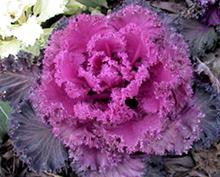
Purple cabbage has a strong root regeneration capacity, a thick main root, and a well-developed root system. It has a strong ability to absorb fertilizer and water, is tolerant of waterlogging and drought, and is suitable for seedling transplanting cultivation. The leaf surface of purple cabbage is smooth with a thick waxy bloom, the leaves are purple-red, the longitudinal section of the leaf is white, and the head is compact, with types such as flat head, round head, and tall round head. Its seeds are round...
 1 Cultivation time
For spring cultivation, seedlings are generally raised in a greenhouse at the end of January and transplanted into the open field at the end of March.
2 Suitable varieties for cultivation
The main varieties suitable for protected cultivation in spring include Purple Cabbage No. 1, Zaohong, Hongmu, Tehong No. 1, etc.
3 Land preparation and bed making
Purple cabbage has a strong ability to absorb nutrients. The land should be deeply plowed, and after leveling, beds 1-1.2 m wide should be made. Apply 5000 kg of organic fertilizer, 25-30 kg of phosphate fertilizer, 30-40 kg of urea, and 20-30 kg of potassium fertilizer per 667 sq m. The calcium content in purple cabbage plants is second only to nitrogen. If calcium is deficient, tipburn may occur, so an appropriate amount of calcium fertilizer should also be supplemented.
4 Sowing and seedling raising
Purple cabbage is generally cultivated by raising seedlings and transplanting. Broadcast sowing is used when sowing for seedling raising, with a seeding rate of 50-100 g per 667 sq m. After emergence, the temperature should be kept at 15-20°C during the cotyledon stage and 18-22°C during the true leaf stage, and gradually brought close to the outside temperature 5-7 days before transplanting. Spring-sown purple cabbage is transplanted in the open field at the end of March and the beginning of April. Planting with water helps raise soil temperature and facilitates seedling recovery. For early-maturing varieties, the plant spacing and row spacing are 50 cm × 50 cm, with 2500-2600 plants per 667 sq m; for mid-maturing varieties, the plant spacing and row spacing are 59 cm × 60 cm, with 2200 plants per 667 sq m.
5 Field management
The growth period of purple cabbage can be divided into the seedling stage, rosette stage, and heading stage.
5.1 Seedling stage management Before sowing, the seedbed should be watered thoroughly. Water thoroughly when pricking out seedlings and transplanting to avoid root damage. Apart from that, water as little as possible.
5.2 Rosette stage management After watering 1-2 times to help seedling recovery, the plants enter the seedling hardening stage, during which 2-4 cultivations should be carried out. The first cultivation should be deep and thorough to conserve soil moisture and promote root growth; during the middle of the rosette stage, cultivation should be shallow and combined with earthing up to encourage more roots to form on the outer shortened stem and benefit heading. Early-maturing varieties are hardened for 10-15 days; late-maturing varieties need 30 days of hardening. By the late rosette stage, when heading begins, large amounts of water should be applied.
5.3 Heading stage management During this period, the heads grow quickly and water demand is high. Generally, water whenever the soil surface becomes dry, all the way until harvest.
6 Harvest
Harvest when the heads have become fairly compact. At harvest, cut off the root base, remove the outer leaves and damaged leaves, and make the heads clean and free of soil. For early-maturing varieties, in order to bring them to market earlier, they can be harvested in batches as long as the heads have a certain degree of compactness. They can be harvested within 1 month. Mid- and late-maturing varieties generally should be harvested in 1-2 concentrated pickings after the heads have grown to their largest and most compact. Early-maturing varieties can yield up to 2000 kg per 667 sq m, while mid- and late-maturing varieties can yield 3000-4000 kg per 667 sq m.
7 Pest and disease control
7.1 Diseases During the seedling stage, prevent damping-off, appropriately control moisture, and increase ventilation and light. During the heading stage, mainly prevent soft rot, especially in summer and autumn. Prevent water accumulation, and promptly remove diseased plants when found. Spraying 100-150 mg/kg agricultural streptomycin has a certain control effect. At the same time, tipburn is likely to occur during the heading stage, so soil moisture should be maintained to facilitate calcium uptake. In addition, spraying some calcium on the leaves also has a certain control effect.
7.2 Insect pests
The main pests are aphids and cabbage caterpillars. For aphid control, promptly clear weeds, crop residues, and dead leaves. Pesticides such as 40% dimethoate emulsifiable concentrate, 50% pirimicarb wettable powder, and fenvalerate can be used for control. For cabbage caterpillar control, avoid continuous cropping or intercropping with vegetables of the same family. For chemical control, 2.5% lambda-cyhalothrin emulsifiable concentrate or bt-781 emulsifiable concentrate can be used.