What are the fertilization methods for growing zucchini?
How do you fertilize when growing zucchini? Here is a detailed introduction: when growing zucchini, you can refer to the following fertilization methods. 1. Growth characteristics: Zucchini has a strong root system; it is highly tolerant of low temperatures and weak light, has strong water absorption and drought resistance, and is not very demanding about soil. It can grow well in sandy soil, loam or...
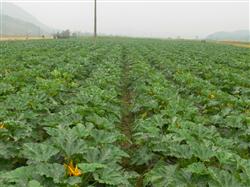
How do you fertilize when growing zucchini? Here is a detailed introduction.
When growing zucchini, you can refer to the following fertilization methods:
1. Growth characteristics: Zucchini has a strong root system; it is highly tolerant of low temperatures and weak light, has strong water absorption and drought resistance, and is not very demanding about soil. It can grow well in sandy soil, loam or clay soil, and it also has high yields, relatively mild diseases, a long harvest period for the fruit, and high economic returns.
2. Nutrient requirements: The fertilizer requirement is relatively large. To produce 1000 kg of marketable fruit, the fertilizer requirement is equivalent to 3.9-5.5 kg of nitrogen, 2.1-2.3 kg of phosphorus pentoxide, and 4-7.3 kg of potassium oxide.
3. Key fertilization points: Fertilization of zucchini should be based mainly on organic fertilizer. In the fertilizer combination, attention must be paid to the supply of phosphorus and potassium fertilizer, especially during the fruiting stage, where sufficient phosphorus and potassium fertilizer is essential.
Apply a heavy base fertilizer. For zucchini stubble cultivation, to prevent fertilizer deficiency due to delayed topdressing under low winter temperatures, sufficient base fertilizer should be applied. If there is no previous crop occupying the land, water thoroughly before land preparation. When the soil is suitable for cultivation, broadcast 5000-7000 kg of high-quality decomposed organic fertilizer, 30-40 kg of diammonium phosphate, 30 kg of urea, and 20-30 kg of potassium sulfate or potassium nitrate per mu, then deep plow 30 cm. After fertilizing, close the greenhouse to raise the temperature and bake the soil for 5-7 days before transplanting. Sulfur or chlorothalonil smoke fumigant can also be used for fumigation sterilization, and the effect is also very good.
Apply topdressing skillfully: After the seedlings recover, water promptly once. Along with watering, 10 kg of urea per mu can be flushed with the water, then control water to promote root development. Entering the fruiting stage, which is also a period when winter temperatures are relatively low and unfavorable for vine growth, both vegetative growth and reproductive growth proceed at the same time during this period. Coordinating the relationship between the two and balanced fertilization are key. When the first fruit begins to swell, carry out the second topdressing along with watering, applying 15-20 kg of diammonium phosphate or 10-15 kg of nitrogen-phosphorus-potassium compound fertilizer per mu. When topdressing, first dissolve the fertilizer in water and then irrigate it with the water into the hidden furrow under the plastic film. After irrigation, seal the plastic film tightly and strengthen ventilation to remove moisture.
Entering the full fruiting stage, fertilizer and water management is very important. Zucchini has a high harvest frequency, and each plant can harvest 7-9 fruits. Apply topdressing once about every 15 days, each time flushing 20-30 kg of urea or ammonium sulfate per mu with water, or 35 kg of nitrogen-phosphorus-potassium compound fertilizer, or cake fertilizer composted into liquid fertilizer, or 400-500 kg of fully decomposed human manure and urine diluted 10 times. Alternating chemical fertilizers and organic fertilizers is best. At the same time, alternately spray foliar fertilizers such as 0.1% urea plus 0.2% monopotassium phosphate plus 100-fold sugar water, or Aiduoshou, Yemianbao, etc., to make up for the insufficient nutrient absorption by the roots. In the late fruiting stage, the plant ages, so appropriately reduce the amount of fertilizer.
In addition to the above fertilization, special attention should be paid to the application of carbon dioxide gas fertilizer. Generally, choose a sunny morning about half an hour after sunrise, when the temperature rises to 15°C, and start applying CO2 gas fertilizer at a concentration of 1000-1300 mg/L, once every 3-5 days, for 2 hours each time. This can increase the fruit-setting rate and extend the fruiting period.
Click to get more zucchini growing techniques
Click to get more vegetable growing techniques