How to grow zucchini well? Cultivation methods and key technical points
How do you grow zucchini well? Here is an introduction. To grow zucchini, you can refer to the following methods: 1. Variety selection. For pollution-free zucchini production, choose high-yielding varieties that are dwarf, short-vined and strongly upright, such as Zaoqing Generation I, Atai Generation I, Biyu zucchini and other varieties. 2. Grow strong seedlings. Winter-spring zucchini...
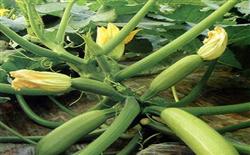
How do you grow zucchini well? Here is an introduction.
To grow zucchini, you can refer to the following methods:
1. Variety selection. For pollution-free zucchini production, choose high-yielding varieties that are dwarf, short-vined and strongly upright, such as Zaoqing Generation I, Atai Generation I, Biyu zucchini and other varieties.
2. Grow strong seedlings. Winter-spring zucchini is generally sown from late September to mid-October, mostly using grafted seedlings, with squash as the rootstock, using the approach grafting method. Before sowing, soak the seeds in warm water, sow them into a prepared seedbed, water thoroughly, and cover with about 1.5 cm of nutrient soil. When the seedlings have cotyledons and show true leaves, divide the seedlings, plant them into nutrient pots, strengthen fertilizer and water management, and grow strong seedlings.
3. Set out seedlings at the right time. Winter-spring zucchini in solar greenhouses is generally planted from early November to early December. Before planting, apply 5000 kg of high-quality decomposed manure and 50 kg of diammonium phosphate per mu, then deep-plow and prepare the soil. Planting should be done on a sunny morning, and the planting depth should be such that the original soil ball is covered by 1-2 cm. After planting, cover with plastic film promptly and water thoroughly.
4. Management after planting.
1. Temperature management: After winter-spring zucchini is planted, keep the daytime temperature at 25-30°C. After the seedlings recover, lower the temperature appropriately, to 20-26°C during the day. After the plants set fruit, raise the temperature appropriately, to 25-30°C during the day and 15-20°C at night. When the temperature exceeds 30°C, ventilate; when it drops below 20°C, close the greenhouse; when it is around 15°C, lower the straw mats to keep warm. After spring begins, as the weather warms up, ventilate and cool promptly at noon. To increase indoor light, reflective screens can be hung at the rear.
2. Fertilizer and water management: From planting until the root fruit expands, control fertilizer and water to avoid [missing text]. When the root fruit grows to about 10 cm, water and apply 20-25 kg of compound fertilizer per mu with the water. During the fruiting period, gradually increase the frequency and amount of watering, and apply 500 kg of decomposed human manure, chicken manure, etc. at intervals. According to the growth vigor of the zucchini, foliar fertilizer can also be applied. Applying carbon dioxide fertilizer in the greenhouse during winter and spring also has an obvious yield-increasing effect.
3. Artificial pollination: When growing zucchini in a greenhouse, artificial pollination is needed. Pollination should be done before 11 a.m. Each male flower can pollinate 3-4 female flowers. To prevent poor fertilization, 2-4-D at 20-30 mg/kg should be used to spot-treat the flowers two days before the female flowers open.
4. Plant adjustment and vine pressing: After 3-4 fruits are harvested per plant, the plants enter the full fruiting period, often due to insufficient nutrient supply and poor environmental conditions, diseases spread easily, leading to premature aging. This is the key period for plant adjustment and vine pressing. First, select and keep one row of melons on each bed, remove the other row of melons and the plastic film on that row, then scatter 25 kg of diammonium phosphate per mu on the vacated bed, and plow and level the soil. On the newly prepared bed, open a small ditch about 4-5 cm deep, remove the diseased and old leaves at the base of the retained melon vines, spray with 58% metalaxyl mancozeb 500 times solution, then press the basal stems and vines into the opened ditch and cover with soil to fill it level.
5. Management after vine pressing: After the stems and vines are buried in the soil, the plants have good ventilation and light transmission, diseases occur less, and a large number of adventitious roots are quickly produced. The ability to absorb fertilizer and water is strong, growth is vigorous, and each plant can set 3-4 melons at the same time. Harvest promptly when the melons weigh about 0.3 kg. At the same time, strengthen fertilizer and water management, apply 6 kg of urea in holes every 1 month, and spray foliar fertilizers such as Huifengman outside the roots. The main pests are aphids and whiteflies, which can be controlled with 50% pirimicarb 1500 times solution. Diseases include powdery mildew and viral disease. Spray control can be done with 25% triadimefon and 20% Virus A.
Click to get more zucchini growing techniques
Click to get more vegetable growing techniques