What should be noted when fertilizing rapeseed? These key points must be mastered
What should be noted when fertilizing rapeseed? Please advise: when fertilizing rapeseed, the following three points should be noted: 1. Do not apply fertilizer in holes. Applying fertilizer in holes easily causes excessive local fertilizer concentration, so the roots cannot absorb it evenly, and it may even cause rapeseed poisoning and root burn, affecting growth, especially when ammonium bicarbonate is applied in holes. Therefore, rapeseed fertilization is best...
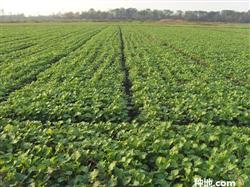
What should be noted when fertilizing rapeseed? Please advise
When fertilizing rapeseed, the following three points should be noted:
1. Do not apply fertilizer in holes. Applying fertilizer in holes easily causes excessive local fertilizer concentration, so the roots cannot absorb it evenly, and it may even cause rapeseed poisoning and root burn, affecting growth, especially when ammonium bicarbonate is applied in holes. Therefore, rapeseed fertilization is best done by opening furrows between the rapeseed rows and applying the fertilizer there. Generally, a furrow depth of 10 cm and a width of 20 cm is suitable.
Second, do not delay the application of seedling fertilizer. Some farmers wait until two months after the rapeseed has been transplanted and has established itself before applying a little farmyard manure as seedling fertilizer. In fact, at this time rapeseed needs to absorb more nutrients from the field. If the nutrients cannot keep up, rapeseed growth will be affected and "stiff seedlings" will form. For this reason, when transplanting rapeseed, dilute human excrement and urine should be used to water the rapeseed as settling water. After the plants have established themselves, use 250-500 kg of human excrement and urine per mu plus 2-3 kg of urea, mixed with 1000-1500 kg of water, and pour it on to promote strong seedlings.
Third, do not neglect the application of boron fertilizer. Rapeseed is relatively sensitive to boron fertilizer. Boron deficiency can cause physiological diseases, leading to poor root development, flowering without setting seed, or shriveled grains. Generally, 0.2-0.3 kg of borax per mu is used as base fertilizer. At the same time, spray boron fertilizer once each at the rapeseed seedling stage, bud-bolting stage, and flowering stage, using 50 grams of borax per mu each time, mixed with 50 kg of water for spraying.
Click to get more rapeseed planting techniques
Click to get more grain crop planting techniques