Detailed Explanation of Fertilization Methods for Pollution-Free Cabbage Cultivation
How do you fertilize when growing pollution-free cabbage? Please introduce the methods. For fertilization methods for growing pollution-free cabbage, you can refer to the following methods: Apply base fertilizer heavily and plant at the right time: Cabbage grown under protected cultivation yields about 30% more than in open fields and reaches the market earlier. Therefore, apply 20%-40% more fertilizer than in open fields, increase phosphorus and potassium fertilizer, and use nitrogen fertilizer...
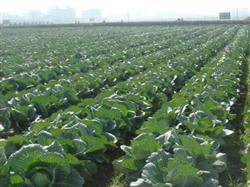
How do you fertilize when growing pollution-free cabbage? Please introduce the methods.
For fertilization methods for growing pollution-free cabbage, you can refer to the following methods:
Apply base fertilizer heavily and plant at the right time: Cabbage grown under protected cultivation yields about 30% more than in open fields and reaches the market earlier. Therefore, apply 20%-40% more fertilizer than in open fields, increase phosphorus and potassium fertilizer, and the nitrogen fertilizer amount can be reduced by 10%-20%. To reduce the nitrate nitrogen content in cabbage, first, increase the application of organic fertilizer, especially applying fully decomposed organic fertilizer fermented with enzyme bacteria EM bacteria, which can greatly reduce the nitrate content in cabbage. According to the experience of vegetable farmers in Shandong, applying 75000-105000 kg/ha of decomposed barnyard manure in greenhouses can ensure that cabbage yield reaches 75000 kg/ha; second, apply long-acting organic-inorganic compound fertilizer. In recent years, controlled-release and slow-release inorganic-organic compound fertilizers have been developed; they are not easily leached in soil, have long and stable fertilizer effects, can reduce application amounts, improve utilization rates, and lower nitrate pollution to cabbage and other crops; third, increase the application of biological fertilizers. Long-term application of chemical fertilizers to vegetable fields reduces microorganisms year by year. Therefore, the decomposition of organic matter is hindered, and the effective utilization rate of nutrients is low. Applying biological fertilizers such as nitrogen-fixing bacteria, phosphate bacteria, potassium bacteria, and mycorrhizae has a significant effect on improving soil microbial activity, promoting the biological effectiveness of soil nutrients, and reducing the nitrate content of vegetables; fourth, optimize formula fertilization. According to the soil's fertilizer supply capacity and the cabbage's fertilizer demand, applying fertilizer in proportion can both increase yield and quality without causing nitrate pollution. According to spring cabbage cultivation under protected cultivation in the vegetable areas of Shandong Province, the general yield is 75000 kg/ha. Applying 90000 kg/ha of pig barnyard manure and topdressing 600 kg/ha of urea and 300 kg/ha of ternary compound fertilizer can fully supply the nitrogen and phosphorus required by cabbage, with a slight surplus, while potassium is slightly insufficient. Because the available potassium in Shandong soil is relatively rich, cabbage will not show potassium deficiency symptoms. When conditions permit, supplementing 300 kg/ha of potassium fertilizer can produce a significant quality-improving effect.
Base fertilizer can be broadcast, applied in furrows, or applied in holes. Furrow application and hole application are used when the amount of base fertilizer is small; fully decomposed organic fertilizer must be used, and planting can be done immediately after application. ③ Skillfully apply topdressing: After planting and seedling recovery, leaves and roots grow quickly, so fertilizer and water management should be strengthened to promote the formation of strong assimilation and absorption organs, laying the foundation for forming tight heads.
Water promptly after planting. On the basis of applying sufficient base fertilizer, apply a small amount of quick-acting nitrogen fertilizer early along with the planting water, 225 kg/ha of ammonium sulfate, which can accelerate seedling recovery, enhance the cold resistance of young seedlings, and promote early maturity and high yield. Cultivate and control growth at the right time. When the plants grow vigorously, the leaves clearly have a waxy bloom, and the heart leaves begin to fold inward, seedling control should be ended in time, then water and topdress, applying about 1050 kg/ha of dilute human manure and urine. Entering the head-forming stage, fertilizer and water management need to be strengthened. This period is the fastest growth period for cabbage, with the largest growth amount and also a large fertilizer demand, so topdressing should be done early. From the beginning of head curling to the early head-forming stage, topdress continuously 2 times. Each time, apply 10000 kg/ha of well-fermented cake fertilizer liquid with water, or 500 kg/ha of organic-inorganic compound fertilizer. Stop topdressing about 30 days before harvest.
Click to get more cabbage cultivation techniques
Click to get more vegetable cultivation techniques